Last updated 2026-08-19
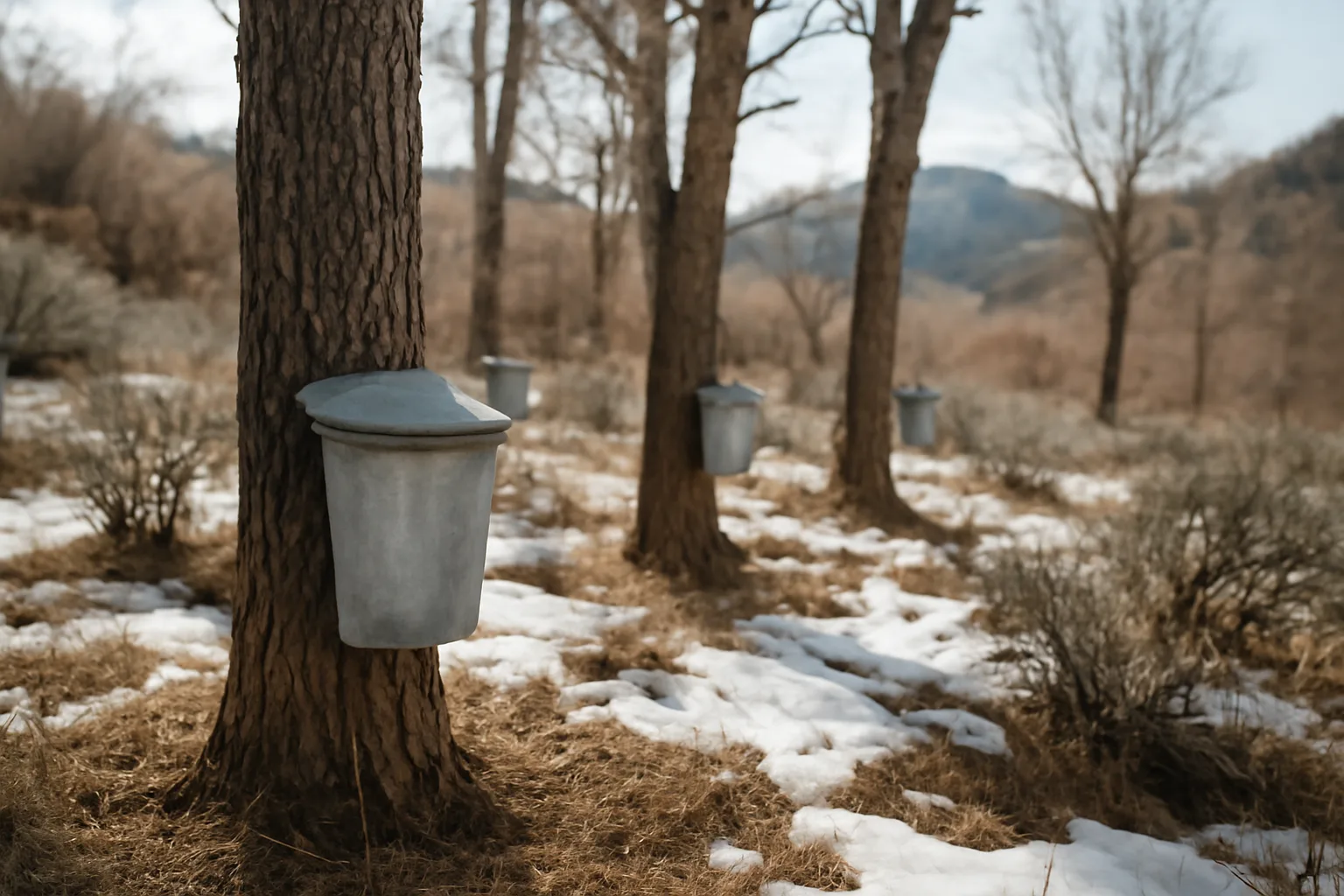
TL;DR
Colorado does not issue a sugarbush license. Renewal means healthy trees, new taps each freeze-thaw season, and current land or food permits if you hold them. Household syrup needs landowner permission. Sales pull in CDPHE cottage food or manufactured food rules and a sales tax account. Federal land needs a USFS or BLM permit. Confirm forms and fees with that office.
Do you need a license for sugarbush in Colorado?
No. Colorado does not issue a sugarbush license, a maple license, or a statewide tap card. If you tap trees you own (or have written permission to use) and you keep the syrup at home, you are not waiting on a maple board.
That is the hobby answer.
Selling is a different pile of paper. Food sales run through the Colorado Department of Public Health and Environment. Some retail setups also hit your county health department. Honey is named in Colorado cottage food law. Maple syrup is not named the same way. Call CDPHE and ask whether finished syrup qualifies as a cottage food, or whether they want manufactured food registration, before you print labels.[8][9]
Land you do not own is the other license-shaped problem. Collection on National Forest System land needs a forest products permit or a special use authorization from the local ranger district.[10] BLM uses a forest product permit for removal of products from public land.[11] State trust land and county open space almost never mean help yourself. Ask. Get it in writing.
A sales tax license from the Colorado Department of Revenue applies if you make retail sales. It does not apply because you hung a bucket.[13] Confirm the current application and any fee on the Department page. I will not quote a fee here. Those numbers move.
I would not form an LLC just to hang 20 buckets. Paper does not make sap run. If a ranger district or a county health office tells you something different from a blog, they win. Confirm with the office that actually stamps the form.
How much does sugarbush cost in Colorado?
There is no honest statewide sticker price. The USDA National Agricultural Statistics Service maple syrup report does not publish a Colorado production estimate, so no per-tap cost series exists for this state.[3] Your real cost is the trees you already control, plus boiling gear, plus any food or land paper you actually need.
If you already stand in a boxelder draw you control, year one can stay cheap. Spiles, lids, buckets or bags, a flat pan, a thermometer, a hydrometer and cup, filters, and jars. A few hundred dollars if you scrounge a pan and build a cinder-block arch. Buying a showroom evaporator before you have counted 10-inch trunks is how people waste money.
Commercial gear is a different planet. Continuous-flow evaporators, reverse osmosis, and vacuum tubing pay off where someone already runs thousands of taps. They do not pay off on 40 western maples. Skip them on a first Colorado bush.
Land cost dominates if you try to buy a sugarbush. Colorado does not sell maple bush the way New England does. You are buying canyon ground or ditch-side acres for other reasons and taking sap as a side yield.
Food-path costs show up only if you sell. Cottage food still means an approved food safety course, labels, and in some counties a conversation with public health.[8] Manufactured food means a registered facility, which often means renting a licensed kitchen.[9] Confirm current CDPHE and county fees with those offices. Do not use an old PDF you found in a forum.
USFS and BLM personal-use permits are usually small money next to land. Commercial special use is a different schedule. Ask the district. Do not assume a firewood permit covers sap.
My honest range for household syrup on land you already control is low hundreds for gear, plus wood or propane. A sales-ready year is that gear plus kitchen access plus a tax account. Price the last two with the state, not with me.
How long does sugarbush take in Colorado?
The boil itself is a season, not a year. Sap runs when nights freeze and days thaw. On the Front Range that window often sits in late winter into early spring. Higher canyons run later. A Chinook can shut you down in a weekend. Nobody publishes a statewide Colorado sugarbush calendar, and I will not fake one.
Setup is the longer clock. Walking land, counting trunks, getting written permission, and (if you sell) clearing the food path can take months before the first legal jar. A household bush on your own fence line can be ready in a few weekends if the trees are already there.
Boiling time follows sugar content. The old rule of 86 says gallons of sap per gallon of syrup is about 86 divided by the sap sugar percent. Sugar maple sap in the East often sits near 2 percent, which is why people talk about 40 gallons of sap for a gallon of syrup. Boxelder and Rocky Mountain maple often run thinner. Plan on more hours over the pan than a Vermont postcard.
Food paper has its own clock. Cottage food and manufactured food each have applications, and county retail food licenses do too.[8][9] I will not quote a processing time. Those change, and a guarantee from a website is worthless. Ask the board that issues the credential for the current queue.
USFS and BLM permits are usually seasonal or annual. Special use authorizations take longer than a personal-use forest products slip.[10][11] Start that call before you need sap, not during the first thaw.
If you are asking how long until the bush itself is renewed, trees heal tap holes over seasons, not overnight. That is biology, not a permit.
What does sugarbush renewal mean in Colorado?
It is not a named state renewal form. There is no Colorado maple board sending you a postcard.
Renewal, on the ground, means three things. You tap new holes in healthy wood each season. You keep the stand from getting beat up. You keep any land or food credential you already hold from lapsing.
If your only paper is a handshake with yourself, renewal is forestry and sanitation. Pull spiles when the buds break or the sap turns buddy. Let holes heal in open air. Do not stuff them with painted dowels. Walk the stand in summer and mark trees that looked weak.
If you hold a manufactured food registration, a county retail food license, a sales tax account, or a special use authorization, those have their own renewal calendars.[9][13] Confirm dates and current fees with the issuer. I will not invent an anniversary or a late fee.
People coming from a real maple state sometimes look for a tap quota renewal. Colorado does not run that system. Compare that eastern paper path in sugarbush renewal in Connecticut or sugarbush renewal in Illinois if you need the contrast. Western public-land paper looks closer to sugarbush renewal in Idaho.
Treat renewal as a winter habit, not a certificate on the fridge.
What trees can you tap in a Colorado sugarbush?
You tap maples in the genus Acer. Colorado's native options are bigtooth maple (Acer grandidentatum), Rocky Mountain maple (Acer glabrum), and boxelder (Acer negundo).[4][5][6] Sugar maple (Acer saccharum), the eastern crop tree, is not a Colorado native stand type.
Bigtooth maple lives in canyon country and on the Western Slope. Rocky Mountain maple is often a multi-stem small tree. Boxelder follows ditches, creeks, and farm edges along the Front Range and river bottoms. CSU Extension's native tree guidance is written for landscapes, not syrup, but it is a clean place to confirm that Rocky Mountain maple belongs here.[7]
Boxelder makes real syrup. The flavor is different. Sugar is often lower. People who hate the tree still hang buckets on it because it is the stem they actually have.
Count live, healthy trunks. Industry tapping sheets used in the East start around 10 inches diameter at breast height for a first tap.[12] Western maples hit that size less often. If you cannot find a couple dozen honest 10-inch stems, you have a science project, not a crop.
I would not plant a sugar maple orchard in Colorado and call it a business plan. Alkaline soils, dry air, and summer heat are hard on that species in a lot of Front Range yards. Plant trees because you want trees. Do not plant them because you want a 2028 syrup brand.
Identify the tree in leaf and in bark before you drill. Guessing from a winter twig is how you tap an elm and feel silly.
Can you collect sap on national forest or BLM land?
Only with permission from the office that manages that tract. Casual tapping on federal land is not a gray hobby. It is removal of a forest product.
The U.S. Forest Service states that "a permit is required to remove forest products from National Forest lands."[10] Ranger districts write personal-use permits for things like firewood and Christmas trees all the time. Sap is uncommon. The district decides whether a personal-use forest products permit fits or whether they want a special use authorization. Ask them. Get the written slip before you drill.
BLM uses forest product permits for cutting or removing products from public lands it manages.[11] Same phone call habit. Same do-not-assume rule.
Commercial collection is a heavier lift than a household gallon. Special use is not a same-day counter sticker. I will not promise a timeline.
State trust land, Colorado Parks and Wildlife ground, and county open space each have their own rules. Many of them ban gathering. A city trail is not your sugarbush.
Private land is simpler and, for almost every first-year operator, smarter. Written permission from the owner beats a romantic ridge on the White River National Forest.
If your only access is federal land, budget a year of conversations, not a February surprise. Other dry-state writeups in sugarbush renewal in Arizona and sugarbush renewal in California hit the same public-land wall.
Can you sell maple syrup under Colorado cottage food rules?
Maybe. Do not assume yes.
Colorado's cottage food program lets certain non-potentially hazardous foods sell direct to consumers from a home kitchen, with labels and a food safety course, and without the full manufactured food plant path.[8] The statute names products such as honey. It does not give maple syrup the same explicit shout.
Finished syrup that is boiled to a high soluble-solids level is a low-water-activity food. That is why people lump it with honey. CDPHE still gets to say whether your jar fits the "other" cottage foods bucket or whether they want you in manufactured food registration.[8][9] Ask them with a process description, not a vibe.
If they say cottage food, you still label. Home-kitchen disclosure language, your name and address, the product name, net quantity, and allergen information are the usual package. Use the current CDPHE label checklist, not a Vermont label you copied.
If they say manufactured food, a home stove is the wrong room. You need a registered facility. That can be a rented commercial kitchen. Confirm the current registration path and fee with CDPHE. No blog should quote that fee for you.
Wholesale to a grocery is not a cottage food move. That is manufactured food territory.[9]
I would get the CDPHE answer in writing (email is fine) before I ordered 200 custom lids.
What other paper shows up if you sell syrup?
Food is the first stack. Tax is the second. Land use is the third if you build a sugarhouse.
Retail sales in Colorado generally need a sales tax license from the Department of Revenue.[13] Direct the current form and fee questions to that office. Selling a few jars to friends for cash still counts as a sale in the eyes of a tax auditor. I am not your accountant. Ask one if the dollars get real.
County retail food licensing shows up if you run a tasting room, a cafe counter, or another on-site food service setup. That is a different license from cottage food and from manufactured food. The county health department is the usual door.
Weights and measures rules apply if you sell by volume or weight. The Colorado Department of Agriculture runs that program. A kitchen mason jar with a Sharpie is a gift, not a labeled retail pack.
Zoning and building permits apply if you erect a sugarhouse, run gas, or put up a commercial evaporator with a stack. Wildfire-prone counties care about open flame and spark arrestors. An evaporator is a fire. Treat it that way.
Here is the paper map I actually use when someone asks what to confirm.
| Situation | Paper to confirm | Who to call |
|---|---|---|
| Household syrup on land you own | None statewide | Your insurer, if you care |
| Household syrup on a neighbor's land | Written permission | Landowner |
| Sap on National Forest | Forest products or special use | Local ranger district |
| Sap on BLM | Forest product permit | Local BLM field office |
| Direct-to-consumer jars | Cottage food eligibility and labels | CDPHE, then your county |
| Wholesale jars | Manufactured food registration | CDPHE |
| Tasting room or cafe service | Retail food establishment | County health |
| Charging money at all | Sales tax license | Colorado Department of Revenue |
None of those rows is a sugarbush license. They are ordinary Colorado business and land rules hanging off a niche hobby.
How should you tap western maples so the bush lasts?
Renewal fails when you overtap small stems. That is the whole game on a Colorado bush.
Eastern hobby sheets start tapping at about 10 inches diameter at breast height, add a second tap only on larger trunks, and keep tap holes shallow.[12] Use that as a ceiling, not a target. Rocky Mountain maple and many boxelders are smaller and often multi-stem. One conservative tap on a healthy stem is plenty. Skip a tree with a thin crown, rot, or a wound from last year that did not close.
New hole, new year. Place it a few inches from old scars, in fresh wood, slightly upward so the spile drains. Drop a tap that runs cloudy. Pull everything when buds break.
Do not plug holes with treated lumber or foam. Let them compartmentalize.
Sanitation matters more than gadgets. Clean spiles. Clean buckets. Sap sitting in a metal pail under March sun at 6,000 feet sours fast. Collect often. Boil the same day if you can. Frozen sap can wait. Warm sap cannot.
Tubing and vacuum are legal on private land. They are still a waste on a 15-tree ditch line. Gravity buckets match the resource you actually have.
If a stem is barely 10 inches, take a year off after a heavy season. The bush outlives your hobby only if you let it.
What density and grade rules apply if you sell?
If you sell maple syrup, density is not a taste opinion. The United States Standards for Grades of Maple Syrup say maple syrup "contains, in solution, not less than 66.0 percent by weight of soluble solids derived solely from such sap."[2] That sentence is the one I would tape above the hydrometer.
The same standards define maple syrup as "the liquid food derived by concentration and heat treatment of the sap of the maple tree (Acer)" or from maple sugar made from that sap.[2] Boxelder is Acer. So is bigtooth. Birch is not. Do not blend birch and call it maple.
USDA also sets four U.S. Grade A color and taste classes.[1][2] You do not need a federal grader in your garage to sell inside Colorado. You do need to stop boiling at a legal density and to filter hot syrup so you are not selling sugar sand.
A hydrometer and a good thermometer are not optional if money changes hands. Guessing that it sheets off the spoon is how you bottle fermenting syrup or a rock-hard jar.
Label the species honestly if the flavor will surprise an eastern buyer. "Boxelder maple syrup" keeps you out of dumb arguments. "Pure maple syrup" is still botanically fair for Acer, but surprise is a refund.
Interstate shipping adds FDA labeling and, if you scale up, facility registration questions beyond CDPHE. Stay in-state until you have a reason not to.
What do first-year sugarbush operations look like on Colorado land?
Start in summer, not in a thaw. Walk the property. Flag live maples. Measure diameter. Write the count down. If the count is embarrassing, stop shopping for evaporators.
Fall is for permission and fuel. Written landowner notes. A call to the ranger district if any tap would stand on federal ground.[10] Firewood stacked dry, or a propane plan that will not blow out in wind. Check with the county on open flame if you are building an outdoor arch. Colorado fire season logic does not end because you are making breakfast candy.
Winter is for gear. Spiles that fit your bits. Lids. Filters. Jars. A hydrometer. If you want a single small kit instead of hunting those pieces down one at a time, MapleSyrupPath sells a $129 one-time Tap + Evaporator + Grade Kit. That kit does not replace land permission or CDPHE paper.
Late winter is the run. Watch night lows and day highs. Tap when the cycle starts, not a week after Instagram says Vermont opened. Collect often. Boil shallow pans hard. Finish to 66.0 percent solids if those jars will leave the house.[2]
Keep notes. Which stems ran. Which holes stained. How many gallons of sap made a pint. Next year's renewal is those notes, not a slogan.
First year, I would give away or keep almost everything. Learn the flavor of your trees before you print a farm name. sugarbush renewal in Alaska is another reminder that a maple season outside the NASS map is a local puzzle, not a franchise.
What is a waste of money on a small Colorado bush?
Reverse osmosis. Vacuum pumps. A 2-by-6 continuous evaporator. Five hundred taps of microbore. A custom sugarhouse with a cupola. An LLC and a trademark before you have boiled 10 gallons. I have watched people buy the catalog and then discover they own fourteen boxelders.
Planting sugar maple as a crop in Colorado is usually a waste too. You can plant a tree. You cannot buy a Vermont climate.
Paying a consultant to permit your sugarbush with the state is a waste, because that license does not exist. Spend the phone time on CDPHE (if you sell) and on the ranger district (if you do not own the trees).[8][10]
Cheap candy thermometers that lie by 10 degrees are a waste if you sell. So are unfiltered jars. So is a hydrometer you never calibrated in hot water against the paper that came with it.
What is not a waste: a $20 increment borer or a diameter tape, written permission, a real thermometer, filters, and enough fuel. Time spent identifying Acer correctly.
If you later need a kit path, use /start. Read the land and food sections first either way. MapleSyrupPath is a publisher with a kit, not your lawyer and not the Colorado health department.
Frequently asked questions
Do you need a license for sugarbush in Colorado?
No statewide sugarbush license exists. Household syrup on land you control needs owner permission, not a maple card. Selling pulls in CDPHE cottage food or manufactured food rules, and retail sales need a Department of Revenue sales tax license. Federal land needs a USFS or BLM permit. Confirm current forms with the office that issues them.
How much does sugarbush cost in Colorado?
On land you already control, household gear can stay in the low hundreds if you scrounge a pan and build a simple arch. Fancy evaporators and reverse osmosis are usually a waste on small western stands. USDA does not publish Colorado maple cost data. Food registration, kitchen rental, and permit fees are real if you sell. Confirm those with CDPHE, your county, and the land office.
How long does sugarbush take in Colorado?
The sap run is a short freeze-thaw window in late winter or early spring, and elevation moves it. Setup can be a few weekends for a home bush, or months if you need federal land permission or a food credential. Boiling takes longer when sap is thin. Nobody should quote you a CDPHE or USFS processing time except those offices.
Is there a commercial maple crop in Colorado?
Not in the federal numbers. The USDA NASS maple syrup report does not publish a Colorado estimate. You will find backyard and micro batches on boxelder and bigtooth, not a published statewide industry. Plan as a land-based hobby that might sell a few jars, not as a crop report business.
Can I tap trees in a Colorado national forest?
Only with a permit from the local ranger district. The Forest Service requires a permit to remove forest products from National Forest lands. Sap is uncommon, so the district may use a personal-use forest products permit or send you down the special use path. Do not tap first and ask later.
Is maple syrup a cottage food in Colorado?
It is not named like honey. CDPHE decides whether finished syrup fits cottage food or needs manufactured food registration. Ask them with your process before you label jars. Cottage food, if allowed, is still direct-to-consumer only, with required label language and an approved food safety course.
Does Colorado grow sugar maples?
Sugar maple is not a native Colorado stand type. Native tapable maples here are bigtooth maple, Rocky Mountain maple, and boxelder. You may see planted sugar maples in towns. A planted yard tree is not a sugarbush, and planting a plantation for syrup is a poor Colorado business plan.
How many taps do I need for a gallon of syrup?
It depends on sap sugar and tree size, not on a Colorado quota. Eastern hobby math often uses about 40 gallons of 2 percent sap per gallon of syrup. Western maples frequently run thinner, so you need more sap and more hours. A 10-inch stem gets one conservative tap. Count trees before you promise anyone a gallon.
Do I need a sales tax license to sell a few jars?
Retail sales in Colorado generally require a sales tax license from the Department of Revenue. A handful of jars sold to neighbors still looks like a sale. Confirm current rules and any fee on the Department's sales tax license page. Household gifting is a different fact pattern from charging money.
Should I plug tap holes at the end of the season?
No. Pull the spiles when the season ends and leave the holes open to heal. Treated dowels and foam scraps are leftover advice. Clean equipment, conservative tap counts, and a year off for weak stems do more for renewal than a plug.
Can I sell grocery-store wholesale from my home kitchen?
Treat wholesale as manufactured food, not cottage food. That means a CDPHE-registered facility, which is usually not your home stove. Confirm the current manufactured food registration path and fee with CDPHE before you pitch a buyer. Interstate grocery accounts add still more labeling and facility questions.
Is an LLC required to run a small Colorado sugarbush?
No. Tapping trees you own does not require an entity. An LLC can make sense later for liability or partners, but it does not replace food or land permits and it will not make sap. I would not spend money on an entity in year one of a 20-bucket bush.
Where do I confirm current CDPHE or permit fees?
CDPHE cottage food and manufactured food pages for food. Your county health department for retail food establishments. The local USFS ranger district or BLM field office for sap on federal land. tax.colorado.gov for a sales tax license. Fees change. If a number is not on that office's current page, do not trust it.
Sources
- USDA AMS United States Standards for Grades of Maple Syrup: Maple syrup is defined as concentrated Acer sap and must contain not less than 66.0 percent by weight soluble solids derived solely from that sap.
- USDA PLANTS Database Acer grandidentatum: Bigtooth maple (Acer grandidentatum) is a native maple whose documented range includes Colorado.
- USDA PLANTS Database Acer glabrum: Rocky Mountain maple (Acer glabrum) is a native maple whose documented range includes Colorado.
- USDA PLANTS Database Acer negundo: Boxelder (Acer negundo) is a maple that occurs in Colorado and can be tapped.
- Colorado State University Extension Native Trees for Colorado Landscapes 7.421: CSU Extension identifies Rocky Mountain maple and other native trees as part of Colorado's flora for landscape use.
- CDPHE Cottage Foods: Colorado's cottage food program sets the home-kitchen path for certain non-potentially hazardous foods sold direct to consumers.
- CDPHE Manufactured Food: Facilities that manufacture or pack food for wholesale or non-cottage retail paths register with CDPHE as manufactured food operations.
- BLM Forest Product Permits: BLM requires a forest product permit to cut or remove forest products from the public lands it manages.
- Ohio State University Extension Hobby Maple Syrup Production (FOR-66): Eastern extension tapping guidance starts first taps near 10 inches DBH and treats conservative tap counts as standard practice.
- Colorado Department of Revenue How to obtain a sales tax license: Retail sellers in Colorado obtain a sales tax license through the Department of Revenue; current fees are listed by that office.