Last updated 2026-08-19
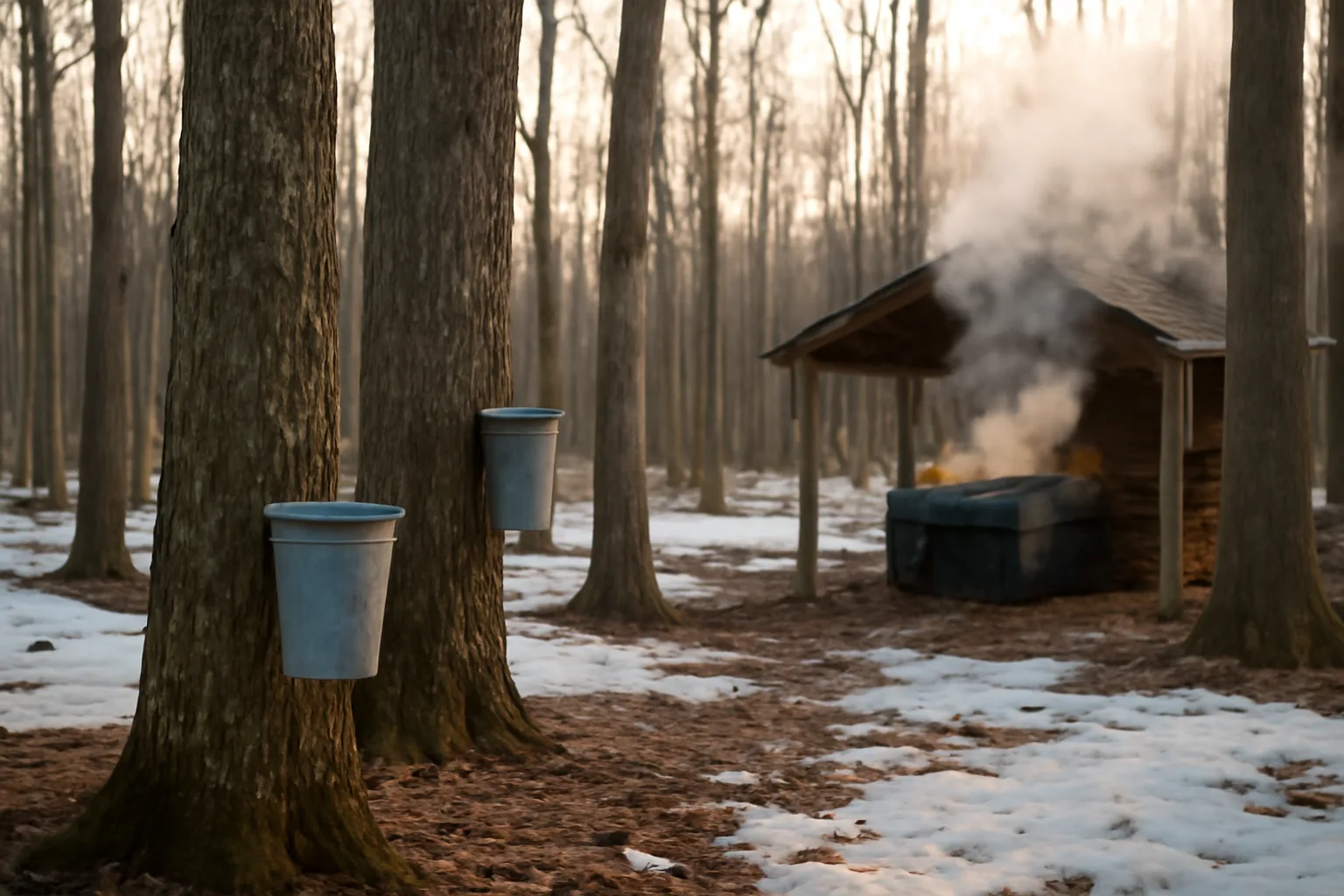
TL;DR
You start a Connecticut sugarbush on woods you control, using existing maples, then you add business and food paper only if you sell. The state does not issue a sugarbush license. Home jugs need none. Selling usually means tax registration and a food path you confirm with the Department of Consumer Protection and your town. First-year money goes to the evaporator and bottles. You can tap 10-inch trees the first late winter.
How do you start a sugarbush in Connecticut?
You start by counting tappable maples on land you own or lease, then you decide if the sap is for your kitchen or for sale. Selling is what creates the paper path. Tapping for home use does not.
Walk the woods in leaf-off. Sugar maple and red maple both run. Oaks and ashes do not. Measure diameter at breast height, not vibes. Extension guidance across the Northeast still treats about 10 inches as the usual first-tap size, and that is the number I would use on a Connecticut hillside too [12]. If you have twelve honest trees, you have a hobby. If you have a few hundred, you have a business conversation.
Connecticut sits on the warm edge of the commercial maple belt. The season is shorter and more jumpy than the path described in how to start a sugarbush in Vermont. That is not a reason to quit. It is a reason to size the evaporator to the woods you actually have.
Do the work in this order. Count trees. Decide personal use versus sales. If you will sell, call your town land-use office and the Department of Consumer Protection before you order stainless. Buy conservative taps and a pan you can actually fire. Tap when the freeze-thaw cycle starts, which in most Connecticut years is late February. Pull the taps when the buds swell.
I would not plant seedlings and call that a first-year sugarbush. Modeling of U.S. maple potential starts from the maples already standing in the forest inventory, not from new plantations. That is the right mental model here. You start on stems that are already in the ground.
Do you need a license for sugarbush in Connecticut?
No. Connecticut does not issue a standalone sugarbush license. Personal-use tapping on land you control needs no state license. Selling syrup is a food and tax problem, not a maple-license problem.
People mix up four different papers. A food manufacturing or local-health approval, if you sell. A Department of Revenue Services tax registration, if you have taxable sales or the department tells you to register. A Secretary of the State entity filing, only if you want an LLC or corporation. A forest-practitioner certificate, which is for people who offer commercial forest practices for hire, not for a landowner dropping 5/16-inch spouts in their own maples [5].
Cottage food looks tempting and usually does not fit. Connecticut's cottage food statute limits a cottage food operation to products made in the home kitchen of a private residence, sold directly to the consumer [3]. A sugarhouse evaporator is not a home kitchen. If you boil in a shed, assume cottage food is the wrong box and confirm the current food path with DCP Food and Standards and your local health department. Fees and the exact license title change. Confirm them. Do not trust a blog for the number.
Compare that with what Vermont actually asks for if you are reading both states. The brand names of the forms differ. The core idea does not. Sap in your freezer is unregulated. Syrup on a store shelf is food.
What paper do you actually file before you tap?
If the syrup never leaves your house, you file nothing at the state level before you drill. That surprises people who have been told maple is a permitted activity. It is a tree and a pan until you sell it.
If you will sell, build a short call list and write down names. Town zoning or planning, for a farm stand or a new sugarhouse. Town inland wetlands, if you will grade, gravel, or build near a stream or wet flat. Town building official, if you will put up a structure. DCP Food and Standards, plus your local health department, for the food path. DRS, for tax registration [14]. IRS, for an EIN if a bank or a form asks for one. The EIN application is free on the IRS site [8]. Secretary of the State, only if you are forming an entity [7].
Connecticut Grown is optional marketing through the Department of Agriculture. It is not an operating license [13]. Skip it in year one unless a market manager is pushing the logo.
I would make the town call before I poured a slab. I would not form an LLC to sell twelve pints at a church fair. Sole proprietor is a real first-year shape. If you want the liability box later, file then, and confirm the current SOTS fee on the current SOTS page. I am not going to invent that number.
No approval clock is honest. Boards do not owe you a week. Build slack.
How much does sugarbush cost in Connecticut?
There is no official Connecticut sugarbush start-up fee, and USDA NASS does not publish a Connecticut cost-of-production series in its June maple report [10]. What you spend is equipment, fuel, bottles, and (if you sell) whatever the town and DCP are charging that year. Confirm those government fees with the offices that collect them.
Cash you can plan around lives in the used-equipment market, not in a statute. A kitchen test on 5 to 20 taps is often a few hundred dollars if you already have a heat source. A backyard 25 to 100 tap setup with a small evaporator, a food-grade tank, filters, and a hydrometer usually lands in the low thousands if you buy used and you already have a shed. Crossing into a few hundred taps with a real sugarhouse and stainless is tens of thousands. Those are catalog and classified ranges, not a state schedule. Used pans move. New stainless does not get cheaper because you live in Tolland County.
Waste of money in year one: reverse osmosis on 40 taps, a 3/16-inch vacuum web, and a branded sugarhouse before you have boiled a single run. Spend on a hydrometer you trust, filters, and food-grade storage. Sap in a trash barrel is how you make a science experiment, not syrup.
If you are only testing a handful of trees, MapleSyrupPath keeps a $129 Tap + Evaporator + Grade Kit as a single small box of taps and grading tools. It does not replace a real evaporator once you outgrow a backyard pan, and you should still run the town and DCP questions if any jar will be sold.
Budget fuel honestly. Wood is cheap if you already cut it. It is not cheap if you count your January weekends. Oil is the opposite math. I would not price my first season on a fantasy of $8 pints and free labor. NASS season-average prices cover the big maple states each June. Connecticut is usually absent from that table, so do not invent a "CT average" and then mortgage a sugarhouse to it [10].
| Scale | Taps | What you actually buy | Honest cash shape |
|---|---|---|---|
| Kitchen test | 5 to 20 | Buckets or bags, small pan, filter, bottles | A few hundred dollars |
| Backyard | 25 to 100 | Hobby evaporator, tank, hydrometer, more bottles | Low thousands |
| Small commercial | 500 and up | Sugarhouse, more stainless, maybe RO later | Tens of thousands |
How long does sugarbush take in Connecticut?
You can tap existing 10-inch maples the first late winter you are ready. You cannot grow a tappable stem from a seedling in a year. Forestry reality is measured in decades, not in a season calendar.
The production clock is short. In most Connecticut years the freeze-thaw window opens in late February and is fading by the end of March, with a stray early-April run if the weather stays mean. Four good weeks is a decent year. Two is a year you will remember for the wrong reason. Nobody publishes a clean, official Connecticut season-length series. You watch the forecast and the buds, not a statute.
The paper clock is separate and slower. Food and building questions can take weeks or a few months depending on the town and whether you are building. There is no statewide guaranteed processing time. Confirm current wait expectations with the office that has your file. Do not advertise a release date you do not control.
If you need a structure, start that conversation in summer or early fall. Tap holes wait for February. Wetlands and building staff do not work on your sap run.
Pull taps as soon as the season dies. Leaving hardware in a tree into leaf-out is sloppy, and it is how you teach yourself a microbiology lesson.
Can you tap maples on your own land without a forestry permit?
On land you own, tapping is not a commercial forest practice, and the Forest Practices Act is aimed at people who offer forest work for hire [5]. You do not go get a forest-practitioner certificate to hang buckets on your own line of sugar maples.
Written permission still matters if the trees are not yours. A handshake with a neighbor is how partnerships end. If you will sell syrup off someone else's woods, put the years, the tap count, and who pays for damage in writing.
Municipal street trees are a no. State land is a no until DEEP says otherwise in writing. I will not name a form I cannot pin to a current instructions page. Ask DEEP Forestry what instrument they want and use that.
Wetlands are the sneaky one. Tapping a maple that happens to stand near a seep is not filling a wetland. Cutting a new farm road, dumping gravel, or setting a sugarhouse pad in a regulated area can be. Connecticut's Inland Wetlands and Watercourses Act declares those wetlands "an indispensable and irreplaceable but fragile natural resource," and the local inland wetlands agency is where that policy becomes a permit question [4]. Call them before you build, not after the first complaint.
What food and sales rules apply if you bottle syrup?
Once syrup is a product, it is food. USDA grade standards say the solids content of maple syrup "is not less than 66 percent by weight (Brix) exclusive of any added sweetener" [1]. That 66.0 Brix floor is the number I would finish to, every batch, with a hydrometer or a refractometer you actually calibrated.
If you print a grade on the label, use the current USDA color and flavor classes. Do not invent a house grade that sounds nicer. Density first. Color second. Flavor is what the customer argues about.
Connecticut does not publish a special maple-only food code. DCP and local health apply the food-manufacturing and retail rules they already have. Some producers who only sell sealed jars from their own farm get a lighter local path. Stores and wholesale accounts usually ask for a manufacturing license, liability insurance, and a label that would not embarrass a weights-and-measures inspector. I will not pretend every town treats a 2-by-6 evaporator the same way. Call both offices. Ask what they want for your exact sales channel. Confirm the current fee with them.
Labels need the product name, net contents, and the name and address of the producer. That is boring and it is how you stay out of a stupid argument at a market. Maple is not a major federal allergen. If you make maple cream or candy, those are different products with different tax and kitchen questions. Confirm those with DRS and DCP. Do not assume the grocery exemption follows you into confectionery.
Sugarbush license rules in Utah are a useful reminder that states invent different form names for the same food idea. Read your own state's forms.
What does a first-year sugarbush season look like in Connecticut?
Summer and fall are for counting stems, dropping firewood, and making the town and DCP calls if you will sell. December and January are for washing tanks and setting any tubing you actually need. Late February is for tapping. March is boiling. April is pulling taps and scrubbing. May is the sales-tax and Schedule F pile if money came in.
Boil as close to collection as you can. Sap is perishable. A warm Connecticut March will teach you that faster than any manual. Finish off the range or on a controlled rig, filter hot, and pack hot. Guessing density by "sheet" on a spoon is how hobby batches float or mold.
Yield is the part everyone inflates. A planning number I would actually use on the southern edge is well under a half gallon of syrup per tap, and some years you will miss that. Connecticut has no public per-tap yield series. The closest official production tables are the NASS maple report for the major states [10]. Use those for scale, not as a promise about your ridge in Litchfield County.
Red maple is worth tapping if that is what you have. Sugar maple is nicer sap. A woods full of healthy red maple still beats a fantasy of 200 sugar maples you do not own.
UConn Extension forestry is the local place I would ask about workshops and tree ID, not a random Facebook thread [15].
Where can you sell Connecticut maple syrup?
Your own farm stand, if zoning allows it. A farmers market, if the market and the local health department allow it. Retail stores, once a buyer is satisfied you are a food producer and not a person with a turkey fryer. Online, if you can ship food legally to the destination state and you still obey Connecticut production rules.
Wholesale is a different job. Expect requests for a manufacturing license, a certificate of insurance, consistent grade, and cases that arrive when you said they would. If that sentence already makes you tired, stay on the farm stand for a year.
Connecticut Grown can help a label look local. It still does not replace a food approval [13]. I would not delay a first season waiting on a marketing logo.
Price what is in the jar. Small Connecticut batches are a food product with brutal labor. If you underprice against bulk Vermont gallons, you will work for less than minimum wage and call it heritage. Read how Vermont producers size the same problem if you need a reality check on scale, then come home and price for your tap count.
What equipment do you need the first year?
A drill, sharp 5/16-inch bits, spiles, lids, buckets or bags, a food-grade collection tank, a pan and a heat source, a deep-fry or syrup thermometer, a hydrometer and test cup, filters, a finish pot, and bottles you can seal. That is the whole honest list for a first backyard year.
Tubing is optional at 30 taps. It becomes sanity around a few hundred, if you will keep the lines clean. Reverse osmosis becomes math after you are hauling more sap than you want to boil. It is a waste of money on a kitchen-scale Connecticut woods.
I would buy used iron if the pans are clean and the welds are not a horror show. I would not buy the first shiny unit a catalog waves at beginners. I would not build a tasting room. I would cut next winter's wood this year, because wet wood turns a six-hour boil into a fight.
Grade tools are not optional if you sell. Density is the standard. Color is the argument customers think they are having.
If you later compare equipment rabbit holes in other dry or western states, pages like sugarbush cost in Utah are about a different forest. Bring the skepticism home. Buy for the stems you counted in November.
What about zoning, sugarhouses, and wetlands?
A new sugarhouse is a building in the eyes of a town even if you think of it as farm kit. Some Connecticut towns treat agricultural buildings gently. Some do not. There is no statewide free pass I can honestly promise. Ask the building official. Ask in writing if the answer is fuzzy.
Inland wetlands jurisdiction is local, under a statewide policy that names those wetlands a fragile resource [4]. If your perfect evaporator pad sits in a review area, the pad is the project, not the trees. Move the pad. That is cheaper than a cease-and-desist in March.
Right-to-farm language can help after the fact on nuisance complaints. Connecticut's right-to-farm statute says that, notwithstanding many nuisance ordinances, "no agricultural or farming operation, place, establishment or facility, or any of its appurtenances, or the operation thereof, shall be deemed to constitute a nuisance" when the complaint is one of the listed agricultural conditions [2]. Read the whole section. It is not a waiver of building codes, wetlands law, or food law. Wood smoke still annoys a neighbor at 2 a.m. Talk to them before opening night.
I would site the sugarhouse for the grade, the flue, and the driveway, not for Instagram. Steam needs to go up. Trucks need to turn around in mud.
How do taxes work if you make maple syrup in Connecticut?
The IRS treats maple as farming when it is actually a farm activity. Publication 225 is the manual I would hand a first-year producer before I handed them a folklore take on write-offs [9]. A Schedule F can be the right form. A hobby determination can also happen if you never intend to make money. That line is fact-specific. Ask a CPA. This site is an independent publisher, not a law firm and not a tax shop.
Get an EIN if a bank, a market, or a form asks. It is free from the IRS [8]. Forming an LLC is a separate SOTS filing and is not required to sell a legal food product [7].
DRS cares about sales tax registration when you have a tax obligation [14]. A lot of grocery-type food is exempt in Connecticut. Maple candy and some packaged specialties may not ride that rule. Confirm the current treatment with DRS for each SKU. I will not guess your jar into an exemption.
If you hire anyone who is not you, payroll and workers' compensation questions appear. Family labor is a different fact pattern. Confirm it. Do not hire a Saturday kid and invent a status.
Renewals, if you hold a food license or a local permit, follow that license, not a maple calendar. Vermont's renewal pile is its own animal if you are comparing states (sugarbush renewal in Vermont). Connecticut will not mail you a "sugarbush renewal." It will mail you whatever license you actually hold.
If you want a single starter box for taps and grading tools after you have read the paper path, MapleSyrupPath lists the $129 Tap + Evaporator + Grade Kit at /start. Use it as hardware. Use this article as the reference. Confirm every fee and form with the board that issues it.
Frequently asked questions
Do you need a license for sugarbush in Connecticut?
No standalone sugarbush license exists. Personal-use syrup from your own trees needs none. Selling is a food and tax path you confirm with DCP Food and Standards, your local health department, and DRS. Cottage food usually fails because a sugarhouse is not a home kitchen under Connecticut's cottage food statute. Confirm current license names and fees with those offices.
How much does sugarbush cost in Connecticut?
The state does not publish a start-up fee for sugaring. A 5 to 20 tap test can be a few hundred dollars. A 25 to 100 tap backyard rig is often low thousands if you buy used. A sugarhouse at several hundred taps is tens of thousands. Confirm any government fees with DCP, DRS, SOTS, and your town. NASS does not publish a Connecticut cost series.
How long does sugarbush take in Connecticut?
Existing 10-inch maples can be tapped the first late winter. Seedlings will not be ready for decades. The sap season is usually late February into March, sometimes a short April tail. Food or building paper, if you sell or build, can take weeks to a few months. No office guarantees your timeline. Confirm current waits with the board holding your file.
Is maple syrup a cottage food in Connecticut?
Usually not if you boil in a sugarhouse. Connecticut's cottage food statute limits cottage food operations to a home kitchen in a private residence, with direct-to-consumer sales. An evaporator shed is a different facility. Maple's low water activity does not move the location rule. Ask DCP whether any part of your plan fits. Do not assume a Facebook answer.
How big should a maple be before I tap it in Connecticut?
Use about 10 inches in diameter at breast height for the first tap, which is standard Northeast extension practice. Bigger trees sometimes take a second tap under conservative manuals. Connecticut has no separate tap-size statute. Skip small stems. They are next decade's sap, not this March's.
Can I tap trees in a Connecticut state forest?
Not on your own initiative. State land is not your sugarbush. Ask DEEP Forestry what written permission, if any, they will issue, and use their current form. Roadside and town trees are a separate no. Private woods you own are the clean path. Neighbor woods need a written permission or lease if syrup will be sold.
Do I need a sugarhouse the first year?
No. Plenty of first seasons finish on a backyard pan under a roof you already have. A purpose-built sugarhouse becomes worth it when steam, wood, and bottling outgrow that roof. If you do build, talk to the town building official and inland wetlands agency first. There is no statewide promise that a sugarhouse is exempt.
Is red maple worth tapping in Connecticut?
Yes, if that is the healthy stem in front of you. Sugar maple sap is usually sweeter. Red maple still makes real syrup and is common in Connecticut woods. Mixes happen. Finish to at least 66 percent solids by weight either way. Do not wait years for a perfect sugar-maple-only stand you do not have.
Do I need to form an LLC to sell maple syrup?
No. An LLC is optional. Many first-year farm-stand sellers operate as sole proprietors, register with DRS if required, and follow the food path. File with the Secretary of the State only if you want that entity. Confirm the current filing fee on the SOTS site. An EIN from the IRS is free if you need a number.
What grade standard applies to Connecticut maple syrup?
USDA United States Standards for Grades of Maple Syrup. Solids must be at least 66 percent by weight (Brix) with no added sweetener. If you claim a color class, use the current USDA classes. Connecticut does not run a separate grading license just for maple. Your hydrometer is the daily enforcement tool.
Can I sell Connecticut maple syrup at a farmers market?
Often yes, if the market manager and the local health department say yes, and if your production setup matches what they expect. Bring labels with your name, address, product name, and net contents. Ask the market about insurance. Confirm with DCP whether your kitchen or sugarhouse needs a manufacturing license for that channel.
Do I need a certified kitchen to sell maple syrup?
You need whatever facility DCP and your local health department require for your sales channel. A home kitchen may fit cottage food only inside that statute's limits, which a sugarhouse usually misses. A dedicated boil space with hot-pack finishing is the common real setup. Confirm the current rule for your exact building. Do not guess.
Can I start a Connecticut sugarbush from seedlings?
You can plant trees. You cannot tap them in year one. Tappable size is roughly a 10-inch stem, which is a decades-long wait. Start on existing woods you control. National maple potential is modeled from existing forest inventory, which is the same idea at backyard scale: you tap what is already grown.
Sources
- USDA AMS, United States Standards for Grades of Maple Syrup (effective March 2, 2015): Maple syrup solids content is not less than 66 percent by weight (Brix) exclusive of any added sweetener.
- Connecticut Department of Consumer Protection, Food and Standards Division: DCP administers the state food programs, including cottage food, and is the office that must confirm whether any maple plan fits a home-kitchen path.
- Connecticut Secretary of the State, Business Services: Entity formation (LLC or corporation) is an optional Secretary of the State filing, not an automatic sugarbush requirement.
- IRS, Apply for an Employer Identification Number (EIN) online: An EIN can be obtained at no charge through the IRS online application.
- IRS Publication 225, Farmer's Tax Guide: The IRS farmer's tax guide is the primary federal reference for whether maple activity is reported as farming.
- USDA NASS, Maple Syrup production reports: NASS publishes season maple production and price tables for selected major maple states and does not provide a Connecticut cost-of-production series.
- Penn State Extension, Maple Syrup Production: Northeast extension guidance treats about 10 inches in diameter as the usual minimum size before a maple is tapped.
- Connecticut Department of Agriculture, Connecticut Grown Program: Connecticut Grown is a Department of Agriculture marketing program, not an operating license to boil or sell maple syrup.
- Connecticut Department of Revenue Services: DRS handles business tax registration for sellers who have a Connecticut tax obligation.
- University of Connecticut, College of Agriculture, Health and Natural Resources (Extension): UConn Extension is the Connecticut land-grant source for local maple production education and tree identification help.