Last updated 2026-08-19
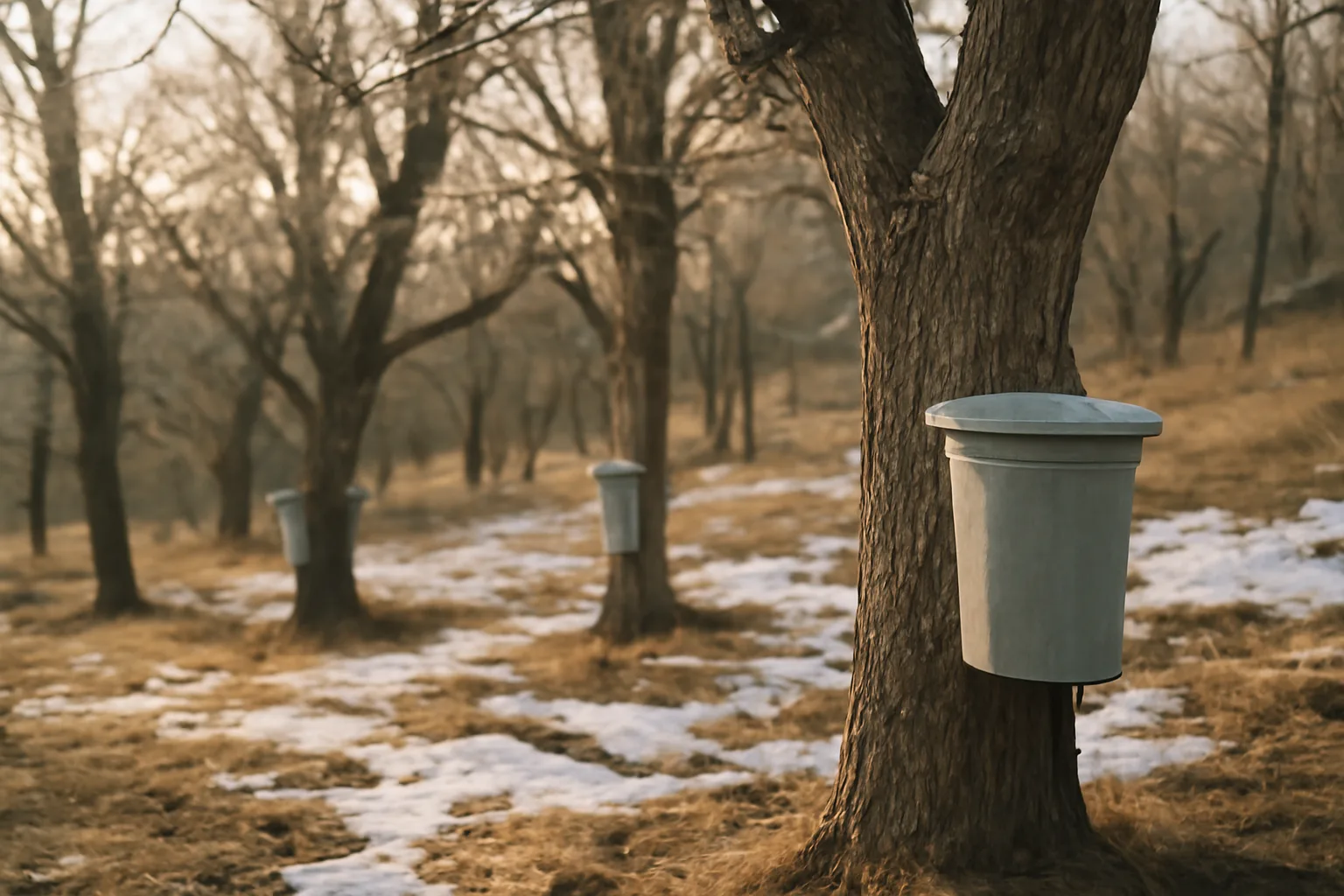
TL;DR
Colorado has no sugarbush board and no tapping license. On land you own, tapping is unlicensed. The paper starts when you sell. The cottage food list names honey, not maple syrup, so most sales need a CDPHE food license and a sales tax license. Confirm forms and fees with CDPHE, your county, and Revenue. The season is short and unreliable.
Do you need a license for sugarbush in Colorado?
No. Colorado does not issue a sugarbush license, a tap permit, or a maple producer number for trees on land you own. Household tapping and household syrup never touch a state board. The license question starts when you sell food, occupy public land, or put up a processing building the county treats as a commercial kitchen.
That is the private-land rule. People still hunt for a board packet because eastern maple states publish one. Vermont wrote a maple statute. New York grades through its agriculture department. Colorado never wrote that law.
What you may still need is ordinary paper that has nothing to do with trees. A sales tax license if you sell a jar. A CDPHE manufactured food registration or a county retail food license if that jar is for customers. A special use authorization if the trees sit on National Forest System land. Local zoning if you build a sugarhouse and pull commercial traffic. Confirm every current form and fee with the office that issues it. Fees move. I will not invent them.[6][7][8][11]
If you never sell, skip the license sections entirely. Tap. Boil. Eat. Keep the woods clean and do not tap trees you do not control.
I have watched people pay consultants for a maple license number. That is money set on fire. There is no number.
An honest first year starts with trees you already own, a few taps, and a thermometer. Paper comes after the first jar you mean to sell.
| What you are doing | Typical paper | Confirm with |
|---|---|---|
| Household tap and boil | None | n/a |
| Sell bottled syrup | Manufactured food or retail food license, plus sales tax license | CDPHE, county health, Revenue |
| Commercial use on National Forest | Special use authorization | Local Ranger District |
| Home kitchen cottage food | Only if the product is on the current list | CDPHE cottage foods |
Is there a sugarbush board in Colorado at all?
No. There is no Colorado sugarbush board, no maple control commission, and no state grade stamp for syrup. Search the Department of Agriculture and CDPHE directories. You will not find a maple desk. The state actors closest to your operation are food safety, sales tax, and, if you are on state or federal land, the land manager.
That vacuum is why copied checklists fail. They were written for New England. Dry-state writeups look more like Colorado than anything out of Vermont. For a side-by-side of how thin the western paper trail is, read the Sugarbush board in Utah and Sugarbush board in Idaho notes after this.
USDA still keeps voluntary maple grades you can put on a label if the syrup meets the standard. That is federal grade language, not a Colorado board action.[9][10]
County health departments do the retail food work. CDPHE runs manufactured food. Neither one will quiz you on tap density the way a Vermont inspector might. They ask about water source, room finishes, bottling, and labels.
Can you even tap maple trees in Colorado?
Yes, but mostly not sugar maple. The USDA PLANTS database does not list sugar maple (Acer saccharum) as native to Colorado.[2] What you actually have is boxelder (Acer negundo) across much of the state and bigtooth maple (Acer grandidentatum) in some western slope canyons.[3][4][14]
Boxelder is a real maple. The sap runs. The syrup is edible. The flavor is not eastern Golden. Some people like it. Some people make one batch and quit. Nobody has good commercial yield data on Front Range boxelder stands. The closest published production tables are the USDA NASS Maple Syrup reports, and those tables do not list Colorado.[1]
Bigtooth maple is the interesting tree if you already live near a canyon stand you control. It is a western maple, not an eastern transplant. Planted street maples in irrigated Front Range yards can run sap in a strange March. HOA rules and city forestry ordinances matter more there than any state tap law. Do not tap a municipal tree.
Planting sugar maple for a future crop is, in my view, a long science project. The species wants summer humidity and even moisture. You can keep a specimen alive with irrigation. Building a 500-tap bush from seedlings on the plains is not a business plan.
Ohio State University Extension says a tree is usually ready for a first tap at about 10 inches in diameter.[13] On a planted sugar maple that can mean three or four decades. On a mature ditch-line boxelder it can mean this February.
How much does sugarbush cost in Colorado?
Hobby scale, on trees you already own, can stay under a few hundred dollars if you boil outside on a propane burner and you accept a messy first year. A small commercial setup (used evaporator, tanks, filter press, bottling table, licensed workspace) runs into the thousands or tens of thousands. Published eastern budgets do not transfer cleanly, because your tree species, season length, and fuel plan are all different.
Ohio State’s hobby fact sheet is the closest plain-language starter budget I trust, and even that is written for a different forest. It uses the old rule of thumb of about 40 gallons of sap per gallon of syrup.[13] Spiles, drop lines, a hydrometer, and filters are cheap. The evaporator and the licensed room are not. Reverse osmosis in year one, for a few dozen boxelders, is money wasted.
Land is the silent line item. If you do not already own tappable trees, buying Colorado acreage for maple is backwards. Compare that to someone shopping woods in a NASS-reporting state.[1]
Confirm CDPHE and county health fees before you price a sugarhouse. I will not post a board fee that can change next month. Secretary of State entity filing fees sit on the current SOS schedule. Sales tax licensing is a Revenue process.[8]
Do not buy stainless you cannot carry until you have boiled sap from your actual trees for one season. Flavor, volume, and your tolerance for a windy March night should decide the second check you write.
If you only need a hydrometer, grade samples, and a sane tap list before you spend on pans, a small kit is enough. MapleSyrupPath sells a $129 Tap + Evaporator + Grade Kit for people who want that starter stack in one box. You can also buy the same classes of tools piecemeal.
How long does sugarbush take in Colorado?
The sap season is short. In the East, operators talk about four to six weeks of freeze-thaw runs. In Colorado the window is choppier. Chinooks wreck a run. A dry cold snap gives you nothing. Some years you get a handful of good nights. Some years almost none. Nobody publishes a reliable Front Range sap calendar.
If you tap mature trees you already own, you can collect sap the first late winter you are ready. Boiling to finished density happens the same day or the next. That part is fast.
If you plant trees, budget decades, not seasons, before a first legal-size tap. Ohio State University Extension puts first tap size around 10 inches in diameter.[13] A planted sugar maple on a harsh, dry site may never become a production tree.
Licensing time is not a published statewide clock. CDPHE and county health do not guarantee a date. Plan review for a food facility can be quick or it can sit for weeks. Confirm current expectations with the office that will inspect you. I will not invent a week count.
Building a workspace, running power, and solving a potable water source is what actually eats months. The trees were never the slow part if they are already standing.
What food license do you need to sell the syrup?
If you sell maple or boxelder syrup in Colorado, treat it as manufactured food unless CDPHE tells you in writing that your exact product is on the cottage food list. Honey is a listed cottage food. Maple syrup is not named on that list.[6] Direct-to-consumer cookies are not your analog. Syrup is a concentrated, bottled product.
The usual path is a manufactured food registration with CDPHE, or a retail food establishment license if you cook and sell in a place the county licenses as retail.[7] Some producers rent a licensed community kitchen and stay out of a home garage. That is often smarter than arguing with a building official about a backyard boil pan.
If finished jars enter interstate commerce, FDA food facility registration also applies. FDA’s registration page states that domestic and foreign facilities that manufacture, process, pack, or hold food for consumption in the United States are required to register.[12] Confirm whether your exact sales pattern trips that rule. A few jars to a neighbor is a different fact pattern than shipping nationwide.
Farmers markets still want the health paper the market manager recognizes. Bring the CDPHE or county license, not a story about tapping rights.
Confirm applications, plan review, and fees with CDPHE and your county health department. A phone call is not approval.
Does the cottage food law cover maple syrup?
Plan on no. Colorado’s cottage food program is a closed list, not a low-risk vibe test. CDPHE publishes the eligible products. Honey is on it. Jams are on it. Maple syrup is not named with them.[6] The statute behind that list is the Cottage Foods Act, C.R.S. 25-4-1614.[15]
Could the list change? Yes. That is why you confirm the current CDPHE cottage foods page before you sell a drop from a home kitchen. Do not take an old blog post as the law.
People ask because honey feels identical. Honey is named. Maple is not. That is the legal difference in Colorado.
Force maple into cottage food without it being listed and you become the training example. Get the manufactured food path, or keep the syrup in the house.
Net sales caps, required label lines, and delivery rules for actual cottage foods are specific and they get amended. I will not recite a dollar cap the legislature can move next session. Read the current CDPHE sheet and the statute text.
What business and tax paper do you file first?
File the boring stuff first if you intend to sell. Pick an entity or a trade name with the Colorado Secretary of State if you want that liability box. Get a sales tax license from the Colorado Department of Revenue before you take money at a market.[8] Then talk to CDPHE and the county about the food side.[6][7]
The order people invert is woods first, then a shiny pan, then panic about tax. Reverse it if jars will leave your property.
Sales tax applies to most retail syrup sales. Wholesale to a store is a different tax fact pattern. Revenue’s sales tax license page is the document to follow, not a group chat.[8]
You do not need a federal EIN until a bank, a payroll, or a tax form asks for one. Plenty of tiny food makers over-form a holding company before they have boiled 10 gallons. That is optional complexity.
Confirm current SOS filing fees on the Secretary of State’s fee schedule. Confirm sales tax license steps on Revenue’s page. Neither fee belongs in a frozen article number.
What if the trees are on public or leased land?
Then you need the landowner’s paper, not a maple license. National Forest commercial use needs a special use authorization from the local Ranger District. The Forest Service describes that document as "a legal document such as a permit, term permit, lease, or easement, which allows occupancy, use, rights, or privileges of National Forest System land."[11] Hobby tapping without authorization is how people end up in a bad conversation with law enforcement.
BLM and Colorado State Land Board parcels have their own commercial use systems. A handshake with a rancher is not a substitute for the state lease if the trees are not the rancher’s to give.
Private leased woods need a written agreement that says you may tap, use the road, and boil (or not) on site. Put duration, cleanup, and who owns the syrup in the writing.
Sugarbush in alaska: what you actually need to know is a useful comparison if you are thinking about public-land access, because the federal special use logic is the same even when the forest is not.
Do not tap along a ditch or a county road because the boxelders look free. Those trees have owners.
What can you put on the label and the jug?
If you call it maple syrup, the federal grade standard is the honest reference. The United States Standards for Grades of Maple Syrup say the product "contains not less than 66 percent by weight of soluble solids" (USDA AMS, standards effective March 2, 2015).[10] A hydrometer or refractometer is not optional if you sell.
Boxelder is still Acer. Some producers label the jar "boxelder syrup" and stay out of a fight about what customers think maple means. I would name the species if it is not sugar maple. It reads cleaner.
USDA grade marks (Golden, Amber, Dark, Very Dark) are voluntary standards, not a Colorado stamp.[9] You may use them if the syrup meets them. You may also skip grade and still sell, as long as the food labeling and net quantity statements are legal.
Packaged food has to meet federal identity and net quantity rules plus Colorado weights and measures expectations. Do not invent a cute volume. Fill to the stated fluid ounces at the stated density.
Organic is a separate USDA NOP certification. It is not a county sticker. Skip it in year one unless you already farm certified woods.
Zoning, ag tax, and county health, what actually bites?
County land use bites harder than forestry. A boil pan in the yard for household syrup is one thing. A commercial sugarhouse with parking, propane, and weekend customers is a structure and a use. Ask planning, not a forum. Fire districts care about outdoor evaporators more than CDPHE does.
Agricultural classification for property tax is a statutory definition, not a story about taps. A handful of spiles on a residential lot will not turn the parcel into ag land. If you are chasing classification, read the current definition and talk to the assessor. Do not count on it.
County health is who you will actually see if you sell retail food. They inspect what the retail rules tell them to inspect. Water source, hand sink, finish surfaces, storage. Your romantic shack fails that list. Budget a boring room.
Compare dry-state land rules with sugarbush board in arizona and sugarbush board in california if you are also looking at western slope parcels. The trees change. The county planning call does not.
What I would spend money on in year one (and what I would skip)
I would tap trees I already own. I would buy a good thermometer, a hydrometer, filters, food-grade buckets, and a cheap outdoor boil setup. I would not buy a new professional evaporator, vacuum tubing, or reverse osmosis. I would not plant 200 sugar maples and call it a business.
I would boil one season, taste the boxelder honestly, and only then call CDPHE if I still wanted to sell. I would read Sugarbush board in Illinois only as a reminder of what a real maple state looks like on paper, so I do not import those forms into a Colorado county.
Skip anyone selling a "sugarbush license." Skip city trees. Skip ag-tax consultants on a suburban lot. Spend on potable water and a workspace an inspector can walk without wincing, if you sell.
If you want our internal first-year paper checklist, it lives at /start. Use it as a reading order, not as a permit. MapleSyrupPath is an independent publisher. We are not CDPHE and we do not file anything for you.
Confirm every fee and form with the office that issues it.
Frequently asked questions
Do you need a license for sugarbush in Colorado?
Not for tapping trees you own and boiling syrup for your household. Colorado has no sugarbush board and no tap permit. Selling syrup is different. Most sales need CDPHE manufactured food or county retail food licensing plus a Department of Revenue sales tax license. Confirm the current applications with those offices before you take money.
How much does sugarbush cost in Colorado?
If you already own mature boxelders, a household year can stay in the low hundreds for taps, buckets, filters, a hydrometer, and a propane boil setup. A licensed commercial path costs thousands or more once you add an evaporator and an inspectable room. Eastern published budgets are only a rough analog. Confirm health-department fees with CDPHE and your county. Do not buy RO in year one.
How long does sugarbush take in Colorado?
Sap season is a short, unreliable late-winter window, often just scattered freeze-thaw nights, not a steady four to six weeks. Existing trees can be tapped the first season you are ready. Planted sugar maples can take decades to reach the usual 10-inch first-tap size. Food-license timing is not a statewide guarantee. Confirm plan review with CDPHE or county health.
Is sugar maple native to Colorado?
No. The USDA PLANTS database does not list sugar maple (Acer saccharum) as native in Colorado. Boxelder (Acer negundo) is the common native maple people actually tap. Bigtooth maple (Acer grandidentatum) shows up in some western slope canyons. Planted yard maples exist in irrigated towns, but city and HOA rules often block tapping.
Can I sell boxelder syrup as maple syrup in Colorado?
Boxelder is a maple (Acer), and USDA’s maple standard is written on the Acer genus, not on sugar maple alone. I would still label the species if it is not sugar maple, because customers taste the difference and you do not want a naming fight. Density still has to meet the 66 percent soluble solids line if you use maple grade language. Confirm labeling with CDPHE if you sell.
Do I need a Colorado water right to collect sap?
Ordinary tree tapping is not treated like a ditch diversion or a well. Colorado administers surface water and groundwater under prior appropriation, and sap collection is not a normal decreed use. Do not mess with a spring, a headgate, or a well in the process. If your plan is somehow tied to a water structure, ask the Division of Water Resources. I am not your water lawyer.
Can I tap trees in a Colorado National Forest?
Not as a commercial operation without a special use authorization from the local Ranger District. The Forest Service treats that authorization as the legal document that allows occupancy or use of National Forest System land. Casual tapping without paper is a good way to get removed. Ask the district first. Hobby use is not a free pass.
Is maple syrup a Colorado cottage food?
Plan on no. CDPHE’s cottage food list names products such as honey, jams, and certain baked goods. Maple syrup is not named with them. The Cottage Foods Act is C.R.S. 25-4-1614. Confirm the live list before you sell from a home kitchen. If it is not listed, use manufactured food or retail food licensing instead.
Do I need an FDA food facility registration?
If you manufacture, process, pack, or hold syrup that enters interstate commerce, FDA food facility registration generally applies. A few jars handed to a neighbor inside Colorado is a different fact pattern than shipping online. Read FDA’s food facility registration page and confirm your sales pattern. State CDPHE paper does not replace a federal registration when the federal rule attaches.
How many taps can one Colorado tree take?
Follow published tapping guidelines, not folklore. Ohio State’s hobby sheet treats about 10 inches in diameter as first-tap size, with one tap on a smaller mature tree. Bigger trunks can take more, but boxelders are often weaker than eastern sugar maple. When in doubt, under-tap. A dead tree makes no second season.
Will a few taps get my land agricultural tax classification?
Almost certainly not on a regular house lot. Colorado agricultural classification follows a statutory land-use definition and assessor practice, not a romance about spiles. A handful of taps will not reclass a residential parcel. If you think you have a real agricultural operation, talk to the county assessor and read the current definition before you spend money on the argument.
Can I sell syrup at a Colorado farmers market?
Yes, if you have the food license the market manager and the county expect, plus a sales tax license for retail sales. Cottage food is the wrong folder unless CDPHE lists your exact product. Bring printed licenses, not a verbal claim that maple is like honey. Ask the market and county health before you pay for a stall.
What density does sold maple syrup need to hit?
USDA grade standards require maple syrup to contain not less than 66 percent by weight of soluble solids. That is the 66 Brix line people quote. Sell thin syrup and you have a spoilage problem and a labeling problem. Use a hydrometer or refractometer. Finish hot, filter, and pack clean. Confirm any extra state label lines with CDPHE if you are licensed.
Sources
- USDA NASS, Maple Syrup Production reports: USDA NASS publishes annual maple syrup production tables, and those tables do not list Colorado
- USDA PLANTS profile for Acer saccharum: Sugar maple is not listed as a native species in Colorado
- USDA PLANTS profile for Acer grandidentatum: Bigtooth maple occurs in parts of the western United States including Colorado
- USDA PLANTS profile for Acer negundo: Boxelder is a widespread native maple that occurs in Colorado
- CDPHE Cottage Foods program page: Colorado cottage food eligibility is a published product list that names honey and does not name maple syrup
- CDPHE Retail Food program page: Retail food establishments in Colorado are licensed and inspected under the state retail food program
- Colorado Department of Revenue, Sales tax license: Retail sellers need to follow Revenue’s sales tax license process before collecting sales tax
- USDA AMS, Maple Syrup Grades and Standards: USDA maintains voluntary United States grade standards for maple syrup
- USDA AMS, United States Standards for Grades of Maple Syrup (PDF): Maple syrup must contain not less than 66 percent by weight of soluble solids under the federal grade standards effective March 2, 2015
- USDA Forest Service, Special use application process: Commercial use of National Forest System land requires a special use authorization such as a permit, term permit, lease, or easement
- FDA, Registration of Food Facilities and Other Submissions: Facilities that manufacture, process, pack, or hold food for consumption in the United States are required to register with FDA
- Ohio State University Extension, Hobby Maple Syrup Production (FOR-36): A tree is usually ready for a first tap at about 10 inches in diameter, and about 40 gallons of sap make a gallon of syrup
- CSU Extension, Native Trees for Colorado Landscapes (7.421): Colorado State University Extension publishes native-tree guidance used to identify species actually suited to Colorado sites
- C.R.S. 25-4-1614, Cottage Foods Act (Justia 2023): Colorado’s Cottage Foods Act is codified at C.R.S. 25-4-1614