Last updated 2026-08-19
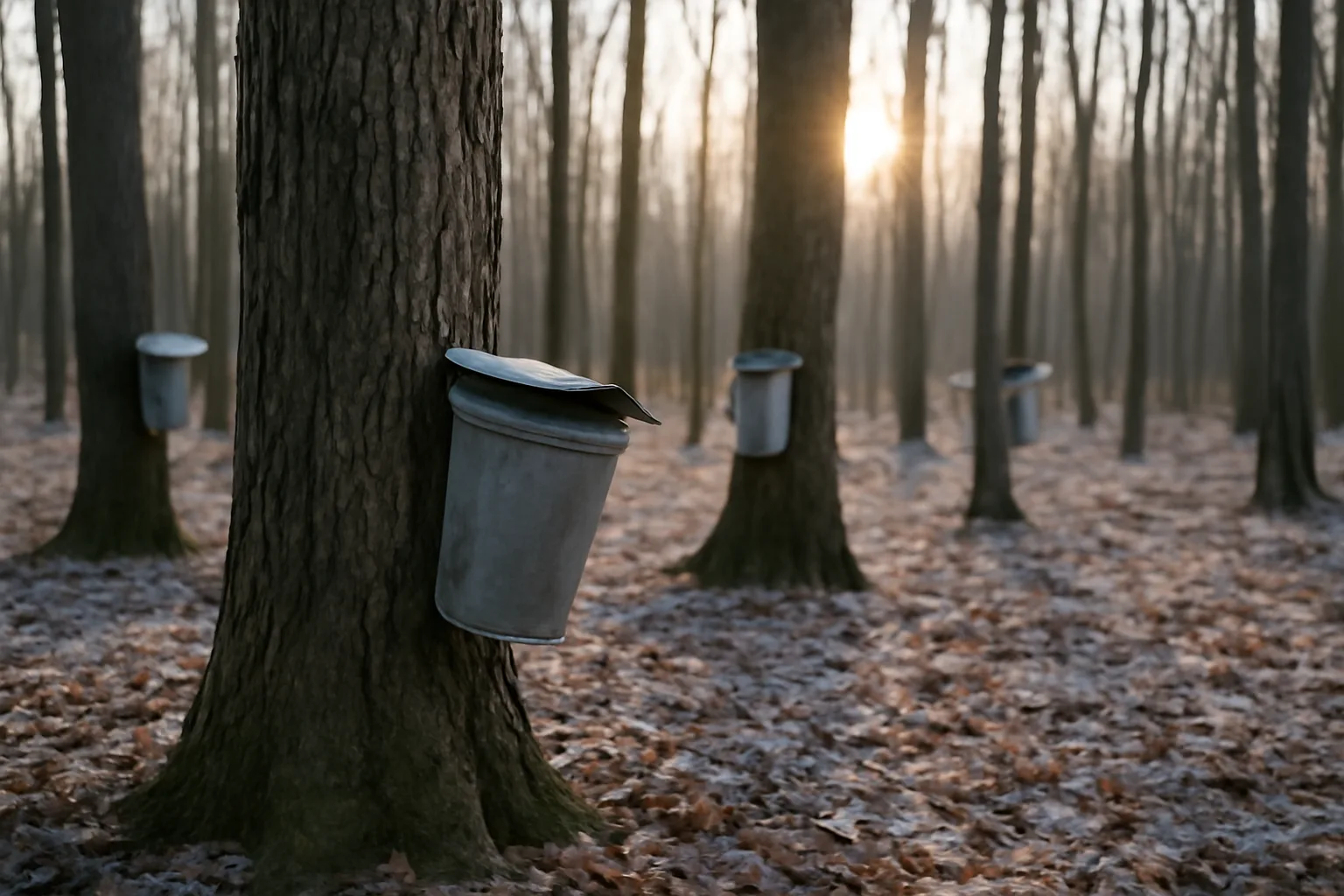
TL;DR
Delaware has no maple producer license and no sugarbush renewal board. Household tapping usually needs no state maple paper. Selling syrup means a Division of Revenue business license, plus food paper if you process for sale. The sap season is short and hit or miss. Confirm current fees and forms with the issuing agency. Nobody can promise approval timing or a usable run of freeze-thaw nights.
What is sugarbush renewal in Delaware?
Sugarbush renewal in Delaware means keeping maple trees productive and, if you sell syrup, keeping ordinary business and food paper current. There is no maple producer license to renew. USDA NASS does not include Delaware in its 10-state maple syrup survey [5].
If you only tap trees you control and keep the syrup, renewal is forestry and weather. You protect bark, retap with honest spacing, and wait for freeze-thaw nights that may not arrive on any useful schedule. That is the whole hobby path.
If you sell, renewal is the Delaware business license cycle plus any food permit your process triggers. Those filings sit at the Division of Revenue and, if you process food for sale, at the Division of Public Health [3][10]. County zoning shows up only if you build or change a sugarhouse.
Do not copy Vermont folklore onto a New Castle County lot. Delaware woods run oak, hickory, sweetgum, and loblolly more than sugar maple [7]. Northern New Castle County is the only stretch I would walk first for Acer saccharum. South of the canal you are hunting scattered trees, not a bush.
Treat sugarbush Delaware work as a woodland hobby with optional farm-gate jars, not a plan you take to a lender. The paper is real. The crop is not.
Do you need a license for sugarbush in Delaware?
You do not need a maple-specific license in Delaware. Household tapping on land you control generally needs no state maple permit. Selling syrup requires a Delaware business license from the Division of Revenue, and food paper may apply if you process for sale [1][3].
Title 30 of the Delaware Code is the business-license title. Chapter 23 lists occupations and trades that must obtain a license and pay the occupation tax before they engage in business [1]. Manufacturing and retail classes live in nearby chapters of the same title. Which class fits a backyard boil that sells a few cases is a Division of Revenue question, not a guess you should make off a blog.
A clean split looks like this.
| Path | Typical paper | Who confirms it |
|---|---|---|
| Household use only | No maple license | Your deed or written land permission |
| Direct sales in Delaware | State business license, labels, possible food permit | Division of Revenue, Division of Public Health |
| Wholesale or interstate | Those filings plus possible FDA facility registration | FDA, DPH, Revenue |
If you never sell, I would not open a state license file just because you hung a tap. Sell even a dozen jars at a market and you should get the business license question answered in writing before the first pint leaves the property [3].
Delaware does not levy a retail sales tax. You can still owe license tax and gross receipts tax under Title 30. Confirm current tax types and class on the Division of Revenue site. Do not treat a neighbor's old receipt as the fee schedule [3].
Federal food facility registration is a separate fork. FDA states that "Domestic and foreign facilities that manufacture, process, pack, or hold food for human or animal consumption in the United States are required to register with the FDA." [10] Farms and some retail operations have exceptions. Read the exception. Do not assume a garage evaporator is a farm.
How much does sugarbush cost in Delaware?
Nobody publishes a solid Delaware sugarbush budget. A backyard tap-and-boil setup can stay in the low hundreds of dollars if you already own mature trees and burn wood you already have. Land, a permitted sugarhouse, and commercial evaporators blow past that fast. State license dollars exist, but you confirm the current amount with Revenue [1][3].
Tree gear is the cheap part. Simple spouts and buckets often land around a few dollars per tap if you buy basic hardware. Tubing, fittings, and a vacuum setup cost more and make less sense on a scattered Delaware lot. I would not string mainline through a mixed oak stand for 40 widely spaced red maples.
The evaporator is where people waste money. A small flat pan over a masonry arch can finish a hobby run. A new commercial oil-fired rig is a waste of money on a climate that may give you two decent weeks. Used restaurant pans get people in trouble on food-contact surfaces and lead solder. Buy food-grade or do not sell.
Land is the silent line item. USDA land-value summaries put Mid-Atlantic farm real estate well above cheap northern maple country. Confirm the current Delaware average in the latest USDA Land Values report rather than recycling a number from memory. If you do not already own the trees, buying Delaware acres to start a sugarbush is usually a bad trade [5].
Time is a cost. Boiling 40-plus gallons of sap toward one gallon of syrup is slow, wet work. At 2 percent sugar, the Jones Rule of 86 calls for about 43 gallons of sap per gallon of syrup [12]. Delaware red maple often runs thinner than that. Budget fuel and hours before you budget taps.
State paper has a price, and it changes. Title 30 sets license classes and occupation taxes. I will not quote a dollar figure here because the General Assembly and the Department of Finance can change the schedule. Ask Division of Revenue for the current class and amount for your exact activity [1][3].
Food-permit fees, county building permits, and weights-and-measures device registration are separate checks if they apply. Confirm each one. Stacking guesses is how a hobby turns into an ugly spring.
How long does sugarbush take in Delaware?
A usable sap run lasts a few weeks in late winter if nights freeze and days thaw. You can tap mature trees the first year you control them. Growing a new bush from seedlings takes decades. License timing is whatever Revenue and DPH are doing that week, and nobody should promise you a date [3][7].
Sap physics does not care about your calendar. You need below-freezing nights and above-freezing days. Wilmington and Dover get those stretches, then they lose them in a warm rain. Some years you get a short run in February. Some years you mostly wash equipment.
From first tap to first jar, a backyard line can finish in a single season. That assumes the trees are already at tapping size. Common extension guidance is about 10 to 12 inches diameter at breast height for a first tap [12]. From a seedling to that diameter in Delaware, nobody has a tight local study. Sugar maple is a slow tree. Think decades, not a five-year orchard plan [7].
Stand renewal in the forestry sense is even slower. You are not replanting a tomato bed. Sugar maple wants shade when it is young and a long tenure in the canopy [7]. If your "renewal" means cutting and hoping maple fills the gap, walk the lot with Delaware Forest Service or University of Delaware Extension before you drop anything [8][9].
Business paper is the only clock you partly control. Delaware business licenses come through the Division of Revenue, and renewals are a recurring state process, not a maple-season process [3]. Processing time is not something this page will invent. File early. Keep the receipt.
If you need an EIN, the IRS online application is the federal piece and it is separate from Dover [13]. Again, no promised turnaround here.
What paper do you file if you sell maple syrup in Delaware?
Selling syrup in Delaware is a business-and-food filing problem, not a maple-board filing. Expect a state business license conversation with the Division of Revenue, a food-process conversation with the Division of Public Health, and ordinary labeling and net-contents rules [3][10][14].
Start with identity. A sole owner can often file in a personal name. Many people still get an EIN so a market organizer or a bank has a number to hang a form on [13]. Then use the Division of Revenue license application for the actual state license [3].
Next is the food question. If you concentrate sap with heat and sell the result, you are making a food. USDA AMS describes the product this way: "Maple syrup is the liquid food derived by concentration and heat treatment of the sap of the maple tree (Acer) or by solution in water of maple sugar (maplesugar) made from such sap." [4] That definition sits inside grade standards, but it also tells you what regulators think you made.
Ask DPH, in writing, whether your setup is a food establishment, a processor, or something they do not permit in a home kitchen. Do not decide that yourself after reading a cottage-food thread from another state. Delaware's cottage rules, if they apply at all to syrup, are a DPH call.
Labels need a name, net contents, and honest grade language if you use USDA grade names. Delaware's weights and measures law is Title 6, Chapter 51. Packaged goods have to meet net-quantity rules [14]. A pretty kraft sticker that says "pint" on a 12-ounce bottle is how you meet an inspector on a bad day.
Ship out of state or wholesale into stores and you read FDA facility registration and the farm exemption text yourself [10]. Interstate food is not a farmers-market handshake.
Does Delaware have a maple grading or producer license?
No. Delaware has no maple producer license, no sugarbush renewal certificate, and no state maple grade stamp. USDA NASS maple estimates cover 10 major producing states, and Delaware is not one of them [5]. If someone sold you a "Delaware maple permit" as a special crop license, ask them to name the statute.
You can still use federal grade language. USDA AMS maple syrup grade standards took effect on March 2, 2015 [4]. The retail Grade A color and flavor classes are Golden, Amber, Dark, and Very Dark. Those names are voluntary federal standards unless a buyer or another state's law makes them mandatory on the jar you ship there.
Print the AMS standard and keep it with the hydrometer. Grade is about color, flavor, and density. Thin syrup that spoils in July is not a branding problem. It is a process problem.
Neighboring paper cultures do not transfer. Connecticut is inside the NASS maple set and has a real producer culture you can study if you want a contrast [5]. Delaware borrowed none of that structure. Your renewal packet, if you have one, is a business license renewal, not a sap license.
For how a real maple state handles yearly paper, read sugarbush renewal in Connecticut. Do not import their forms into Dover.
Can you actually run a sugarbush in Delaware weather?
You can tap maples in Delaware some winters. You cannot count on a commercial season. The biology works only when nights freeze and days thaw, and the Mid-Atlantic loses that pattern easily [7][12].
Sugar maple (Acer saccharum) is the tree people mean when they say sugarbush. USDA PLANTS lists it as a northeastern hardwood. Delaware sits on the ragged southern and coastal edge of that range [6][7]. Red maple is far more common on Delmarva and it will run sap. The sugar is often lower, so you boil longer for the same jar.
The Forest Service is blunt about site. Sugar maple wants moist, well-drained soils and a northern hardwood climate [7]. A wet Coastal Plain flat with sweetgum and red maple is not that site. A shaded Piedmont slope in northern New Castle County is closer.
I have a simple field test. If you cannot find a dozen sugar maples above 10 inches diameter on the property without a treasure hunt, you do not have a sugarbush. You have a few tapable trees. That can still be a good February.
Production data will not rescue the fantasy. NASS publishes maple syrup production estimates for 10 major producing states, and Delaware is not one of them [5]. When a federal survey skips you, that is information.
Plan for a short window, spoiled runs after a 60-degree rain, and years you freeze equipment for nothing. If that still sounds like a good Saturday, proceed. If you need syrup income to carry the land payment, stop.
What land and forestry rules apply to a Delaware sugarbush?
Land rules are mostly ownership, county zoning, and ordinary Delaware forestry programs. There is no special sugarbush zoning class. You need the legal right to tap the trees, and you need the county's blessing if you build [8][9].
Tap only trees you own or trees you have in a written permission. A handshake with a hunting buddy is a thin file when a landowner changes. I would not tap a boundary line tree. I would not tap a street tree. I would not tap a park tree.
If your "renewal" means cutting, planting, or rewriting the stand, call Delaware Forest Service before the saw starts. State forestry lives in Title 3, Chapter 10 [8]. Stewardship plans, cost-share chatter, and harvest advice run through that shop and through University of Delaware Extension woodland programs [9]. Some pine harvest rules on the southern end of the state have nothing to do with maple and everything to do with cutting the wrong acre the wrong way.
County building and zoning are local. New Castle, Kent, and Sussex do not share one code. A boil pan under a fly and a 400-square-foot sugarhouse are different buildings. Ask the county whether you need a permit before you pour a slab. This page will not guess your setback.
Public land is not your bush. Delaware State Parks and state forest rules are written for recreation and timber management, not freelance taps. If you think you found a loophole, ask in writing and expect a no.
Invasive vines, deer browse, and wet soils will wreck maple regeneration faster than a missing permit. Walk the lot in August, more than in February. Dead understory is a renewal problem you cannot boil your way out of [7][9].
Do you need a food permit to boil sap and sell syrup?
You may. Household syrup you never sell is food for you, not a DPH file. Syrup you sell is a processed food, and Delaware's Division of Public Health is the shop that says whether your kitchen, shack, or garage is legal for that process [10].
I would not start from cottage-food Twitter. Some states allow maple under a cottage law. Some do not. Delaware's answer has to come from DPH for your process, your volume, and your kitchen. Ask them. Get the email.
If they classify you as a food establishment, you are in Delaware's food code world, which follows the FDA Food Code model. That can mean sinks, surfaces, water source, and a plan review. It can also mean you should not have started construction yet.
Boiling sap is a concentration step with heat. It is not a raw agricultural handoff of unprocessed produce. Inspectors know the difference. So do wholesale buyers.
Water and fuel matter. A hose from an untreated surface pond into a finishing pan is a bad look. So is finishing syrup in a pot that last cooked chili. If you mean to sell, keep food-contact surfaces for food.
FDA registration sits on top of state paper when you manufacture, process, pack, or hold food for U.S. consumption, unless an exemption fits [10]. Read the current FDA page. Screenshot it. Do not rely on a memory of the farm definition from 2016.
How do you renew a Delaware business license for maple sales?
You renew whatever license the Division of Revenue issued you, on their cycle, with their form. There is no maple renewal checkbox. If you do not sell, you likely have nothing maple-related to renew [3].
Delaware business licenses are a Department of Finance product. The business-license pages are the live instructions [3]. Renewal windows, grace periods, and online account steps change. Pull the current renewal notice or log into the account they gave you. Do not renew off a printout from three seasons ago.
Gross receipts tax, if you owe it, runs on a separate rhythm from the license card. Filing frequency depends on how Revenue classified you and on volume thresholds they publish. Confirm that on the current Revenue page. I will not invent a monthly-versus-quarterly cutoff.
Keep the license class honest. If you told them you were a retailer and you are now wholesaling to shops in Pennsylvania, say so. Wrong class is how a cheap license becomes an expensive letter.
Food permits, if DPH issued one, renew on DPH's clock, not Revenue's. County permits renew on the county's clock. Put the three dates in one place. February is a stupid month to discover a lapsed food file.
No one on this site can promise an approval date. File early. Pay the invoice they send. Keep PDF copies.
What should you buy for a Delaware sugarbush, and what is a waste?
Buy taps, food-grade pans, a good thermometer, a hydrometer, and a written grade sheet. Skip vacuum pumps, reverse-osmosis units, and new commercial evaporators until you have several real Delaware seasons behind you [4][12].
I would start with 10 to 25 taps on the best trees, buckets or short drops, and a small wood-fired pan. That kit teaches you whether the lot actually runs. A 200-tap mainline on a warm coastal winter is how you own a lot of plastic.
Grade tools are not optional if you sell. USDA Grade A classes are Golden, Amber, Dark, and Very Dark under the March 2, 2015 standard [4]. A $20 hydrometer saves you from selling thin syrup. That is money well spent.
Waste of money, in this climate: brand-new stainless steam-away gear, a dedicated sugarhouse you permit before year two, and any marketing that implies Delaware is a maple state. Also a waste: tapping trees under 10 inches, retapping old holes, and buying every spout color in the catalog [12].
If you want a simple tap, evaporator, and grade checklist in one bundle, MapleSyrupPath sells a $129 one-time Tap + Evaporator + Grade Kit. It does not replace Delaware filings and it does not make the weather colder.
Used equipment is fine if you can prove food-contact surfaces are safe. Mystery solder is not rustic. It is a recall waiting on a shelf.
How does sugarbush paper in Delaware compare with real maple states?
Delaware's paper path is generic business and food law. Real maple states add crop-specific grade rules, sometimes a producer license, and a culture of extension maple schools. NASS already told you which club Delaware is not in [5].
Connecticut is the closest NASS maple state most Delaware readers will recognize. Their producers work inside an actual maple volume number. Start with sugarbush renewal in Connecticut if you want that contrast.
Illinois sits on the western edge of commercial maple and still has more of an industry conversation than Dover does. Sugarbush renewal in Illinois is the Midwest version of the same question.
If you want states that look more like Delaware (thin native sugar maple, no NASS line, mostly hobby paper), read sugarbush renewal in Alabama, sugarbush renewal in California, sugarbush renewal in Colorado, or sugarbush renewal in Idaho. The lesson repeats. No maple board does not mean no license. It means the license has another name.
I would rather file a boring Delaware business license than invent a crop statute that does not exist. Copying a Vermont producer packet into a Kent County kitchen does not impress DPH.
Where do you confirm Delaware fees and forms before you spend?
Confirm fees and forms with the agency that cashes the check. Division of Revenue for the business license. Division of Public Health for food process questions. Your county for buildings. FDA for facility registration if you manufacture for sale beyond a narrow farm or retail exemption [3][10].
Pull Title 30 yourself if you like reading statutes, then still call Revenue [1]. Statutes tell you that a license exists. The live fee table and the online application live on Revenue's business-license pages [3]. Same habit for Title 3 forestry and Title 6 weights and measures [8][14].
University of Delaware Extension can walk woodland questions. They will not stamp a food permit [9]. Penn State maple pages are honest on sap math and tapping size if you want Mid-Atlantic production detail Delaware never wrote down [12].
This page is a map of the paper, not legal advice. MapleSyrupPath is an independent publisher, not a law firm and not a filing service. No approval, quota, or timing promise lives here.
If you still want the tap, evaporator, and grade bundle after you talk to Revenue, the kit page is /start. File the Delaware paper either way.
Frequently asked questions
Do you need a license for sugarbush in Delaware?
Not a maple license. Delaware has no sugarbush or maple producer permit. Tapping for household use on land you control usually needs no state maple paper. Selling syrup means a Division of Revenue business license, and DPH may require food paper. Confirm your exact facts with those offices before you sell a jar.
How much does sugarbush cost in Delaware?
A backyard setup on trees you already own can stay in the low hundreds of dollars. Commercial evaporators, land purchases, and a permitted sugarhouse cost much more and usually fit poorly here. State license fees exist under Title 30 but change. Ask Division of Revenue for the current class and amount. Nobody publishes a Delaware crop budget.
How long does sugarbush take in Delaware?
Mature trees can be tapped the first late-winter season you control them. The sap window is a few weeks if freeze-thaw nights actually happen. Growing tapable maple from seedlings takes decades. Business-license timing is set by Division of Revenue, not by this page. Do not plan income around a guaranteed run.
Is maple syrup production legal in Delaware?
Yes. Nothing in state law bans boiling sap. Selling the syrup puts you under ordinary business, food, labeling, and (if they apply) FDA rules. Legality of the hobby is not the same thing as a ready market or a reliable season. Ask DPH before you sell food from a home kitchen.
Can I tap trees in a Delaware state forest or park?
Plan on no. Public trees are not a free sugarbush. State Parks and Forest Service manage those acres for public use and timber programs, not freelance taps. If you think you have a special written authorization, get it on letterhead first. Tapping a park maple is a good way to meet an enforcement officer.
What maple species can I tap in Delaware?
Sugar maple is the real syrup tree, and it is scarce except in parts of northern Delaware. Red maple is common and legal to tap on land you control, but the sap is often lower in sugar so you boil longer. Silver maple shows up on wetter ground. Identify the tree before you drill it.
Do I need an EIN to sell syrup in Delaware?
Not always, but many market organizers and banks want one. The IRS issues EINs online for free. An EIN does not replace the Delaware business license. Get the federal number if you need it, then finish the Division of Revenue file. Confirm whether your county or a market asks for both.
Does Delaware charge sales tax on maple syrup?
Delaware does not levy a retail sales tax. You can still owe a state business license tax and gross receipts tax under Title 30 if you are engaged in business. Confirm current tax types with Division of Revenue. Out-of-state buyers and platforms may have their own collection rules that Dover does not erase.
How many taps can a Delaware maple take?
Extension tapping guides commonly start one tap around 10 to 12 inches diameter at breast height and add taps only as diameter grows. Weak, wounded, or street-stressed trees get zero. Delaware has no separate tap statute. Follow conservative extension spacing so you still have a tree in ten years.
Do I need a building permit for a sugarhouse?
Maybe. Counties run building and zoning in Delaware. A pot under a pop-up tent is not the same file as a new heated building with gas or a commercial sink. Ask New Castle, Kent, or Sussex before you pour concrete. State food rules can also dictate finishes inside that building if you sell.
Is there a Delaware maple report or crop insurance line?
USDA NASS maple syrup estimates cover 10 major producing states. Delaware is not on that list, so there is no annual Delaware maple production number to quote. Crop insurance and FSA questions go to your local USDA office with whatever documentation they ask for. Do not invent acreage that is really a backyard line.
Can I wholesale Delaware syrup across state lines?
You can sell food across state lines if you meet FDA and the destination state's rules. That often means facility registration unless a farm or retail exemption truly fits, plus honest labels and density that will not spoil. Delaware paper alone does not clear Pennsylvania or Maryland retail. Read FDA's current registration page first.
How often do I renew a Delaware business license?
On the Division of Revenue cycle for the license they issued, which is a recurring state process. Food permits, if any, renew with DPH on a different clock. Pull the current renewal notice from your Revenue account. This page will not invent a due date or a grace period.
Who should I call first in Delaware?
If you will sell, call Division of Revenue about the business license and email DPH about the process. If you will only tap household trees, talk to whoever owns the land and, for stand work, Delaware Forest Service or UD Extension. Save FDA for wholesale or interstate manufacturing questions.
Sources
- Delaware Code Title 30, Chapter 23 (Occupations Requiring Licenses): Delaware Title 30, Chapter 23 requires listed occupations and businesses to obtain a state license and pay the occupation tax before engaging in business.
- Delaware Division of Revenue, Business Licenses: The Division of Revenue administers Delaware business licenses and publishes the live application and class information.
- USDA AMS, United States Standards for Grades of Maple Syrup (effective March 2, 2015): Federal maple syrup grade standards took effect March 2, 2015, define maple syrup, and set Grade A Golden, Amber, Dark, and Very Dark classes.
- USDA NASS, Maple Syrup Production: USDA NASS maple syrup estimates cover 10 major producing states, and Delaware is not among them.
- USDA PLANTS Database, Acer saccharum (ACSA3): Sugar maple (Acer saccharum) is the native northeastern maple species used for traditional sugarbush syrup.
- USDA Forest Service, Silvics of North America: Acer saccharum: Sugar maple is a slow-growing northern hardwood that wants moist, well-drained sites and a climate with real winter freeze-thaw.
- Delaware Code Title 3, Chapter 10 (State Forestry): Delaware state forestry authority and related forest practice provisions live in Title 3, Chapter 10.
- University of Delaware Cooperative Extension, Forestry: UD Cooperative Extension provides Delaware woodland management education for private landowners.
- FDA, Registration of Food Facilities: Domestic and foreign facilities that manufacture, process, pack, or hold food for U.S. consumption must register with FDA unless an exemption applies.
- Penn State Extension, Maple Syrup Production: Mid-Atlantic extension guidance covers sap-to-syrup ratios, tapping-size practice, and hobby-scale production methods used when a state has little local maple literature.
- IRS, Apply for an Employer Identification Number (EIN) Online: The IRS issues EINs online to businesses that need a federal identification number.
- Delaware Code Title 6, Chapter 51 (Weights, Measures and Standards): Delaware weights and measures law governs packaged commodity labeling and net quantity for goods sold by weight or measure.