Last updated 2026-08-21
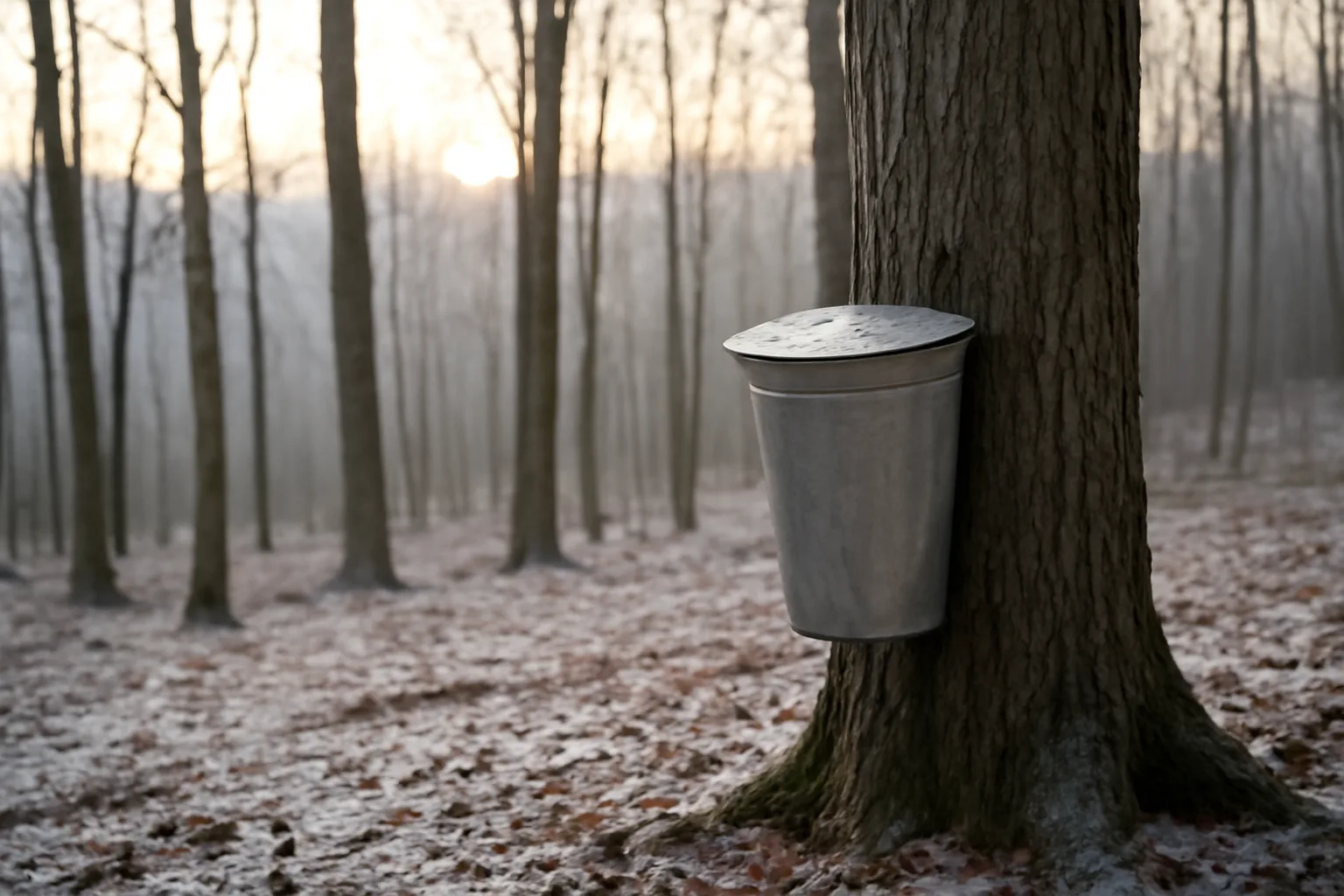
TL;DR
Georgia has no sugarbush board and no maple-specific license. Tapping for your own table is mostly a land and tree question. Selling syrup puts you under Georgia Department of Agriculture food rules, local business tax paper, sales tax, and USDA grade practice. Sap windows in the mountains are short. Confirm fees and forms with GDA and your county. No one can honestly promise a statewide approval time.
Is there a sugarbush board in Georgia?
No. Georgia has no maple board, no sugarbush license, and no state grade stamp for syrup.
People type "sugarbush board" because Vermont, New York, and Maine actually staff maple programs. Georgia does not. The Georgia Department of Agriculture runs food. The Secretary of State runs entities. Your county or city runs the occupational tax certificate. The Forestry Commission cares about logging BMPs, not spiles. That split is the whole story.
Stop hunting for a maple office. You will waste weeks. Call GDA Food Safety if you plan to sell food, and call the county clerk if you plan to take money. A sugarbush Georgia plan that opens with a board application will stall, because the board is not there.
USDA still writes the grade language most buyers recognize. The 2015 United States Standards for Grades of Maple Syrup say maple syrup is "the liquid food derived by concentration and heat treatment of the sap of the maple tree (Acer)" and that it "contains not less than 66.0 percent by weight of soluble solids derived solely from such sap." [1] Georgia never wrote a replacement standard. If you grade, you are using the federal language or a private buyer spec.
USDA's National Agricultural Statistics Service runs an annual Maple Syrup survey. Georgia is not one of the states in that survey. [2] That is the cleanest proof that the commercial path here is a food path, not a maple path.
Compare that with a state that actually staffs maple work, like sugarbush board in Connecticut, and you will see how different the file folder looks.
Do you need a license for sugarbush in Georgia?
No sugarbush license exists, so you cannot get one. Personal tapping on land you control generally needs no state food permit. Selling syrup is a different animal, and the paper (if any) is a food license or a local business certificate, not a maple ticket.
Keep the use case honest. If the jars never leave your family, GDA is not your first call. If you sell at a market, ship online, or wholesale to a store, you are in food law. Confirm the current category with GDA before you print labels. I will not invent a fee or a wait time. Those change, and the only safe number is the one on the form they hand you this year.
Cottage food is the path people hope for. GDA's cottage food program covers certain non-potentially hazardous foods made in a home kitchen. [5] Maple syrup finishes as a high-solids product at the USDA minimum, but high sugar is not the same as "on the allowed list." Lists get amended. Ask GDA, in writing, whether maple syrup is an allowed cottage food product right now. If they say no, you are looking at a licensed food establishment or a rented commercial kitchen.
Wholesale, private-label, or interstate packing usually means a manufactured food setup plus, in many cases, FDA food facility registration. FDA says domestic and foreign facilities that manufacture, process, pack, or hold food for consumption in the United States "must register with FDA." [6] Registration itself is free. It is not a Georgia license and it is not permission to skip GDA.
Local paper still applies when you sell. Cities and counties issue occupational tax certificates. The Secretary of State files LLCs and corporations if you want an entity. [8] None of that is a sugarbush board.
Southern neighbors run the same confusion. The sugarbush board in Alabama writeup is worth a look if you tap across the line too.
How much does sugarbush cost in Georgia?
There is no official Georgia sugarbush fee schedule, so anyone quoting a single statewide startup cost is making it up. Your real spend is land access, taps and pans, fuel, jars, and whatever food license your sales model triggers.
On land you already own in the Blue Ridge or the upper Piedmont, a first hobby season can stay in the low hundreds of dollars if you scrounge a pan and buy spiles, food-grade buckets, a thermometer, and a hydrometer. Fuel will surprise you. Oil, wood, or propane to boil thin southern sap is the line item people forget. I would not buy reverse osmosis, vacuum mainlines, or a framed sugarhouse until I had one ugly season of real sap weights from my own trees.
If you do not own maple ground, land dwarfs every other cost. I will not invent a per-acre price. North Georgia timberland moves with road frontage, steepness, and whether the tract already sits in a conservation easement. Price the tract with a local broker and a forester, not with a maple blog.
License and tax costs are real but secondary, and they are not stable enough to reprint here. GDA posts food establishment fees. The Secretary of State posts entity filing fees. [8] Counties post occupational tax. Georgia's state sales and use tax rate is 4 percent, and local governments add their own. [7] Register if you have taxable sales. Confirm the combined rate for your ship-from county on the Department of Revenue chart, not on a forum screenshot.
A rented commercial kitchen, if cottage food is closed to you, will cost more than the evaporator. That rental is often the right call. Building a licensed plant for a few hundred taps of unreliable southern sap is how people go broke.
Skip the chrome. A $129 Tap + Evaporator + Grade Kit from MapleSyrupPath covers the three tools I actually want in year one. Buy that kind of kit, or buy the hydrometer alone. Do not buy a gift-shop story.
How long does sugarbush take in Georgia?
The sap season in north Georgia is short and jumpy, often a handful of freeze-thaw swings from late December into February, sometimes bleeding into March on a high ridge. It is not a Vermont March. Plan on days of flow, not weeks of steady vacuum.
Nobody has a clean, official dataset of Georgia tap-to-jar hours. USDA NASS does not collect Georgia maple production, so there is no state average season length to cite. [2] The closest honest picture is climate. You need nights below freezing and days above it. That pattern is common on the Blue Ridge and rare in South Georgia. If you live in the coastal plain, I would not build a business plan around maple.
Boiling time tracks sugar content. The old Jones Rule of 86 says gallons of sap per gallon of syrup is about 86 divided by the sap sugar percent. At 2 percent sugar you are near 43 to 1. Southern red maple and southern sugar maple often run thinner than northern sugar maple. Virginia Cooperative Extension's maple production guidance walks through the same concentration math producers use everywhere. [13] Thin sap means a longer boil and more fuel per jar. Budget the time.
Paper time is separate. Entity filings can be quick. Food licenses run on no public guarantee clock. FDA registration is an online filing, not an approval wait in the usual sense. [6] I will not promise you a GDA turnaround. Call them. Ask for the current checklist. Build a month or more of slack if you need a license before a market Saturday.
First year, start tree ID in fall, tap only when the forecast actually shows freeze and thaw, and treat the first season as data collection. If you want syrup for Christmas gifts in year one, you are already late.
Can you tap maple trees in Georgia at all?
Yes, in the right counties, on the right species, in a real freeze-thaw. No, not as a statewide crop.
Sugar maple (Acer saccharum) reaches the southern edge of its range in the Georgia mountains. The USDA PLANTS profile for Acer saccharum lists Georgia within the plant's United States distribution. [3] That is not the same as every county. You are hunting coves and north slopes in the Blue Ridge, not a pecan belt fencerow.
The Fire Effects Information System review on sugar maple describes it as a northern and Appalachian species that occupies moist, fertile sites and drops out as you leave that climate. [4] Read that as a site filter. If your woods are loblolly and sweetgum on flat clay, you do not have a sugarbush. You have a wish.
Southern sugar maple (often treated as Acer floridanum or Acer barbatum) and red maple (Acer rubrum) show up more widely. People do tap them. Sugar usually runs lower. Flavor can be fine. Yield per tap is the gamble. I would tap a test set of 10 to 20 trees before I ordered tubing.
Identify the tree in leaf and in winter bark. If you cannot tell red maple from oak in January, hire a forester for an afternoon. That fee beats a season of dry holes. Bring a hand lens and a good key. Guessing from a phone photo in January is how you drill the wrong trunk.
What food licenses apply if you sell maple syrup in Georgia?
The license follows the sales model, not the tree. Confirm your bucket with GDA Food Safety. Do not trust a Facebook group. Packaged jars are usually a GDA food-sales or manufactured-food problem, not a county restaurant permit. County environmental health licenses meals. GDA licenses most packaged food. Call the right building.
Personal use, no sales. No food license.
Cottage food, if maple syrup is on the current allowed list. Home kitchen, labeled as cottage food, sales channels limited to what GDA allows that year. Training and registration rules live on the cottage food page. [5] Ask them to email you the allowed-product list. Keep the email.
Retail food sales establishment. If you run a storefront, a tasting room, or a route that GDA treats as retail food, you need that license. This is ordinary food code work, sinks and all.
Manufactured or wholesale food. Jars destined for other retailers, private label, or a dedicated processing building usually leave cottage rules. Then you are in plant inspection territory. Water source, finishes, lot codes, and a label review start to matter.
FDA registration sits on top when you manufacture, process, pack, or hold food for U.S. consumption and you are not under a real exemption. [6] Farms that only sell their own raw produce have a different conversation. Concentrating sap into syrup is processing. Read the FDA exemption text yourself. I would register if I packed syrup for other people and I was not clearly exempt.
| Sales model | Likely paper | First call |
|---|---|---|
| Own family only | None for food | None |
| Home kitchen direct sales | Cottage food, only if syrup is allowed | GDA cottage food staff |
| Market booth from a licensed kitchen | Food sales or manufactured food | GDA Food Safety |
| Wholesale jars | Manufactured food, plus FDA if applicable | GDA, then FDA |
| Organic claim | USDA NOP certification or the small-seller exemption | AMS Organic |
The organic line is its own fork. Federal organic rules exempt a producer with organic sales of $5,000 or less from certification, but the product still has to be produced organically and you cannot use the USDA organic seal. [9] Over that figure, you certify. Confirm the current exemption text in 7 CFR 205.101 before you print the word organic.
If you also sell in Florida winter markets, read the sugarbush board in Florida notes so you do not assume one state's cottage list matches the other.
What grades and labels does Georgia expect?
Georgia publishes no state maple grade. If you grade, use the USDA color and density language, or stay quiet on grade.
USDA consumer grades run Golden, Amber, Dark, and Very Dark, all at that 66.0 percent solids floor. [1] A cheap hydrometer or refractometer is not optional. Thin syrup spoils. Thick syrup crystals. I have a strong opinion here. Grade by instrument, not by "it looks ready."
Labels are food labels. If you are not cottage-exempt from nutrition labeling, 21 CFR Part 101 is the rulebook for Nutrition Facts, statement of identity, net quantity, and the name and place of business. [12] Cottage food has its own required statement on the label. Copy GDA's required sentence exactly. Do not rewrite it to sound pretty.
Do not put a Vermont grade shield on a Georgia jar. That is lying. "Maple syrup" must be maple. Blends with cane sugar are something else and must be named as such. USDA's product description limits solids to those "derived solely from such sap." [1]
Weights and measures still apply when you sell by volume. GDA's Fuel and Measures people can check a packer. Fill to the declared net contents. Confirm any packer registration with them if you are filling cases. Keep a written fill-check once in a while. Inspectors like boring records.
Do you need a permit to tap trees that are not yours?
Yes, in the only sense that matters. You need the owner's written permission, and on federal land you need a special use authorization, not a handshake.
Private land. A lease or a letter. Spell out tap counts, tubing, access roads, and who carries liability. I would not tap a neighbor's yard on a text message.
National forest. Large pieces of the best sugar maple ground in Georgia sit in the Chattahoochee-Oconee National Forest. The Forest Service special uses program is how anyone occupies or uses National Forest System land for something that is not casual recreation. [11] Tapping and collecting sap is a commercial or at least a special forest product use. Apply. Wait. Do not hang buckets on USFS maples and hope. I would expect a no, or a narrow yes with conditions. Either way, the ranger district is the door.
State parks and wildlife management areas are not free taps either. Ask the managing agency. Assume no until you have paper.
Timber BMPs still apply if your sugarbush setup turns into skid trails, stream crossings, or a cleared sugarhouse pad. Georgia's Best Management Practices for Forestry are the reference your logger already knows. [10] They cover water and roads, not syrup, but inspectors do not care about your evaporator story if you push mud into a trout stream.
What business, tax, and scale rules apply?
If you take money, you are a business in the ordinary Georgia way.
Entity. Sole prop is legal. An LLC is a paperwork choice, not a maple requirement. File with the Secretary of State if you want the entity. Use their current fee table. [8] I would form an LLC before I signed a kitchen lease. I would not form one to boil five gallons for neighbors.
Sales tax. Georgia state sales and use tax is 4 percent. Local rates stack on top. [7] Syrup sold at retail is generally taxable tangible personal property unless a specific exemption applies. Confirm food exemptions with DOR. Do not assume "farm product" means "no tax." Register for a sales tax account if you are required to collect.
Income tax and Schedule F or Schedule C are IRS questions. Maple on a woodland you already own often lands on the farm versus hobby facts. I am not your CPA.
Scales and bottles. Sell by the declared fluid ounces. Keep a checked measuring setup if you ever move into bulk. This is boring and it is how you avoid a bad market day.
If you are comparing a desert-state paper pile to this one, the Sugarbush board in Utah piece shows the same pattern. Food and tax offices, not a maple board.
What first-year paper path should you actually follow?
Walk it in this order. Do not start with a logo.
One. Walk the tract in leaf-on season and mark true maples. If the stand is wrong, stop. Two. Decide personal use versus sales. Be honest. Three. If sales, email GDA cottage food and Food Safety the same week. Ask whether maple syrup is allowed from a home kitchen, and ask what license applies if it is not. Four. Ask your county about an occupational tax certificate. Five. If you still need an entity, file with the Secretary of State. [8] Six. If you will collect tax, register with DOR. [7] Seven. If you pack for others or you are not exempt, file FDA facility registration. [6] Eight. Only then buy more than a test set of taps.
Write dates on a single sheet. Keep every reply. Inspectors like people who can find the email.
I would not apply for organic in year one. I would not build a sugarhouse on a slab. I would not sign a five-year equipment lease. Georgia sap is a maybe. Your paper should stay cheap until the trees vote.
Cross-check the same sequence against sugarbush board in Arkansas if you keep woods west of here too. The offices change names. The order does not.
What is a waste of money on a Georgia sugarbush?
A full vacuum tubing plant for 200 taps of unproven southern maple. A timber-frame sugarhouse before you have produced 10 gallons. Lead-soldered antique pans. Fancy glass with a fake Vermont town on the label. A consultant who talks about "the board" as if Atlanta staffs one.
Lead is the safety version of this. Old evaporators and cheap solder can put metal in syrup. Buy food-grade, lead-free contact surfaces. That is not romance. That is the jar you hand a kid.
RO machines pay off when you boil thousands of gallons of sap. Most Georgia woods will never give you that problem. A wide, shallow pan and dry wood (or a propane turkey-fryer setup for tiny batches) matches the resource.
I also would not pay for a trademark fight over the word sugarbush. Spend that money on a refractometer. And do not pre-order 1,000 custom bottles. You will drink the leftovers.
How does Georgia compare with states that run a real maple program?
Those states survey production, publish grade outreach, and sometimes inspect sugarhouses as maple houses. Georgia inspects food and forests. Production in the NASS maple states is measured in millions of gallons at the top end. Georgia does not appear in that table. [2]
That is not an insult. It is site truth. Use it. Borrow USDA grade language. Borrow Cornell or Virginia extension process notes. [13] Do not borrow another state's license name and then get mad when GDA has never heard of it.
For a coastal contrast, sugarbush board in Delaware is another small, non-survey state walking a food-first path. The lesson holds.
One last practical note. MapleSyrupPath is an independent publisher, not a law firm and not a permitting shop. For the physical starter set, the $129 kit is on /start. For the paper, call the offices named above and confirm what they want this month.
Frequently asked questions
Do you need a license for sugarbush in Georgia?
No maple-specific license exists. Personal-use tapping on land you control generally needs no food permit. Selling syrup can require a GDA cottage food registration or a food establishment license, plus local occupational tax paper. Confirm the current category and fee with GDA and your county. Do not treat another state's maple permit as valid here.
How much does sugarbush cost in Georgia?
There is no official statewide startup price. Hobby gear on woods you already own can stay in the low hundreds if you keep the pan simple. Land, fuel, and a rented commercial kitchen (if you sell and cottage food does not apply) dwarf taps and jars. Confirm GDA, Secretary of State, and county fees on their current charts. I would not budget a sugarhouse in year one.
How long does sugarbush take in Georgia?
Sap flow in the mountains is a short freeze-thaw window, often late December into February, with no official Georgia season table because NASS does not survey the state. Boiling thin southern sap takes longer per jar than a 2 percent northern run. License clocks are not guaranteed. Collect tree data in fall and leave slack before any market date.
Is maple syrup allowed as a Georgia cottage food?
Maybe, if it is on GDA's current allowed list. Cottage food covers certain non-potentially hazardous foods made in a home kitchen, but the list is specific and it changes. High Brix is not an automatic yes. Email GDA cottage food staff, ask about maple syrup by name, and keep the reply. If they say no, plan on a licensed kitchen.
Can I tap trees in the Chattahoochee-Oconee National Forest?
Not as casual recreation, and not on a handshake. Collecting sap on National Forest System land is a special use. Apply through the Forest Service special uses process at the ranger district. Expect conditions or a denial. Hang nothing until you have written authorization. Private land still needs the owner's written permission.
Does Georgia grade maple syrup like Vermont does?
No. Georgia has no state maple grade program. If you print a grade, use USDA Golden, Amber, Dark, or Very Dark language and hit the 66.0 percent soluble solids minimum in the 2015 federal standards. Do not put another state's shield on a Georgia jar. Measure with a hydrometer or refractometer.
What maple species actually grow in Georgia?
Sugar maple sits at the southern edge of its range in the north Georgia mountains and is listed for Georgia in the USDA PLANTS profile. Southern sugar maple and red maple are more widespread and can be tapped, usually at lower sugar. If your stand is pine and sweetgum on flat clay, you do not have a sugarbush.
Do I need FDA registration to sell syrup from Georgia?
If you manufacture, process, pack, or hold food for U.S. consumption and you are not under a real FDA exemption, you must register. Registration is free and is not a Georgia license. Concentrating sap is processing. Read the exemption text yourself. I would register if I packed syrup for other people and I was not clearly exempt.
Can I call my Georgia maple syrup organic?
Only if you follow USDA National Organic Program rules. Producers with $5,000 or less in organic sales can be exempt from certification under 7 CFR 205.101, but they still must produce organically and they cannot use the USDA organic seal. Over that figure, certify. Confirm the current text before you print the word.
Do I charge sales tax on maple syrup in Georgia?
Georgia's state sales and use tax rate is 4 percent, and local rates stack on top. Retail syrup is generally taxable tangible personal property unless a specific DOR exemption applies. Do not assume a farm product is tax free. Register if you are required to collect, and use the current DOR rate chart for your county.
Is a backyard sugarhouse a food processing plant?
If you only boil for your household, GDA is usually not in the yard. If you pack jars for sale, GDA decides whether you are cottage food, retail food sales, or manufactured food. A pretty shed does not make you exempt. Ask Food Safety before you pour a slab. County restaurant permits are the wrong office for packaged syrup.
What Brix or density should finished syrup hit?
USDA's 2015 maple syrup grade standards require not less than 66.0 percent soluble solids by weight, from maple sap only. That is the number I would finish to, even though Georgia has no state grade. Thin syrup spoils. Over-dense syrup crystals. Use an instrument every batch.
Can I use red maple or boxelder in Georgia?
Red maple is common and people do tap it. Sugar often runs lower, so you boil longer. Boxelder is in the maple family and shows up in some southern woods. Flavor and yield vary. I would run a 10 to 20 tree test and weigh sap before I bought tubing. Label the finished jar honestly if you blend species.
Who should I call first in Georgia?
If the syrup never leaves the house, call a forester to confirm the trees. If you will sell, email GDA cottage food and Food Safety the same week, then your county occupational tax office. Add the Secretary of State only if you want an entity, and DOR if you must collect tax. There is no maple board to put at the top of the list.
Sources
- USDA AMS, United States Standards for Grades of Maple Syrup (effective March 2, 2015): Maple syrup is concentrated Acer sap and must contain not less than 66.0 percent soluble solids by weight from that sap.
- USDA NASS, Maple Syrup survey program: USDA NASS surveys maple production in a set of northern states that does not include Georgia.
- USDA NRCS PLANTS Database, Acer saccharum Marshall: Sugar maple is documented in Georgia as part of its U.S. distribution.
- USDA Forest Service FEIS, Acer saccharum: Sugar maple is a northern and Appalachian species of moist, fertile sites at the southern edge of its range.
- FDA, Registration of Food Facilities (21 CFR Part 1, Subpart H): Facilities that manufacture, process, pack, or hold food for U.S. consumption must register with FDA unless exempt, and registration is free.
- Georgia Department of Revenue, Sales and Use Tax: Georgia imposes a state sales and use tax (4 percent state rate) with local add-ons, and sellers must follow DOR registration rules.
- Georgia Secretary of State, How to Guide: Forming a Business in Georgia: Business entities such as LLCs are filed with the Georgia Secretary of State using that office's current forms and fees.
- 7 CFR 205.101, National Organic Program exemptions: Operations with $5,000 or less in organic sales can be exempt from organic certification but cannot use the USDA organic seal.
- Georgia Forestry Commission, Best Management Practices for Forestry: Georgia publishes forestry BMPs that apply to roads, skid trails, and stream crossings on woodland operations.
- USDA Forest Service, Special Uses program: Occupying or using National Forest System land for non-recreational activity requires a Forest Service special use authorization.
- 21 CFR Part 101, Food Labeling: Federal food labeling rules cover statement of identity, net quantity, name and place of business, and Nutrition Facts when they apply.
- Virginia Cooperative Extension, maple production guidance: Extension maple guidance explains the sap-to-syrup concentration math, including the Rule of 86 relationship between sap sugar and yield.