Last updated 2026-08-21
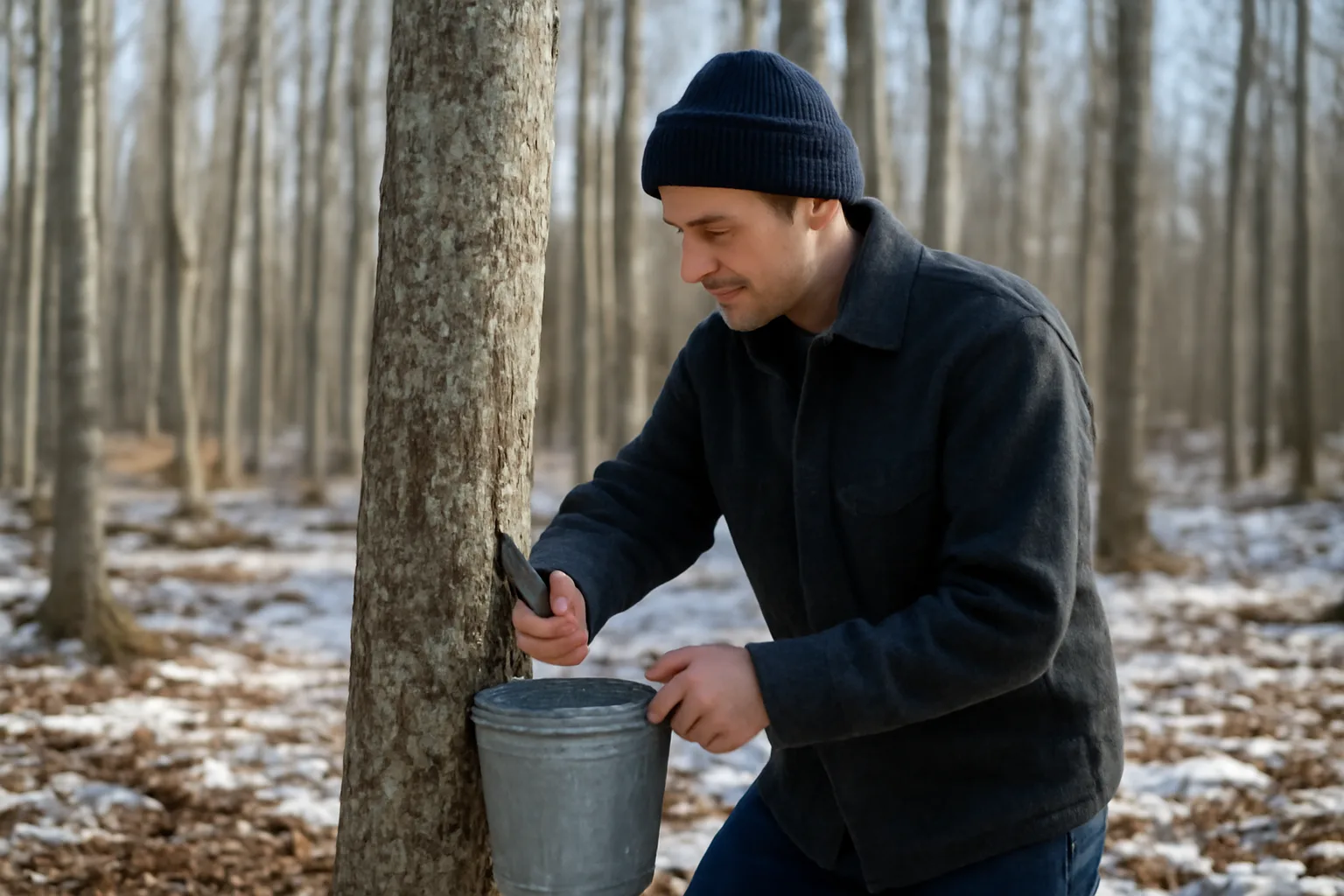
TL;DR
You can run a hobby sugarbush in Georgia only if you already own tapable maples, mostly in the Blue Ridge. Selling syrup is food-manufacturing paper, not a forestry license. Confirm the license and fees with the Georgia Department of Agriculture and your county. Plan on a short, unreliable season. I would not finance a commercial sugarhouse on Georgia weather.
Can you start a sugarbush in Georgia at all?
Yes, as a hobby, if you already own tapable maples in the north Georgia mountains. A commercial sugarbush that is supposed to pay a mortgage is a poor plan here. USDA NASS does not include Georgia in its maple syrup production survey.[5]
The limiter is climate, not a missing magic permit. Sap flows when nights freeze and days thaw. Most of Georgia does not get a reliable string of those nights. The Blue Ridge does, some winters, for a short window. Miss that window and you have holes in trees and no syrup.
I would only start if I could walk my own woods and count sugar maple or large red maple stems that already meet tapping size. Buying pasture in south or middle Georgia to plant a sugarbush wastes money. Those trees take decades, and the weather still has to cooperate.
People copy Vermont blogs and then act shocked when January in Hall County feels like April in Stowe. Read how to start a sugarbush in Vermont if you want the paper stack of a real maple state. Then come back and be honest about your elevation.
A sugarbush in Georgia is a woods project with a food product bolted on. It is not an industry you join. If that still sounds fun, keep going. If you need predictable gallons, pick another crop.
Which maple trees actually grow in Georgia?
Sugar maple (Acer saccharum) is native in the mountains of northern Georgia, not across the whole state. USDA PLANTS lists the species for Georgia, and the Forest Service silvics chapter traces its range south through the Appalachians into northern Georgia.[1][2] Red maple is far more common statewide. You can tap red maple. Sugar content runs lower and the season ends sooner.
UGA Extension's native plants bulletin treats sugar maple as a north Georgia mountain tree, not a Piedmont yard tree you can wish into production.[8] If your maples are Japanese maples by the driveway, stop. That is not a sugarbush.
Walk in late fall. Sugar maple has opposite buds, a sharp terminal bud, and leaves that turn yellow to orange. Measure diameter at 4.5 feet. Northern extension guides set about 10 inches as the floor for a first tap.[6][7] A second tap waits for a much larger stem. Leave small trees alone.
Nobody keeps a public, county-level inventory of tapable sugar maple in Georgia that I trust. The closest honest sources are the silvics range map and your own diameter tape. Rabun, Towns, Union, Fannin, and the high coves of Gilmer and White are where I would even bother to look. A warm ridge full of pine and sweetgum is a hike, not a sugar lot.
Boxelder is an Acer and it grows in Georgia. I still would not build a plan on it. Weak sugar, messy sap, and a flavor most people do not want on pancakes.
Do you need a license for sugarbush in Georgia?
Tapping your own trees and boiling sap for your household takes no forestry license. Selling syrup takes food paper. Georgia treats bottled syrup as food. Confirm the exact license with the Georgia Department of Agriculture before you sell a jar.[11][12]
There is no standalone sugarbush license in Georgia. Northern blogs invent a vibe. The actual path, if you sell, is a Department of Agriculture food license (manufactured or other packaged food, depending on how they classify your process), plus whatever local business or occupation tax your county or city collects, plus a sales and use tax account if you collect tax.[9][10] Fees move. Processing times move. I will not quote a board number I cannot see on today's form. Call GDA and ask them to put the product category in writing.
Cottage food looks like a shortcut. Georgia cottage food rules sit in Comp. R. and Regs. r. 40-7-19, and they are product-specific.[12] I would not assume maple syrup is allowed just because jam is. Ask. If they say no, you are in inspected-process territory, not a home stove with a cute label.
Interstate shipments can also trigger FDA food facility registration.[13] That is a federal database filing, not a Georgia forestry stamp.
Want to see a state that built maple into its culture? Read sugarbush license in Vermont. Then make the Georgia phone calls anyway. Vermont rules do not bind a Rabun County jar.
Border sellers should also read sugarbush license in Alabama. Two states means two answers, not one blog post.
How much does sugarbush cost in Georgia?
An honest first-year hobby, using trees you already own, often lands in the low hundreds to a few thousand dollars for taps, buckets or cheap line, a flat pan, a thermometer, a hydrometer, filters, fuel, and jars. A commercial sugarhouse is a different sport and a bad bet on Georgia weather.
I will not invent a Georgia average sugarbush cost. There is no state cost survey. Northern extension pages publish equipment lists you can price this week.[6][7] Ohio State's maple production fact sheet is a solid shopping list even if their season runs longer than yours.[6]
Waste of money in year one: a reverse-osmosis machine, a full vacuum tubing web, and a stainless flue pan sized for 1,000 taps. You do not know your sap volume yet. Fuel and time will surprise you. A used flat pan over a junk wood fire has taught more southern producers than any catalog evaporator.
Want a small bundled starter (spouts, a boil setup, a hydrometer and grade bit)? MapleSyrupPath sells a $129 Tap + Evaporator + Grade Kit at /start. Price current hardware locally either way. Trees, a roofed boil spot, and cordwood still cost more than any kit.
Land is the real number. If you have to buy mountain acreage just to touch sugar maple, you are buying real estate, not a syrup company. Timberland prices move by county and by road access. Confirm with local listings.
Budget a zero-syrup winter. That is the Georgia line item northern calculators skip. Compare the neighbor-state version in how to start sugarbush in Alabama if your woods sit near that line.
How long does sugarbush take in Georgia?
If the trees are already mature, you can scout in fall, tap in a cold stretch, and bottle the same season. That is weeks on the calendar and many hours at the pan. Growing a new sugar maple stand to tapable size takes decades, not a business quarter.[2]
The sap window itself is short. Northern commercial seasons run several weeks. Georgia's freeze-thaw stretch can be a handful of good days, then a warm rain, then nothing. Plan for that. Do not plan a two-month routine.
Paper, if you sell, is its own clock. A GDA food license, a local business certificate, and a Department of Revenue sales tax account each take whatever those offices are quoting that month.[9][10][11] Nobody should promise you a date. Ask each desk for the current processing time and get it in an email.
I would not quit a job on year-one Georgia syrup. The crop can be zero. The boil can eat a weekend for a few pints. That is still a fine hobby. It is a lousy timeline for a launch deck.
Tree wounding lasts after the season. Pull taps when nights stay above freezing or when buds break. Leaving metal in the hole until you "feel like it" is lazy, and it costs next year's wood.
When does sap run in north Georgia?
Sap runs when wood temperature cycles below and above freezing. In the Georgia Blue Ridge that is usually a midwinter pattern, often January or February, not a long March like Vermont. Check the USDA Plant Hardiness Zone Map for your exact stand, then ignore the map and hang a max/min thermometer on a north-facing trunk.[14] Your cove is the data.
Do not tap on one random cold night in November and leave spouts in until April. That wounds the tree for nothing and invites late-season microbes. Drill when the forecast actually shows a freeze-thaw string.
Red maple buds break earlier than sugar maple. If most of your stems are red maple, your season ends sooner. People who only tap red maple in Georgia get a short, watery run and then wonder why the hydrometer never moves.
I keep a cheap recording thermometer in the stand. It beats any statewide start date I have ever seen. When nights quit freezing, pull the taps. Then stop.
What land rights and forest rules apply before you drill?
You need the right to tap. That means you own the trees, you hold a written lease, or you have a permit. Handshake permission is how people lose friends and, sometimes, get accused of messing with someone else's timber. Tapping is not a timber harvest, so a harvest notification is usually the wrong form.
Do not tap trees on the Chattahoochee-Oconee National Forest, a state park, or a county park unless you hold a written special use authorization. The default answer is no.[15]
If you lease private woods, put tap count, access dates, boil location, fire rules, and syrup ownership in the lease. A one-page lease beats a feud in March.
County zoning rarely cares about 20 buckets behind a barn. A sugarhouse with public tasting hours is a different building. Ask the county planning desk before you pour a slab. Outdoor boiling is a fire. Check local burn rules before you light a pan on a windy ridge.
Steep skid trails and a boil dump into a creek will get you the wrong kind of attention. Keep wash water and niter off the stream. That is basic woods manners even when no ranger is watching.
What first-year equipment is worth buying (and what is not)?
Buy a diameter tape, a sharp bit, food-grade spouts, lids, a deep-fry thermometer plus a real syrup hydrometer and test cup, filters, and a pan you can dedicate to sap. That kit makes syrup. Everything else is comfort or scale.
Ohio State and Penn State both walk through hobby layouts if you want pan sizing and tap counts.[6][7] Conservative practice is one tap on a tree that has reached about 10 inches in diameter at breast height. More taps on a small stem is how you look busy and hurt the tree.
Skip colored jugs that never see a hydrometer. Density is the line. USDA AMS requires maple syrup to contain not less than 66 percent by weight (Brix) of soluble solids.[3] Under-boiled syrup spoils. Over-boiled syrup sugars off in the jar.
A big oil-fired evaporator is a waste if you have 15 red maples and a 4-day season. Boil outside. Steam wrecks indoor paint and sets off alarms. Keep kids and dogs away from the pan.
Used restaurant pans show up cheap. New hobby evaporators show up pretty. I would rather have an ugly pan and a good hydrometer than the reverse.
How do you sell maple syrup legally in Georgia?
You sell it as food. Start with a plain product description to Georgia Department of Agriculture food staff (100 percent maple syrup, boiled, filtered, bottled hot, no flavors). Ask which license, which kitchen, and which water source they want. Confirm current fees on their form, not on a blog.[11][12]
Then register the business form you actually need. An LLC is optional. If you form one, the Corporations Division of the Georgia Secretary of State is the filing office.[9] Get a local business or occupation tax certificate if your county or city requires it. Open a sales and use tax account with the Georgia Department of Revenue before you collect tax.[10]
Farmers markets still want the GDA conversation. Market managers do not override state food law.
If you ship out of state, read FDA food facility registration rules and 21 CFR 168.140, the federal identity standard.[4][13] The federal rule says, "Maple sirup is the liquid food derived by concentration and heat treatment of the sap of the maple tree (Acer) or of solution of maple sugar or maple concentrate made from such sap."[4]
I would not sell a drop until GDA has answered in writing. A weekend market fine is a dumb way to learn.
Keep batch notes (date, Brix out of the pan, tap count, filter used). Inspectors like records. So will you when a jar weeps in July.
What grade and label rules apply to Georgia maple syrup?
If you use the words maple syrup, federal identity and USDA grade language matter. The AMS standard states that maple syrup contains not less than 66 percent by weight (Brix) of soluble solids derived solely from maple sap.[3] Color and flavor grades (Golden, Amber, Dark, Very Dark) live in that same standard.
FDA labeling (name of food, net quantity, name and place of business) applies once you are in commerce.[4] Georgia can layer on packaged-food label checks through the Department of Agriculture. Confirm the current label checklist with them.[11]
Do not put a Vermont grade sticker on Georgia syrup. Do not stretch maple with corn syrup and still call it maple. That is the kind of labeling problem that gets expensive.
Home-use jars can be ugly. Sold jars should be clean, hot-filled, and marked with a date code you understand. A hydrometer reading written in a notebook is worth more than a pretty lid.
What would I actually do if I owned woods in Towns or Union County?
I would spend year one counting trees, not building a brand. Flag every sugar maple over 10 inches. Note red maples separately. Watch temperatures for one winter before I bought much steel, or boil a few gallons on a turkey fryer to learn density.[6][14]
I would not plant a commercial block of sugar maple in Georgia for syrup cash flow. Silvics is clear the species likes cooler northern and high-elevation sites.[2] A home planting for shade and a future hobby is fine. A bank loan is not.
If I sold, I would call GDA before I designed a label. I would budget for a zero-syrup winter. I would boil outside on a gravel pad, not in a garage with smoke alarms.
If the stand was mostly pine and sweetgum, I would walk away. Sweetgum is not maple. The internet will lie to you about any tree with sap.
For another southern start with the same weather problem, how to start sugarbush in Arkansas is the same honest uphill walk. How to start sugarbush in Colorado is a different elevation story, still not Vermont.
How does a Georgia start compare to a real maple state?
Vermont has a deep maple culture, a long NASS time series, and a season people plan a year around.[5] Georgia has a mountain remnant of the species and a food-safety department that treats your bottles like any other processed sweet. That is the whole comparison.
| Item | North Georgia hobby | Vermont-style commercial |
|---|---|---|
| Trees | Scattered mountain maples you already own | Mapped stands, thousands of taps |
| Season | Short freeze-thaw streaks | Multi-week industry season |
| Federal production data | Not in the NASS maple survey [5] | Annual NASS estimates |
| First license question | GDA food path if you sell [11] | State maple culture plus food paper |
| Year-one buy | Tape, spouts, pan, hydrometer | Often tubing, RO, arch, sugarhouse |
I like Georgia woods. I would still rather make my mortgage with something else.
If you later want a northern paper model, keep how to start a sugarbush in Vermont and the Vermont license explainer in your pile. They will not change Georgia weather.
For a starter bundle and the rest of the state paper guides, use /start. MapleSyrupPath is an independent publisher. We are not a law firm and we do not file your GDA paperwork.
Frequently asked questions
Do you need a license for sugarbush in Georgia?
Not for tapping your own trees and boiling syrup for your household. Selling jars is a food question. Confirm the license type and current fee with the Georgia Department of Agriculture. Also ask your county about a business certificate and the Department of Revenue about sales tax if you will collect it. There is no separate sugarbush license.
How much does sugarbush cost in Georgia?
If you already own the trees, a first hobby year often costs a few hundred to a few thousand dollars for taps, a pan, fuel, filters, a hydrometer, and jars. Nobody publishes a Georgia cost survey, so price hardware this week and ignore national averages. Do not buy commercial tubing or reverse osmosis until you have measured a real season. Land, if you must buy it, dwarfs equipment.
How long does sugarbush take in Georgia?
Mature trees can go from fall scouting to bottled syrup in one winter, during a short freeze-thaw window that may last only days. Growing tapable sugar maple from seedlings takes decades. Any sales license follows the current processing time at GDA, your county, and the Department of Revenue. Ask those offices. Do not treat a blog timeline as a promise.
Can you tap red maples in Georgia?
Yes. Red maple is common statewide and it is a true Acer. Sugar content is often lower than sugar maple, so you boil more sap for each jar, and buds break earlier so the season ends sooner. I would tap large red maples I already own. I would not plant a red maple plantation for syrup.
Is maple syrup a cottage food in Georgia?
Do not assume it is. Georgia cottage food rules in Chapter 40-7-19 are product-specific. Jam being allowed does not pull syrup along with it. Ask the Georgia Department of Agriculture to classify 100 percent maple syrup in writing. If they say cottage food does not fit, you are on an inspected food path.
Can you tap trees in the Chattahoochee National Forest?
Not as a default. National Forest trees are not your sugarbush. You would need a written special use authorization from the Forest Service, and the ordinary answer is no. Tap trees you own or lease in writing. Park and Forest taps without paper are how a hobby becomes a law enforcement story.
How many taps do you need to make a gallon of syrup?
At about 2 percent sugar, the old rule of 86 points to roughly 40 to 43 gallons of sap per gallon of syrup. Southern sap is often weaker, so the number climbs. One tap on a modest red maple may not give you a gallon in a short Georgia season. Count trees first. Then count jars after the boil, not before.
Do you need a sugarhouse inspection to make syrup at home?
Household use, no. Selling is different. GDA decides whether your boil spot and bottling table count as a food process that needs inspection. Confirm with them before you take money. A backyard pan under a tarp can be fine for family pancakes and still be the wrong room for retail jars.
What Georgia counties actually have sugar maple?
Look in the high Blue Ridge, especially coves in counties such as Rabun, Towns, Union, and Fannin. USDA PLANTS and Forest Service silvics put the species in northern Georgia, not on the coastal plain. There is no tap-ready public inventory. Walk the stand with a diameter tape. If you cannot find Acer saccharum, you do not have that sugarbush.
Can you make maple syrup for home use with no paperwork?
Yes, if the trees are yours (or you have written permission) and the jars stay in the household. You still owe the trees a sane tap size and a pulled spout when the season ends. The paper starts when money changes hands, when you ship, or when you set up at a market.
Does Georgia grade maple syrup?
Georgia does not run a famous state maple grade program the way a northern maple state might. If you sell, you still live under the USDA AMS grade standard and the federal identity standard for maple sirup. That means 66 percent Brix solids, honest color names, and no stretching with other sugars. Confirm any extra GDA label checks when you call.
Should you buy vacuum tubing in year one in Georgia?
No. Vacuum tubing is for mapped stands and a season long enough to pay for leaks. Year one in Georgia is a diameter tape, a few spouts, and a pan. Learn whether your cove even runs. Tubing on 12 scattered red maples is a tangle you will hate in March.
Can you tap sweetgum or other non-maples for "Georgia syrup"?
You can boil sap from other species as a curiosity at home. You should not label it maple syrup. Federal identity language ties maple sirup to Acer sap. Sweetgum syrup is a different food, if it is a food you even want. Selling it as maple is how you buy a labeling problem.
Do you charge sales tax on jarred syrup in Georgia?
If you sell, ask the Georgia Department of Revenue how sales and use tax applies to your exact setup and register if they say you must. I will not guess your rate or your exemptions. Market rumors are not a ruling. Get the account question answered before the first jar leaves the table.
Sources
- USDA NRCS PLANTS Database, Sugar Maple (Acer saccharum): Sugar maple is documented as occurring in Georgia on the federal PLANTS profile.
- USDA Forest Service, Silvics of North America Vol. 2, Sugar Maple: The native range of sugar maple extends south through the Appalachians into northern Georgia, and the species is slow to reach large size.
- eCFR, 21 CFR 168.140 Maple sirup: Federal identity standard defines maple sirup as the liquid food derived by concentration and heat treatment of the sap of the maple tree (Acer).
- USDA NASS, Maple Syrup Production: USDA NASS surveys maple syrup production only in named northern states and does not include Georgia.
- Ohio State University Extension, Maple Syrup Production (FOR-36): Hobby maple production guidance includes a minimum tree diameter near 10 inches for a first tap and the common ~40 gallons of sap per gallon of syrup teaching figure.
- Penn State Extension, Maple Syrup Production: Land-grant extension guidance on beginner equipment, tapping, and small-scale production costs and methods.
- UGA Extension Bulletin B987, Native Plants for Georgia Part I: UGA Extension treats sugar maple as a native tree of the north Georgia mountains rather than a statewide landscape default.
- Georgia Secretary of State, How-To Guide: Form a Limited Liability Company: If you form an LLC to sell syrup, the Georgia Secretary of State Corporations Division is the filing office.
- Georgia Department of Revenue, Sales and Use Tax: Sellers who must collect Georgia sales tax register a sales and use tax account with the Department of Revenue.
- Georgia Comp. R. & Regs. r. 40-7-1, Retail Food Sales: Packaged food sales in Georgia are regulated under Department of Agriculture food rules; selling syrup is a food-license question, not a forestry license.
- Georgia Comp. R. & Regs. r. 40-7-19, Cottage Food Regulations: Georgia cottage food allowances are product-specific under Chapter 40-7-19 and must be confirmed for maple syrup before you treat it as cottage food.
- FDA, Registration of Food Facilities (21 CFR Part 1, Subpart H): Facilities that manufacture, process, pack, or hold food for U.S. sale, including interstate shipment, may be required to register with FDA.
- USDA Agricultural Research Service, Plant Hardiness Zone Map: USDA hardiness zones vary sharply from the Georgia Blue Ridge to the coastal plain and should be checked for the exact stand.
- USDA Forest Service, Special Use Permits: Uses of National Forest System land beyond ordinary recreation require a written special use authorization from the Forest Service.