Last updated 2026-08-18
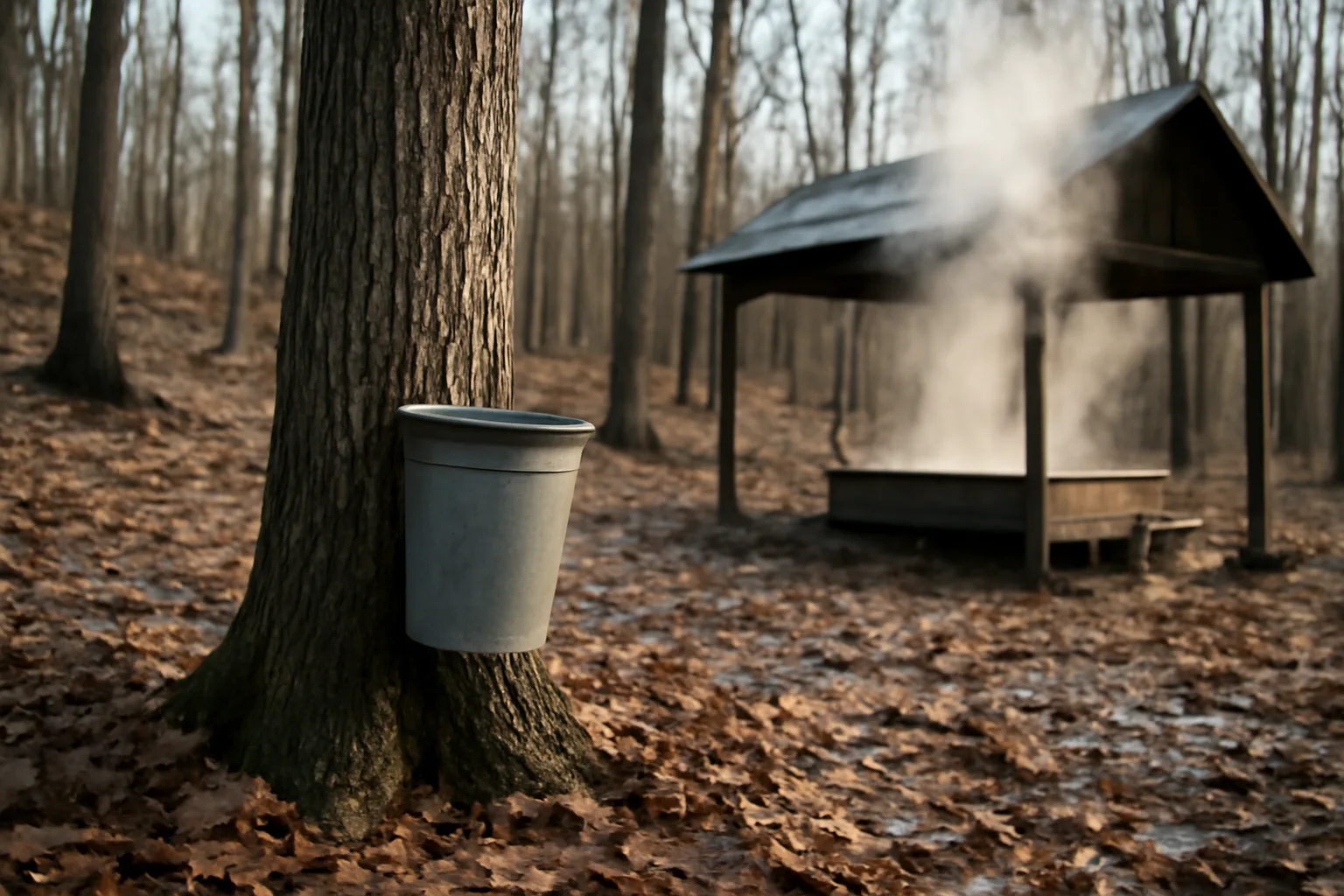
TL;DR
Arkansas runs no statewide sugarbush license, so you can tap maples on land you control. Selling syrup is the catch. That triggers food rules through the Department of Health and usually a DFA sales tax permit. Confirm both with the boards. Expect red maple more than sugar maple, a short Ozark sap window, and first-year gear from a few hundred dollars backyard to much more if you buy a commercial evaporator.
Can you actually start a sugarbush in Arkansas?
Yes. You can start a sugarbush in Arkansas on land you control. The state runs no maple crop program, and you will not find an Arkansas line in the federal syrup estimates. That is not a ban. It is a thin-data sideline with a short season.
The real limit is weather. Sap flows when nights freeze and days thaw. High Ozark north slopes get that some winters. The Gulf-facing south and the Delta often stay too warm. Nobody has good multi-year commercial yield data for Arkansas maple. The closest public series is the USDA NASS Maple Syrup report, which estimates production in designated northern states. Arkansas is not in that report.[6]
If you want a sugarbush that acts like New England, you will hate this. If you already own mixed hardwoods and you can live with a few gallons in a good year and a dry pan in a bad one, it is a fair winter project. Read how to start a sugarbush in Vermont when you want the contrast. Vermont has buyers, graders, and a deep extension stack. Arkansas has trees and a coin-flip February.
Sugar maple sits on the edge of its native range in this state. Red maple is the tree you will actually find.[1][2] You will boil more sap per finished gallon than a Vermont producer. That is sugar content, not a personal failure.
Start only if the woods are already yours. Buying land for maple in Arkansas is a weak reason to take on a mortgage. Hunt, timber, and recreation pay more reliably than a southern sap run.
Do you need a license for sugarbush in Arkansas?
No. Arkansas issues no statewide sugarbush license, tap quota, or maple producer card. Tapping trees you own and boiling sap for your own kitchen takes no forestry license. Selling syrup is a different path. That path is food law and tax law. Confirm the current forms with the Arkansas Department of Health and the Department of Finance and Administration. Do not treat a website as the board.
There is no exam. There is no tap lottery. People import those ideas from northeastern guides. Some producing states wrap maple into grade programs or agricultural registrations that Arkansas does not run. For the Arkansas-only paper list, use sugarbush license in Arkansas. For a real producing-state stack, use sugarbush license in Vermont.
If you sell, talk to your local health unit before you print labels. Ask whether your setup counts as homemade food or as a manufactured-food process. I will not invent a fee or a wait time. Those change, and this guide is not the health department.
Retail sales usually need a sales and use tax permit from DFA.[10] Ship across state lines from a processing room and FDA food facility registration can apply. The rule is blunt. 21 CFR 1.225 says the owner, operator, or agent in charge of a facility that manufactures, processes, packs, or holds food for U.S. consumption "must register the facility with FDA" unless an exemption in 21 CFR 1.226 applies.[4] That filing is federal. It is not an Arkansas maple license.
Tapping woods you do not own needs written permission. National Forest System land needs a special use authorization before you drill.[5] Hiring help brings ordinary wage and insurance rules, same as any other seasonal crew.
What maple trees in Arkansas can you tap?
You tap native maples. In Arkansas that usually means red maple (Acer rubrum), which grows across the state, and sugar maple (Acer saccharum) only where cooler Ozark sites still hold it.[1][2][13]
USDA Forest Service silvics treat sugar maple as a northern hardwood that wants moist, well-drained ground and does not love long hot summers.[1] Red maple is the generalist. It takes wet feet and poor sites. It also runs a lower sugar percentage, so you haul more water to the pan.[2]
Walk the north slopes first. Look for opposite branching, paired keys, and bark you can actually name in January. If you cannot tell red maple from sweetgum in winter, stop and learn trees before you drill. A wrong hole is just a wound.
Extension guidance from the real maple states agrees on size. MSU Extension tells producers to tap trees 10 inches in diameter or larger.[12] Ohio State's hobby sheet uses the same 10-inch floor and adds a second tap only on larger trunks.[7] That is what I would follow here. Do not tap a 6-inch pole because you are impatient.
Boxelder is a maple. Some people boil it. The flavor can get weird. I would not build a sales story on boxelder.
A simple field rule: one tap on a healthy 10 to 17 inch tree, and only if the crown is live. Skip trunks with large wounds, rot, or a dying top. Mark keepers in the fall when leaves still help you ID the stand.
How much does sugarbush cost in Arkansas?
A backyard first year on trees you already own can stay in the low hundreds of dollars. A commercial evaporator, vacuum tubing, a sugarhouse, and an inspected kitchen is a different budget, often thousands to tens of thousands. Arkansas has no public cost-of-production survey, so treat every dollar figure below as equipment reality, not a state official number.
Ohio State's hobby production sheet is the closest beginner list most people actually use. Spiles, buckets or bags, a pan you can watch, a thermometer, a hydrometer or refractometer, filters, and food-grade jugs.[7] Penn State's beginner guide walks the same stack.[8]
What I would spend money on: a decent thermometer, a syrup hydrometer with a cup, filters, and storage that will not leach junk into hot syrup. What I would skip: a huge oil-fired evaporator for 15 taps, reverse-osmosis on a hobby lot, or new vacuum mainline through woods you have never timed for freeze-thaw.
If you want a single boxed backyard set, MapleSyrupPath sells a $129 Tap + Evaporator + Grade Kit. Fine for learning. It does not replace a health review or a sales tax permit.
Land is the real cost if you do not already have woods. Buying Ozark timber for maple is a weak thesis. Timber, access, and hunting usually dwarf syrup. Lease someone else's maples with a written share or a flat fee if you must. Get that on paper.
Fuel is not free. Wood you cut yourself still costs time. Propane is easy to meter and easy to overspend on a wide pan.
| Setup | Typical first-year cash | What you get | Waste of money if |
|---|---|---|---|
| Backyard, trees you own | about $100 to $600 | 5 to 40 taps, hobby pan, jugs | you buy commercial RO |
| Side-sale kitchen batch | $600 to a few thousand | more taps, better filter, labeled jars, board fees you confirm | you skip ADH and get shut down |
| Dedicated sugarhouse | several thousand and up | evaporator, hood, tanks, inspection-ready room | you have not proven a sap season yet |
Confirm any permit fee with ADH or DFA. Street prices on pans and jugs move. Do not budget a fantasy gallon count to justify stainless you do not need.
How long does sugarbush take in Arkansas?
The sap run itself is short. In a usable Ozark winter you might see runs across 2 to 6 weeks, often in January and February, with dead stretches when it stays warm. Building the operation takes longer than the season. Plan a first useful year as 3 to 9 months of prep plus one short boil window, not a 12-month factory.
Tree ID and tap counts happen in fall and early winter. You hang gear before the first real freeze-thaw. Boiling is a string of long days when sap actually moves. Then you finish, pack, and clean.
A new commercial-style sugarhouse plus a health review is not a weekend. I will not promise an ADH calendar. Confirm inspection scheduling with your local health unit. Nobody serious guarantees a date.
Compared with Vermont, you get fewer reliable nights below freezing. Check the U.S. Climate Normals for your nearest station before you buy an evaporator.[14] Fayetteville and Harrison do not behave like El Dorado. A warm January can erase a season.
From first walk in the woods to first legal pint for sale, a motivated owner with trees already in hand can do it in one winter if they start in November and the health paper is simple. If they need a kitchen remodel, they miss the season. That is normal. Start the paper before you order bottles.
What food rules apply if you sell Arkansas maple syrup?
If you eat the syrup at home, food law mostly stays out of your kitchen. If you sell, you are in the food business. Arkansas handles that through the Department of Health, not through a maple board.
I will not invent which homemade-food exemption covers maple syrup this year. Some states put syrup on a cottage list. Some treat it as a manufactured product because it is concentrated and packed for sale. The only clean move is to call ADH, describe your process (open wood pan versus indoor finisher, kitchen versus outbuilding, farmers market versus wholesale), and ask which rule and which inspection apply. Get the answer in writing if you can.
Federal overlay still matters. If your facility manufactures, processes, packs, or holds food for consumption in the United States, FDA registration can apply unless an exemption fits.[4] Many tiny on-farm setups still ask FDA or a food lawyer whether they are a farm exemption or a facility. This guide is not a law firm. Do not take this paragraph as a registration decision.
21 CFR 117 sets current good manufacturing practice for human food.[11] Even when you are small, the habits matter. Clean surfaces. No dripping roof over finished syrup. Potable water. Pest control. A dead mouse in the filter tank ends your brand.
Farmers markets will ask for whatever the county wants. Bring your ADH answer, your tax permit, and labels. Do not show up with mason jars and a handwritten sticker and argue with the manager.
Interstate wholesale is the line where people get surprised. Cross a state line and federal labeling plus facility registration get real fast. Stay in-state until that paper is honest.
Can you tap trees on national forest or leased land?
On your deeded land, tap with ordinary care. You still follow water-quality and burn rules if you fire a wood arch. Check county burn bans on boil days.
On leased private woods, get a written license to tap, use roads, and split syrup or pay cash. Handshake deals die when a landowner sees tubing and thinks you claimed the stand.
On National Forest System land, you do more than walk in with a drill. Federal rules designate most uses as special uses. 36 CFR 251.50 says persons "must submit a proposal to the authorized officer and must obtain a special use authorization" before engaging in a special use, unless a listed waiver applies.[5] Commercial sap collection is not casual recreation. Call the Ozark-St. Francis National Forest permits staff and ask. Expect a no, or a long yes. Do not treat silence as permission.
State parks and wildlife management areas are worse bets. Those lands are managed for other things. Ask the managing agency in writing. Assume no until you have paper.
Do not tap a neighbor's fence-line maple because the crown hangs over. The trunk is what matters, and so does not being a jerk.
Alabama's paper story is close in spirit if you want another southern walkthrough: how to start sugarbush in Alabama. Colorado and California are other states outside the NASS maple list with the same climate-plus-food-law problem. See how to start sugarbush in Colorado and how to start sugarbush in California.
What equipment do you need the first year?
First year on 10 to 30 taps: a 5/16 or 7/16 bit, spiles, buckets or bags, a gathering pail, a pan with enough freeboard that you do not scorch, a thermometer, a hydrometer, filters, and jugs rated for hot fill if you pack hot.
5/16 health spouts are what most modern producers use. They make a smaller wound. Ohio State and Penn State both walk this beginner kit.[7][8] Buy the smaller bit unless you are replacing old 7/16 hardware.
Skip tubing networks until you have timed two seasons. Gravity tubing needs slope. Vacuum needs power and leaks you will chase in the dark. Arkansas tap density is often too scattered to justify mainline.
Evaporator size should match a heavy run, not your ego. A wide, shallow pan finishes faster than a deep stockpot. Watch the last few degrees. Burnt syrup is dog food.
Reverse osmosis earns its keep at 1,000 taps. It is a waste of money at 20.
Keep a dedicated finishing pot on a clean burner so you are not grading density in wood smoke and ashes. Sanitation is boring and it is the job. Hot water. No perfume soap in finished syrup. No rusty buckets. If a bucket smells like last year's ferment, throw it out.
How do you grade and label syrup you plan to sell?
USDA grade standards set a minimum maple syrup density of 66.0 degrees Brix at 68.0 F.[3] Tape that number above the hydrometer cup. Thin syrup spoils. Heavy syrup throws crystals.
The standards also describe color and flavor grades (Golden, Amber, Dark, Very Dark under current USDA color names). You can sell honest syrup that is dark. You cannot sell pancake dye and call it maple.
The AMS standard is the line, not a forum opinion. "Maple syrup shall not have a density of less than 66.0 degrees Brix at 68.0 ° F."[3] Draw a sample, cool it to the hydrometer's reference temperature, and write the reading down.
Filter while hot. Pack hot into clean containers. Leave no wet sugar sand in the bottle if you can help it. Cloud in the jar looks like a science fair, not a gift.
Labels for sale need the common name, net contents, your name and address, and any ADH-required statement. Confirm the exact label set with ADH and, if you go interstate, with FDA labeling rules. I will not invent a required Arkansas font size.
Connecticut's producer culture is tighter on grade language if you want to see how a small northeastern state talks about this: how to start sugarbush in Connecticut.
What tax paper shows up after you sell a jar?
If you sell, DFA cares. Arkansas requires a permit to make taxable sales, and the statute side of that story sits in the gross receipts (sales tax) permit rules.[10] Confirm whether your syrup is taxed as grocery food or at the general rate. Food rates have moved. Do not guess. Ask DFA.
Income tax is separate. IRS Publication 225 is the Farmer's Tax Guide used to report farm income and expenses when the work is an agricultural operation.[9] A sugarbush can belong on a Schedule F. It can also look like a hobby to the IRS if you never show a profit motive. That line is fact-specific. A CPA who has seen farm returns is worth more than a maple forum.
Weights and measures: sell by a net volume or weight you can defend. Short-filling jugs is how you meet an inspector the hard way.
No Arkansas maple quota means no production report to a maple board. Keep your own boil log anyway. Health inspectors and the IRS both like records. Gallons of sap, hours of boil, jars packed, and who bought them. A notebook beats a memory after a 14-hour finishing night.
Should you stay backyard or try to sell?
Stay backyard until you have boiled through one ugly warm winter. If the trees barely ran, you just learned something cheap. Scaling a sugarhouse on one pretty February is how people buy too much stainless.
Commercial makes sense if you already have a food kitchen, a market stall that sells out, and woods with real sugar maple, not three red maples by the driveway. Even then, Arkansas will not give you a Vermont price story. Local novelty can sell a few hundred dollars of jars. It will not service a $20,000 evaporator loan.
Price jars as a craft food, not as commodity Grade A from Quebec. Tell people it is Ozark red maple. Some buyers like that. Some want the Vermont name and will not switch. Do not lie about species or grade to close a sale.
Liability is real once strangers eat your food. Ask an agent who writes food makers about product coverage. Do not serve samples from a dirty spoon. If a batch tastes off, dump it. One bad pint costs more than the sugar you wasted.
What does a first Ozark maple season look like?
November: count trees over 10 inches. Reread the sugarbush license in Arkansas notes and call ADH if you plan to sell.
December: order spiles and jugs. Repair the shed roof. Apply for the DFA permit if you will sell. Confirm forms and any fee with the board. No timing promise lives in this paragraph.
January: tap when the forecast shows freeze nights and thaw days. Boil the same day you collect if you can. Sap sours in Arkansas heat fast. A full bucket left in the sun is vinegar in training.
February: often your last decent runs. Pull taps when buds swell. Late-season off-flavor is real. Do not chase one more gallon into bud break.
March: clean, inventory, and decide if year two is still buckets or a small expansion. Most people should stay small.
That is the year. It is not a lifestyle brand. It is a weather window. If you still want a boxed learner set after you have read the paper path, the $129 kit on MapleSyrupPath is the simple backyard bundle, and the start page is /start. The rest of this page stands if you never click it.
Frequently asked questions
Do you need a license for sugarbush in Arkansas?
No statewide sugarbush license, tap quota, or maple card exists. Household tapping on land you control takes no forestry permit. Selling syrup brings food rules from the Arkansas Department of Health and usually a DFA sales tax permit. Confirm current forms with those boards. Federal FDA facility registration can apply if you process food for sale beyond a farm exemption.
How much does sugarbush cost in Arkansas?
On woods you already own, a backyard first year often lands about $100 to $600 for spiles, pans, filters, and jugs. Side-sale setups run higher once you add packing gear and whatever ADH or DFA charges, which you must confirm. A dedicated sugarhouse can reach several thousand dollars and up. Arkansas has no official maple cost survey, so do not finance stainless on a hoped-for gallon count.
How long does sugarbush take in Arkansas?
The sap window is short, often 2 to 6 weeks in a usable Ozark winter, usually January into February. Prep takes longer. Count on 3 to 9 months to ID trees, hang gear, and sort food paper before a first legal sale. A kitchen remodel or a slow inspection can push you into the next year. Confirm any inspection timing with your local health unit.
Can you make maple syrup from red maple in Arkansas?
Yes. Red maple (Acer rubrum) is the tree most Arkansas woods actually hold. Sugar content is usually lower than sugar maple, so you boil more sap per finished gallon. Flavor can be fine if you filter well and hit 66.0 degrees Brix. Do not call it sugar maple on a label if it is red maple. Buyers can handle honesty.
Is Arkansas maple syrup legal to sell at a farmers market?
It can be, if you satisfy the Arkansas Department of Health rule that applies to your kitchen or sugarhouse and you carry whatever tax permit DFA requires. Market managers often ask for those papers at setup. Confirm the current homemade-food versus manufactured-food treatment with ADH before you cook a sales batch. Do not invent an exemption from a social post.
Do you need FDA registration to sell syrup only in Arkansas?
Not automatically. 21 CFR 1.225 requires facility registration for manufacturing, processing, packing, or holding food for U.S. consumption unless an exemption in 21 CFR 1.226 applies. Tiny in-state, on-farm setups sometimes fit an exemption and sometimes do not. Describe your process to FDA guidance or a food lawyer. This publication is not that lawyer.
How many taps do you need to make a gallon of syrup?
It depends on sugar content and the run. At about 2 percent sugar, extensions teach roughly 40 gallons of sap per gallon of syrup. Red maple often sits at or under that, so plan more sap, not less. A healthy 10-inch tree gets one tap. A backyard of 20 taps in a weak Arkansas winter may not finish a gallon. A strong week can surprise you.
When is sap season in the Ozarks?
Most usable runs land in January and February, whenever nights freeze and days thaw. Warm spells shut it off. Bud swell ends it, often by late February or March. Check U.S. Climate Normals for your nearest station instead of copying a Vermont calendar. Southern and Delta counties are a worse bet than high north slopes.
Can you tap trees in Ozark-St. Francis National Forest?
Not as casual recreation. National Forest System uses outside listed exceptions are special uses. 36 CFR 251.50 requires a proposal and a special use authorization before you start, unless a waiver in that section applies. Call the forest permits staff. Assume commercial sap collection needs paper, and assume the answer can be no.
Does maple syrup count as farm income in Arkansas?
It can, if you are actually farming. IRS Publication 225 is the Farmer's Tax Guide for farm income and expenses. Many maple operations use Schedule F. A tiny boil with no profit motive can look like a hobby instead. State income tax follows your federal facts more than a maple brand story. Ask a CPA who has filed farm returns.
What size tree can you tap in Arkansas?
Follow the same 10-inch diameter floor used by MSU Extension and Ohio State hobby guidance. One tap on a healthy 10 to 17 inch trunk is the conservative start. Add taps only on larger, live-crown trees. Skip wounded or declining stems. Arkansas heat already stresses maples. Small poles do not owe you sap.
Do you need a sugarhouse inspected to sell syrup?
Maybe. ADH decides whether your process counts as homemade food or a manufactured-food operation. A dedicated sugarhouse is more likely to be treated as a food facility than a one-pan kitchen hobby. Confirm with your local health unit before you pour a sales batch. This guide will not invent an inspection fee or a calendar.
Is there a quota on maple taps in Arkansas?
No. The state assigns no tap quotas, maple allotments, or producer numbers. Your limit is tree health, land permission, and whatever food and tax rules apply if you sell. On national forest land the limit is whatever a special use authorization allows, if you get one at all.
Can you start a sugarbush on rented woods in Arkansas?
Yes, if the owner puts access, tap rights, cleanup, and payment in writing. A handshake fails when tubing appears or a gate gets locked mid-run. You still owe ADH and DFA the same sales paper. You cannot grant yourself rights the landowner never gave. National forest and state wildlife land are not casual rentals.
Sources
- USDA Forest Service, Silvics of North America: Sugar Maple (Acer saccharum): Sugar maple is a northern hardwood with a native range that only reaches limited cooler sites at its southwestern edge, relevant to Ozark Arkansas woods.
- USDA Forest Service, Silvics of North America: Red Maple (Acer rubrum): Red maple is a widely distributed eastern species that occupies a broad range of sites, including the southeastern United States.
- USDA AMS, United States Standards for Grades of Maple Syrup: Maple syrup shall not have a density of less than 66.0 degrees Brix at 68.0 F under USDA grade standards.
- eCFR, 21 CFR 1.225 Who must register: Owners, operators, or agents in charge of facilities that manufacture, process, pack, or hold food for U.S. consumption must register with FDA unless exempt under 21 CFR 1.226.
- eCFR, 36 CFR 251.50 Special uses: Most uses of National Forest System lands are special uses and require a proposal and special use authorization before a person engages in the use.
- USDA NASS, Maple Syrup publication series: The federal Maple Syrup report estimates production for designated northern producing states and does not publish an Arkansas crop estimate.
- Ohio State University Extension, Hobby Maple Syrup Production (Ohioline F-36): Hobby maple guidance on minimum tree diameter, beginner equipment, and about 40 gallons of sap per gallon of syrup.
- Penn State Extension, Maple Syrup Production for the Beginner: Beginner process, tree selection, and equipment stack for first-year maple syrup production.
- IRS Publication 225, Farmer's Tax Guide: Federal farmer tax reference for reporting agricultural income and expenses, the usual home for a farm sugarbush on Schedule F.
- Justia, Arkansas Code § 26-52-201 (gross receipts tax permits): Arkansas gross receipts (sales tax) law penalizes doing taxable business without the required permit.
- eCFR, 21 CFR Part 117 Subpart B Current Good Manufacturing Practice: Federal current good manufacturing practice requirements that apply to human-food facilities, including sanitation and process controls.
- Michigan State University Extension, Ready to tap maple trees: Tap only maple trees 10 inches in diameter or larger, with tap counts rising only on larger healthy trunks.
- USDA Plants Database, Acer saccharum Marsh.: Official plant profile and distribution reference for sugar maple.
- NOAA NCEI, U.S. Climate Normals: Station climate normals are the public source for judging whether a site has reliable winter freeze-thaw cycles.