Last updated 2026-08-19
TL;DR
You can start a sugarbush in California only where mature bigleaf maples already stand and winter freeze-thaw actually happens. There is no sugarbush license. Selling syrup usually means CDPH Processed Food Registration plus county environmental health, not a cottage-food shortcut. Land and a commercial kitchen dwarf tap costs. Confirm every current fee with the board that charges it. Do not plant sugar maples and wait.
Can you actually start a sugarbush in California?
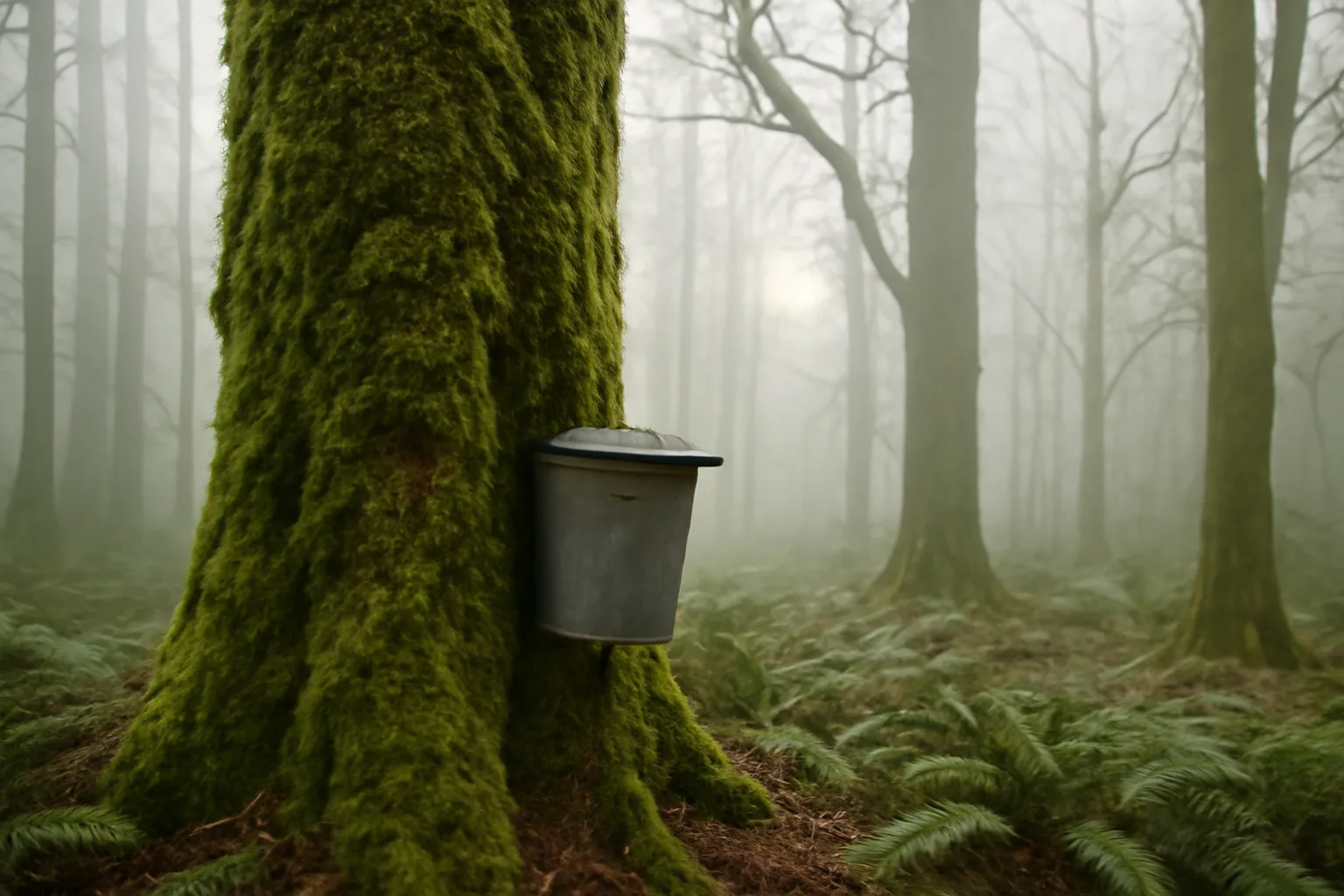
You can, but only if mature bigleaf maples already stand on your ground and the site gets a real freeze-thaw window. California is not a sugar maple state, and no maple board hands out a sugarbush ticket. Selling the syrup is a food plant problem, not a folklore problem.
Bigleaf maple (Acer macrophyllum) is the West Coast tree people actually tap. USDA PLANTS lists it as native in California. [6] Sugar maple (Acer saccharum) is an eastern species. USDA PLANTS does not treat sugar maple as a California native. [8] That single range fact kills most Instagram plans.
Most of the state will disappoint you. The Central Valley, the south coast, and a lot of oak woodland never get the night freeze and day thaw that makes sap run. Far north counties and higher mixed-evergreen belts are the only honest conversation. The sugarbush California newcomers picture is a Vermont postcard. The real version is a mossy draw in Siskiyou, Humboldt, Trinity, Del Norte, or a cold Sierra pocket, and only if the trees are already there.
If you do not already own those trees, buying California land just to invent a sugarbush is usually a poor use of cash. Timberland sticker prices, access roads, fire insurance, and a buildable bench add up before you drill a single taphole. Read a state that actually has a maple industry in how to start a sugarbush in Vermont before you romanticize a Sierra parcel.
I would walk the property in January with a 5/16 bit before I poured a sugarhouse slab.
Do you need a license for sugarbush in California?
There is no statewide sugarbush license in California. Boiling sap for your own household does not, by itself, trigger a processed food registration. The minute you sell syrup, the state treats you as a food manufacturer.
Health and Safety Code section 110460 is the core statute. It says a person may not manufacture, pack, or hold processed food in California without a valid registration from the department for each place of business. [1] That department is the California Department of Public Health. CDPH runs Processed Food Registration as the filing for that statute. [2]
You stack local paper on top. City or county business license. County environmental health if you are a food facility under the California Retail Food Code. [7] A fictitious business name if you are not using your legal name. None of those agencies publish a "sugarbush" category. You will look like a small syrup processor.
Cottage food is a different box. California cottage food operations are limited to the current CDPH approved foods list. [4] Do not assume maple syrup is on it. Read the list dated for this year. If syrup is not listed, cottage food is not your path. Health and Safety Code section 114365 is the cottage food operations statute, and it only helps if you fit the definition and the food list. [3]
Fees change. Processing times change. Confirm both with CDPH and with your county environmental health department. For the license stack in one place, see sugarbush license in California.
What trees actually run sap in California?
Bigleaf maple is the tree. Look for large leaves, opposite branching, and a big furrowed trunk in mixed evergreen or riparian forest. USDA PLANTS places Acer macrophyllum in California. [6]
Sap sugar is the hard part. Eastern sugar maple often sits around 2 to 3 percent sugar. West Coast bigleaf runs are commonly more dilute. The old Rule of 86 still applies. Gallons of sap per gallon of syrup is about 86 divided by the sugar percent. At 2 percent you need roughly 43 gallons of sap for a gallon of syrup. At 1.5 percent you need about 57 gallons. [9]
That means more fuel, more time, more pans. I would buy a cheap hydrometer or digital refractometer before I bought a bigger arch. Guessing Brix by taste is how people scorch a batch and call it "craft."
Boxelder (Acer negundo) shows up in California too. People tap it in other states. Yield and flavor are a gamble. I would not plant a plantation of either species in the Sacramento Valley and call it a business plan.
Tapable size in eastern practice is a mature stem, often about 10 inches in diameter and up. Bigleaf trunks can be huge. Young planted maples will not pay you back. If the stand is seedlings, you do not have a sugarbush. You have a landscaping project.
How much does sugarbush cost in California?
Land is the number that breaks people. USDA NASS reported U.S. farm real estate at $4,170 per acre in 2024. [10] California's statewide average sits far above that U.S. figure because the same table mixes irrigated valley cropland, orchards, and range. It is a bad proxy for a mossy maple draw in Siskiyou or Humboldt. Use local timberland comps, and assume access, water, and a buildable bench cost extra.
If you already have the trees, first-year cash is equipment, fuel, bottles, and paper. A backyard pan and a small evaporator can land in the low hundreds to a few thousand dollars depending on used gear and whether you weld. A commercial evaporator is a different universe. Reverse osmosis pays when you have volume and dilute sap. Vacuum tubing does not pay on a 15-tap experiment.
I would not spend money on a branded sugarhouse, a gift shop, or a custom bottle until sap has actually run for one season. Pretty glass does not fix a 1.4 percent run.
Permit fees are real, and they are not stable enough to print here as if they were a statute. Confirm the current Processed Food Registration fee with CDPH and the current food facility fee with your county. [2] Insurance, a potable water test, and a certified room build-out can dwarf the tap budget if you go commercial in year one.
Western comparison reads help if you are still shopping climates rather than a parcel you already own. Try how to start sugarbush in Colorado and how to start sugarbush in Arizona.
How long does sugarbush take in California?
If the trees are already mature, you can tap the first winter you get freeze-thaw. The run itself is short. You are hunting nights below freezing and days that thaw. In much of California that window is thin, sometimes a handful of good days, sometimes a few weeks.
Nobody has a clean multi-year sap-yield dataset for a California sugarbush the way Vermont does. Treat any "average season length" you see on a forum as a story, not a planning number.
Paper for sales is a separate clock. CDPH registration, county plan check for a processing room, water tests, and a business license can take weeks or stretch longer if your building needs review. There is no honest statewide processing time. Confirm with the board that will stamp the permit. No one can promise you an opening date.
Planting sugar maples or bigleaf seedlings and waiting for a crop is a 30-plus year hobby, and the climate may never cooperate. I would not start the clock that way.
Other thin-season states have the same "do we even have a winter" problem. how to start sugarbush in Alaska is a useful contrast if you like edge cases.
What food permits do you need to sell California maple syrup?
Start with CDPH Processed Food Registration for the place you manufacture, pack, or hold the syrup. [1][2] Then call county environmental health. If you are not on the cottage food list, you are likely a food facility, and the county will want to see the room, the water, the sinks, and how you bottle. [7]
| Path | CDPH processed food registration | County environmental health | FDA food facility filing | Cottage food |
|---|---|---|---|---|
| Home use only | Generally no | Generally no | No | No |
| Sell inside California | Usually yes | Usually yes | Often no if you stay in-state | Only if syrup is on this year's list |
| Ship out of state | Usually yes | Usually yes | Usually yes | Unlikely |
Interstate shipments can trigger FDA food facility registration. [11] That is a federal filing, not a California maple card. Small-operation exemptions under FSMA exist on paper. Read the current FDA guidance rather than guessing you are exempt.
CDTFA seller's permit rules hinge on whether you are selling tangible personal property that is ordinarily taxable. [5] Many grocery food sales are exempt under California sales tax law, but the seller's permit question is still one you confirm with CDTFA, not with a blog.
Organic claims need USDA National Organic Program certification. Do not print "organic" because the forest feels organic.
Shared commercial kitchens can be cheaper than building a room. They can also be full in February. Ask before you promise a market manager a delivery date.
Can you tap trees on national forest or someone else's land?
Only with authority. Private land needs the owner in writing. A handshake is how people lose friends and pick up trespass complaints.
National Forest System land is not a free tap zone. Federal rules treat most uses as special uses. 36 CFR 251.50(a) states: "Before engaging in a special use, persons or entities must submit a proposal to the authorized officer and must obtain a special use authorization from the authorized officer, unless that requirement is waived by paragraph (c) of this section." [12] Commercial sap collection is not casual firewood. Talk to the local Ranger District. Do not invent a permit by filling a backpack with spiles.
State parks and many municipal watersheds are a no. CAL FIRE forest practice rules matter if your "sugarbush plan" is actually a timber harvest. Tapping is not a timber harvesting plan. Cutting a new road to the trees can become one.
I would not build a business on a one-year handshake lease either. If the landowner sells, your tubing is a gift.
Do you need a water right to boil sap?
Sap in the tree is not a creek diversion. The trouble starts when you drill a well, pump a spring, pull from a stream to wash pans, or discharge boil waste and wash water.
California surface water and many groundwater uses run through the State Water Resources Control Board water rights process. [13] Small domestic uses and existing riparian claims are fact specific. I cannot give you a statewide yes. Confirm with the Water Board and with your county if you are building a process room that needs a potable supply and a legal septic or sewer hookup.
County environmental health will care about potability long before anyone argues the doctrine of riparian rights with you. A clean lab test on the tap that fills your bottles matters more than a theory about tree sap.
Dumping sweet wash water into a Class I stream is a bad idea. Keep it out of the ditch. Evaporator condensate and pan rinse are not a hobby you run into a creek.
What about air districts and a wood-fired evaporator?
California splits air rules across the California Air Resources Board and local air districts. Wood smoke is a live issue. [14] A backyard hobby pan for one weekend is not the same as a commercial arch you fire every February in a nonattainment basin.
Some mountain counties barely blink. Some urban-adjacent districts regulate outdoor wood burning on spare-the-air days. Ask the district that maps your parcel before you buy a used Vermont evaporator and a dump truck of slab wood.
Propane or oil fired pans cost more to run and annoy fewer neighbors. That trade is worth money in a lot of California zip codes. I would spend an afternoon on the air district website before I spend a winter's fuel budget on an open wood arch.
If you are inside a tight district, a closed sugarhouse with a proper stack still may need a conversation. Do not take a forum post from 2014 as the rule.
How do you grade and label syrup in California?
Use the USDA maple grades if you want a label people recognize. The United States Standards for Grades of Maple Syrup say maple syrup is "the liquid food derived by concentrating and heating sap from the maple tree (Acer)" and that it contains "not less than 66 percent by weight of soluble solids derived solely from maple sap." [15] Color classes run Golden through Very Dark. Grade the batch with a comparator, not with your memory of the last pot.
California still wants an honest net quantity, your name and address, and no fake origin story. "Vermont maple" on a Siskiyou bigleaf run is a problem. "California bigleaf maple syrup" is the true sentence.
I would keep batch notes and a lot code even on a tiny run. When a bottle fails, you will want to know which afternoon it came from.
Do not blend cane sugar into a light run and still call it maple syrup. The AMS standard is not a vibe.
Does California cottage food law cover maple syrup?
Only if maple syrup is on the current CDPH approved cottage food list. [4] That list is a closed list. Honey has often been on it. Maple syrup is not something I would bet a business on without reading this year's document.
Health and Safety Code section 114365 is the cottage food operations statute. [3] Class A and Class B have different sales channels and different inspection postures. Even if syrup were listed, you still register with the county and follow the labeling rules.
If the list says no, stop arguing with the internet. File as a processed food manufacturer and do the kitchen correctly, or stay a household producer and do not sell.
Farmers markets will ask who permitted you. "My kitchen is really clean" is not a permit.
What would I actually do if I started a California sugarbush this year?
I would not buy land. I would not pour concrete. I would confirm the trees are Acer macrophyllum, tap a couple dozen stems on the first hard freeze, and measure sugar. If nothing runs, you lost a Saturday and some cheap spiles.
If sap runs, I would take one gallon of finished syrup to county environmental health and ask what they want to see before a farmers market table. Then CDPH. Then I would decide if the season is long enough to care.
A small test setup is enough. MapleSyrupPath publishes a $129 Tap + Evaporator + Grade Kit at /start for people who need basic gear to try a first boil. That is a test, not a sugarhouse.
Vermont still has the density of processors, the grades culture, and the winter. Read sugarbush license in Vermont if you are still choosing a state rather than a California hillside you already own.
Skip the consultant deck. Skip the custom bottle. Skip hiring a branding shop to name a product you have not boiled.
What paper mistakes burn first-year California producers?
The classic errors: selling unlabeled jars at a market without asking the market and the county. Tapping a neighbor's maples because the trees "look unused." Printing organic. Promising a six-week season. Building a wood arch in an air district that will hate you. Paying someone to write a sugarbush business plan before you have a single Brix reading.
Keep the first year ugly and measured. Confirm every fee. Confirm the cottage food list. Confirm water and septic if you build.
MapleSyrupPath is an independent publisher, not a law firm and not a service company, and it will not stamp your permit. The board that takes your money is the one that answers the fee question.
Frequently asked questions
Do you need a license for sugarbush in California?
There is no statewide sugarbush license. Household tapping for your own kitchen generally does not need CDPH registration. Selling syrup usually means Processed Food Registration under Health and Safety Code section 110460, plus county environmental health and a local business license. Confirm current forms and fees with CDPH and your county. Cottage food only works if syrup is on this year's approved list.
How much does sugarbush cost in California?
If you must buy land, land dominates. USDA NASS put U.S. farm real estate at $4,170 per acre in 2024, and California statewide averages run much higher and mix valley cropland with timber. With trees already on the deed, hobby gear can be hundreds to a few thousand dollars. Commercial kitchens, evaporators, and insurance dwarf taps. Confirm permit fees with CDPH and the county. Do not print a fee from memory.
How long does sugarbush take in California?
Mature trees can be tapped the first winter that freeze-thaw actually happens. The sap window is often days to a few weeks, not a long Vermont season. Sales permits can take weeks or longer if a process room needs county review. There is no statewide clock and no approval guarantee. Planted maples are a multi-decade wait and may never run in a low-chill zone.
Can I sell maple syrup as a cottage food in California?
Only if maple syrup appears on the current CDPH approved cottage food list. That list is closed. Do not assume syrup qualifies because honey sometimes does. If it is not listed, you are in processed food registration and county food-facility territory. Read this year's list and Health and Safety Code section 114365 before you advertise a home-kitchen brand.
Is sugar maple native to California?
No. USDA PLANTS treats sugar maple (Acer saccharum) as an eastern species, not a California native. The tapable native maple here is bigleaf maple (Acer macrophyllum). Planted sugar maples in yards do not make a commercial belt. Most of the state also lacks a reliable freeze-thaw sap season even if you like the species.
Can I tap bigleaf maples on national forest land?
Not as a casual right. Commercial or organized use of National Forest System lands generally needs a special use authorization. 36 CFR 251.50 requires a proposal and an authorization unless a listed waiver applies. Call the local Ranger District before you hang a bucket. State parks and many watersheds are a separate no.
Do I need a seller's permit to sell syrup?
Confirm with the California Department of Tax and Fee Administration. A seller's permit is required when you sell tangible personal property that would ordinarily be subject to sales tax. Many grocery foods are exempt, but that is not a DIY call. Ask CDTFA how your exact sales channel is treated before you skip the permit or collect tax you should not collect.
What county office do I call first?
If you plan to sell, call county environmental health and ask how they classify a small syrup processor. Then file Processed Food Registration with CDPH for the place you manufacture, pack, or hold the food. Also ask the city or county business-license counter. CalGOLD can point you at local permit names, but the county health inspector is the person who will walk your room.
Can I bottle syrup in my home kitchen?
For household use, yes. For sale, usually no, unless you truly fit cottage food and syrup is on the current approved list. Most sales paths need a process room the county will accept, or time in a permitted shared kitchen. Home granite and a slow cooker will not impress an inspector. Ask before you print labels.
Is reverse osmosis worth it for California sap?
If you have real volume and dilute bigleaf sap, yes, RO cuts boil time and fuel. If you are testing 20 taps for one winter, no. Buy a refractometer first. Rule of 86 already tells you a 1.5 percent run needs about 57 gallons of sap per gallon of syrup. Do not finance an RO skid to learn the trees do not run.
Do I need organic certification for forest syrup?
Only if you want to print organic. A wild-feeling stand is not a USDA organic claim. Organic labeling needs National Organic Program certification. Skip the word until a certifier says you may use it. "Natural" on a label is a separate advertising problem. Stay with origin and grade if you are new.
What elevation or region works best in California?
Places that actually freeze at night and thaw by day, with mature bigleaf maple already on the ground. That points to far north forest counties and some higher mixed-evergreen or Sierra pockets, not Los Angeles and not the floor of the San Joaquin. Elevation alone is not a recipe. Walk the stand in January. If the nights never go hard, you do not have a season.
Can I bring in sap from Oregon or Washington and bottle it here?
You can become a processor of someone else's sap, but then you are clearly a food manufacturer. You still need the CDPH and county path for the California facility, plus any interstate rules if sap or syrup crosses a state line. Label origin honestly. Calling Oregon sap a California sugarbush is a story you should not print.
What if I only give syrup to friends and family?
Household production for your own table is the simple case. Gifting a few bottles is different from a farm-stand price list, a website cart, or a market booth. The more it looks like a sale, the more CDPH and county environmental health will treat it as manufacturing. When money changes hands, get on the phone with the county before the second batch.
Sources
- California Health and Safety Code section 110460: California requires registration from CDPH before a person manufactures, packs, or holds processed food at each place of business.
- California Health and Safety Code section 114365: Section 114365 is the California cottage food operations statute that sets CFO registration and operating rules.
- CDTFA seller's permit FAQ: CDTFA requires a seller's permit when you are engaged in business in California selling tangible personal property ordinarily subject to sales tax.
- USDA PLANTS profile for Acer macrophyllum (ACMA3): Bigleaf maple (Acer macrophyllum) is listed as native in California on the USDA PLANTS profile.
- California Health and Safety Code section 113789: Section 113789 defines food facility under the California Retail Food Code, which is how counties classify many commercial kitchens.
- USDA PLANTS profile for Acer saccharum (ACSA3): Sugar maple (Acer saccharum) is treated as an eastern species on USDA PLANTS, not as a California native.
- Ohio State University Extension, Hobby Maple Syrup Production (Ohioline FOR-66): U.S. maple extension practice uses sap sugar content (and the Rule of 86) to estimate how many gallons of sap are needed for a gallon of syrup.
- USDA NASS Land Values 2024 summary: U.S. farm real estate value averaged $4,170 per acre in 2024.
- FDA Registration of Food Facilities: Facilities that manufacture, process, pack, or hold food for consumption in the U.S. may need to register with FDA, including many interstate syrup processors.
- 36 CFR 251.50 (USFS special uses): Most uses of National Forest System lands require a special use proposal and authorization before the use begins, unless a listed waiver applies.
- State Water Resources Control Board, The Water Rights Process: California surface water and many related uses are administered through the State Water Resources Control Board water rights process.
- California Air Resources Board, Residential Wood Smoke program: CARB and local air districts regulate residential and similar wood smoke, which can affect wood-fired evaporators depending on the district.
- USDA AMS United States Standards for Grades of Maple Syrup: USDA grade standards define maple syrup as concentrated Acer sap with not less than 66 percent by weight soluble solids derived solely from maple sap.