Last updated 2026-08-18
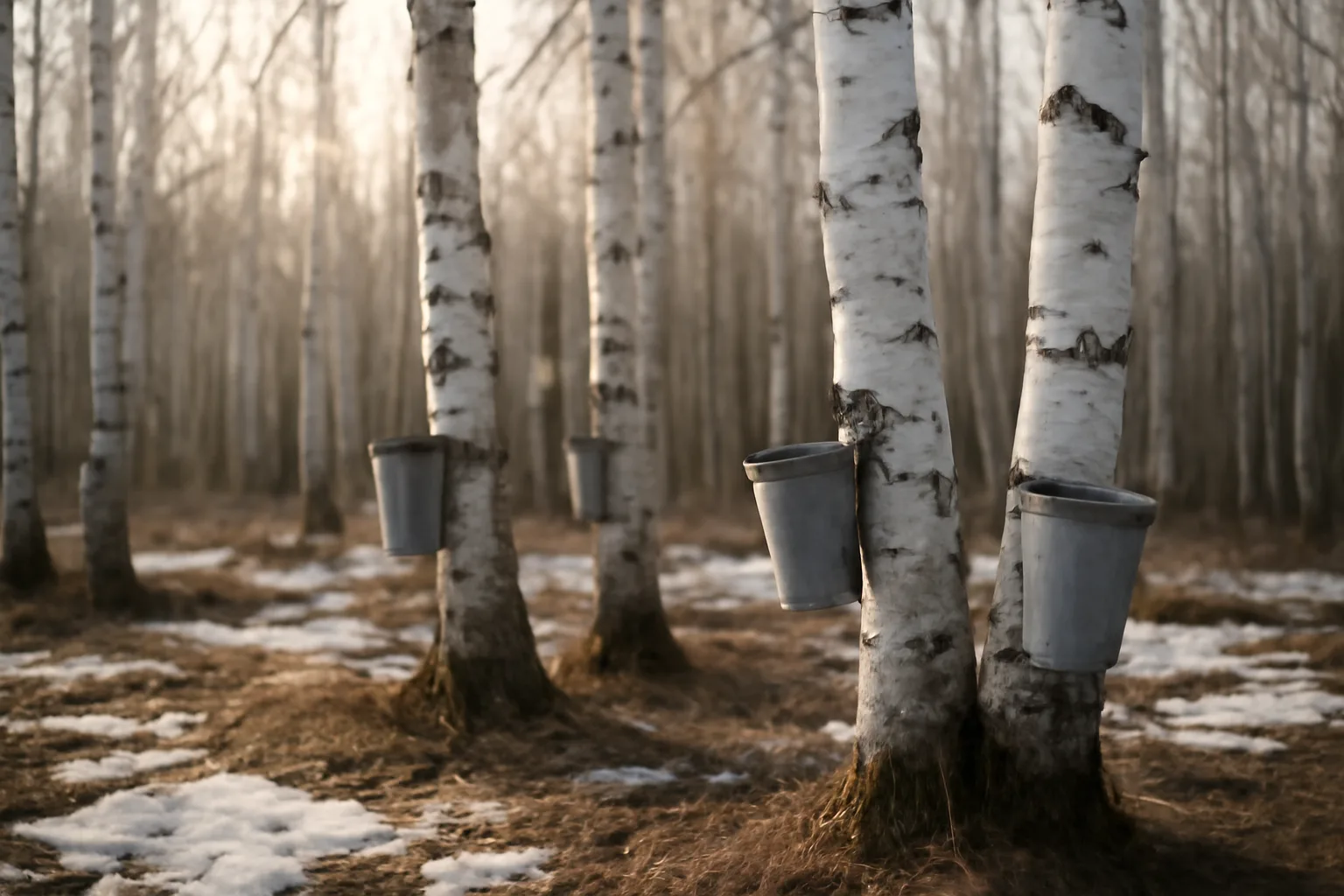
TL;DR
A sugarbush in Alaska runs $200 to $2,000+ to start, depending on tap count and whether you buy or build your evaporator. Alaska has no state syrup license for small producers. Land access, food handler rules, and DNR permits still apply. The birch season is brutally short, often 2 to 4 weeks in April. Plan around that window above everything else.
Do you need a license for sugarbush in Alaska?
For most small producers, no. Alaska has no dedicated maple or birch syrup producer license the way some northeastern states do. But "no syrup license" is not the same as "no paperwork."
Sell the syrup you make and Alaska's Department of Environmental Conservation (DEC) treats it as a processed food product. Selling at a farmers market or to a retailer usually means a food establishment permit or a cottage food exemption filing with DEC [1]. Alaska's cottage food law (AS 17.20.020) lets certain low-risk foods go direct to consumers without a full food establishment permit [9]. The exact scope and any annual limits are worth confirming with DEC before your first sale [1].
Tap trees on state land and you need a personal-use or commercial resource-use permit from the Alaska Department of Natural Resources (DNR). Personal-use tapping is a different (and cheaper) category than commercial extraction [2]. On federal ground inside national forests or BLM parcels, a special use permit from the managing agency applies. Confirm the current fee schedule and form numbers with that agency before you tap a single tree.
Private land is the simplest path. Own the land or hold a written lease and you skip the DNR layer entirely, going straight to the food rules if you sell.
So the real picture: a DEC food permit (or cottage food filing) if you sell, plus a DNR or federal land-use permit if you don't own the ground. Neither is a "sugarbush license" as such. Ignoring either is a real legal exposure.
How much does sugarbush cost in Alaska?
Startup runs from about $200 for a micro backyard operation to $2,000 or more once you factor in real equipment for even 50 taps. Here's how the money actually breaks down.
Taps and tubing
Spiles run $0.30 to $1.00 each for basic aluminum, or $1.50 to $3.00 for food-grade plastic drop lines [3]. A 50-tap bucket setup costs roughly $50 to $100 in hardware. Move to gravity tubing runs and add another $100 to $300 for food-grade tubing, fittings, and a collection tank.
Collection buckets or bags
Food-grade 3-gallon buckets cost $3 to $6 each. Fifty of them is $150 to $300. Sap bags cost less per unit but they're disposable. Most beginners buy 20 to 30 buckets and grow from there.
Evaporator or boiling setup
This is where costs split hard. A DIY cinder-block arch with a steam table pan costs under $100 in materials and handles only tiny batches. A purpose-built 2x3 ft hobby evaporator (flat pan style) runs $400 to $700 [3]. A proper 2x4 or 2x6 drop-flue evaporator, which most people want once they pass 50 taps, starts around $1,200 to $2,500 new. Used units surface in Alaska now and then. Budget $500 to $1,000 for a working secondhand rig.
Birch punishes you on the conversion ratio. Birch sap runs about 100:1 to 150:1 (sap to syrup) versus roughly 40:1 for sugar maple [4]. Your evaporator runs longer per finished gallon, and that shows up on your fuel bill.
Fuel costs
Propane and heating oil cost far more in Alaska than in the Lower 48. The U.S. Energy Information Administration has reported Alaska residential propane in the $3.50 to $4.50+ per gallon range in recent heating seasons, against a national average closer to $2.50 [5]. Boiling 100 gallons of birch sap down to roughly one gallon of syrup on propane can burn 3 to 5 gallons of propane. Scale that up fast.
Permits
DNR personal-use permits on state land have historically been low-cost or free for subsistence-scale tapping, but fee schedules change. Confirm current fees with the Alaska DNR Division of Forestry [2]. A DEC food establishment permit, where required, has run $100 to $300 annually for small operations historically. Confirm the current schedule with DEC [1].
Totals at a glance
| Setup size | Tap count | Estimated startup cost | Notes |
|---|---|---|---|
| Backyard hobby | 10 to 20 taps | $150 to $400 | DIY boil, no land permit |
| Small personal-use | 30 to 75 taps | $600 to $1,500 | Basic evaporator, buckets |
| Small commercial | 75 to 200 taps | $1,500 to $4,000+ | Real evaporator, permits, fuel reserve |
| Mid-scale birch | 200 to 500 taps | $4,000 to $12,000+ | Tubing system, bulk storage, licensing |
These ranges come from major sugaring supplier pricing and Alaska energy cost data [3][5]. Your real number depends on whether you already own land, how far sap has to travel to your boiling station, and whether you can buy used.
Pricing your first kit before you commit? MapleSyrupPath sells a $129 one-time Tap + Evaporator + Grade Kit at /start that covers the core gear for a starter operation. Worth knowing before you over-buy.
For how startup costs look in states with older maple industries, see our guides on sugarbush cost in Idaho and sugarbush cost in Colorado.
What trees can you tap in Alaska, and does species affect cost?
Alaska has essentially no sugar maple (Acer saccharum). The native sugaring tree is paper birch (Betula papyrifera), plus Alaska paper birch and Kenai birch. Some interior growers tap black cottonwood and white spruce for experimental syrups. Birch is the real crop [4].
Species drives the economics. Birch syrup costs more per gallon to make than maple syrup anywhere in North America, mostly because of that 100:1 to 150:1 reduction ratio. A Cornell study on maple costs doesn't translate cleanly to birch, but the math is simple. Boil 150 gallons of sap for one gallon of syrup instead of 40, and your per-gallon fuel cost is 3 to 4 times higher [4][6].
Birch syrup also carries a premium at retail, often $15 to $25 per 8 oz bottle or $60 to $100+ per quart at Alaska specialty markets. That reflects both the production cost and the regional novelty [4]. The economics can work. They demand honest accounting first.
On the cost side, this species difference makes your evaporator choice matter more in Alaska than in Vermont. A small hobby pan that's fine for a weekend maple boil in New England feels undersized fast when you're reducing birch sap.
How long does sugarbush take in Alaska?
The birch sap season in most of Alaska is shockingly short. Experienced Alaska birch producers describe a 2 to 4 week window, usually in April, sometimes into early May in the interior [4]. Exact dates shift by year and elevation. You have to be ready before it opens, because you cannot catch up once it does.
Compare that to Vermont, where maple season often runs 4 to 6 weeks across March and early April, and to Michigan or Wisconsin, where sugar maples can give 30 to 45 days of productive tapping in a good year [6]. Alaska's window is narrow.
Inside that window, daily flow tracks temperature. Birch sap runs best on days above freezing with nights that still drop below. That freeze-thaw cycle drives sap in birches much as it does in maples. Alaska springs are variable enough that some years you get 10 good collection days and some years you get 20.
For first-year operators, this points to one hard rule. Every piece of equipment has to be on hand and working before the season opens. There's no time to order a replacement tap or fix a leaky tubing connection once sap is flowing. Order gear in February at the latest. Test your evaporator with water before April.
On the regulatory side, if you need a DNR permit for state land, apply well ahead. Personal-use permit processing has historically been quick, but commercial permits take longer. Confirm current timelines with DNR's Division of Forestry [2]. MapleSyrupPath is not a permit service and cannot predict how long your application takes.
For how season length shapes cost in warmer states (where tree species and timing are completely different), compare with sugarbush cost in California or sugarbush cost in Georgia.
What are the land access and permit costs in Alaska?
Alaska's land ownership picture is unusual. The federal government owns roughly 60% of Alaska, the state about 28%, Native corporations around 12%, and private individuals a small slice [7]. Most of the birch forest a new producer might want to tap is state or federal land, not private.
On state land, DNR runs resource permits. Personal-use extraction of birch sap falls under DNR's land use permit process. Small personal-use activity has historically been low-cost or permit-by-notification, but this changes. The DNR Division of Forestry is the office to contact for current requirements [2].
On federal land, the U.S. Forest Service (Chugach and Tongass National Forests cover huge portions of southern Alaska) handles special use permits for commercial or organized non-commercial activity. A small personal-use permit may be free or nominal. A commercial operation pays a land-use fee tied to the value of the product extracted [8]. Contact the ranger district for your area.
Tapping on Native corporation land takes written permission from the relevant ANCSA corporation. There's no standard permit form. It's a private negotiation.
Private land sidesteps all of it. Own acreage with birch stands and your only regulatory touchpoints are the DEC food rules (if selling) and standard business licensing (if commercial).
What does birch syrup sell for, and does the math work?
Birch syrup is a real commercial product in Alaska with an established, if small, market. Producers like Kahiltna Birchworks have run for decades and set pricing benchmarks. Alaska birch syrup has historically retailed from about $12 to $20 for a 3.4 oz bottle up to $60 to $120 per quart, depending on producer and outlet [4].
The math is not easy. Run the numbers: 150 gallons of sap at 150:1 yields one gallon (128 oz) of syrup. At $80 per quart retail, that gallon grosses $320. Spend $30 on propane, $10 on supplies, and several hours of labor, and the margin on your time is thin. Scale to hundreds of taps with a real evaporator and the economics improve, because fixed overhead spreads across more output.
Nobody has great published cost-per-gallon data for Alaska birch syrup specifically. The closest numbers come from extension work on birch economics in Canada and from the general maple cost literature, which Cornell's extension program covers for maple [6]. Applying those frameworks to birch means adjusting for the worse sap-to-syrup ratio and Alaska's higher energy costs.
For first-year operators, treat year one as a learning season, not a profit season. Expect to cover consumables if you're lucky, and count equipment as a multi-year investment.
What equipment do you actually need, and what can you skip?
The honest minimum for a working birch sugarbush: spiles, collection buckets, a heat source, and a pan you can boil in. That's it. You can start for under $300 at 20 taps if you don't mind slow, smoky, outdoor boiling.
What's worth buying: a flat-pan or drop-flue evaporator speeds the process a lot and improves syrup quality by cutting scorching. For birch, the long reduction time makes a real evaporator more valuable than it might be for a maple hobbyist with a better ratio. A refractometer ($20 to $50) is essential for knowing when syrup is done. Birch finishes near 66 Brix and scorches easily at the end of the boil, so a reliable reading matters [4].
What you can skip in year one: reverse osmosis. RO pulls water out of sap before boiling and cuts fuel use a lot. It makes sense at scale, but a used RO unit for a sugarbush starts at $2,000 to $8,000. Wait until you know this is a multi-year habit. A filter press is also skippable at first. Cone filters and a food-grade filter set work fine for small batches.
For bottling: food-grade glass or plastic containers, a capper or lidder, and labels. If you sell, Alaska DEC has labeling requirements for processed food products, including ingredient statements and producer contact information [1]. Check the current requirements before you print labels.
See also our comparison guides for states with denser equipment supplier networks: sugarbush cost in Illinois and sugarbush cost in Connecticut.
How do Alaska's startup costs compare to other states?
Alaska is not the cheapest place to start a sugarbush, and it's not the most expensive. The physical gear costs about the same as anywhere. Three Alaska-specific factors move the total: higher fuel costs, a shorter and less forgiving season, and distance from major sugaring suppliers.
Shipping matters here. A 2x4 evaporator that costs $1,400 at a New England supplier can land in Anchorage or Fairbanks with $200 to $400 in freight on top. Buy locally when you can, or fold freight into your budget from the start.
Fuel, as noted, runs meaningfully above the national average for propane and heating oil [5]. Fire with wood (many Alaska producers do, given access to birch and spruce firewood) and your fuel cost drops sharply while your labor and time climb.
The species-driven 100:1+ reduction ratio is the biggest Alaska-specific cost driver. A Vermont producer with sugar maple needs roughly 40 gallons of sap per finished gallon. An Alaska birch producer needs 3 to 4 times the sap volume, and 3 to 4 times the fuel, for the same output. That's the number that reshapes every other line in the budget.
For states with traditional maple operations and more infrastructure to compare against, our guides on sugarbush cost in Alabama and sugarbush cost in Colorado show how land and licensing costs vary across the country. Curious how warm-climate states handle having no native syrup trees? See sugarbush cost in Hawaii.
What are the food safety rules for selling birch syrup in Alaska?
Alaska Statute 17.20.020 governs food safety for processed foods, and DEC is the administering agency [1][9]. The question for a birch syrup producer selling direct comes down to this: does your operation qualify for a cottage food exemption, or do you need a food establishment permit?
Alaska's cottage food provisions let certain low-risk products go direct to consumers without a full food establishment permit. Syrup usually reads as low-risk because of its high sugar content (water activity below the threshold for most pathogens). Confirm with DEC that birch syrup falls within the current cottage food allowance before relying on that exemption [1].
Sell wholesale (to a retailer, restaurant, or distributor) and cottage food exemptions almost never apply. You'd need a food establishment permit, which means an inspectable facility, certain equipment standards, and annual fees. Confirm current fee schedules with DEC directly.
Labeling under Alaska's food rules requires at minimum: product name, net weight or volume, ingredient list, and producer name and address. Make any nutrient claim and FDA labeling rules layer on top.
One thing Alaska producers sometimes miss: if you process sap from state or federal lands, some permit conditions require documentation of harvest volumes. Keep records.
What's the realistic first-year budget for an Alaska sugarbush?
Here's a realistic first-year budget for someone starting small in Alaska: 50 taps on private land, selling a portion of what they produce.
Equipment (one-time):
- 50 spiles at $0.75 each: $38
- 30 food-grade buckets: $120
- Basic 2x3 hobby evaporator: $500
- Refractometer: $35
- Bottling supplies (100 bottles, lids, labels): $80
- Total equipment: about $773
Operating (year one):
- Propane (estimate 15 to 25 gallons for a short season at 50 taps with birch): $60 to $110 at Alaska prices [5]
- DEC food permit or cottage food filing: $0 to $300 depending on category (confirm with DEC) [1]
- Filters, cleaners, spare parts: $30 to $50
- Total operating: about $90 to $460
Expected output: at 50 taps with a short birch season (say 15 good collection days averaging 1 gallon of sap per tap per day), you'd collect roughly 750 gallons of sap. At 125:1, that's about 6 gallons of birch syrup.
At $80 per quart retail (32 oz), 6 gallons (24 quarts) grosses about $1,920. Net against operating costs and you clear the year comfortably, with your equipment still in hand for year two. That assumes you sell everything at full retail, which most first-year operators do not.
Be honest with yourself. Year one is education. Sell half at retail and give the rest to family and you're near break-even. Year two, with the equipment paid for and your process figured out, the numbers look much better.
Want a starter kit before committing to that full build? MapleSyrupPath's $129 Tap + Evaporator + Grade Kit at /start covers the essentials for learning the process before you spend on a full setup.
Frequently asked questions
Do you need a license for sugarbush in Alaska?
There's no dedicated sugarbush or birch syrup producer license in Alaska. If you sell, you likely need a DEC food permit or cottage food filing under AS 17.20.020. If you tap on state or federal land, you need a DNR or federal land-use permit. Private landowners skip the land permit layer but still need food-side paperwork to sell. Confirm requirements with DEC and DNR for your situation.
How much does sugarbush cost in Alaska?
Startup runs from about $200 for a backyard micro-operation (10 to 20 taps, DIY boil) to $2,000 to $4,000 for a 50 to 200 tap setup with a real evaporator. Birch sap's 100:1 to 150:1 reduction ratio drives higher fuel costs than maple anywhere. Alaska propane prices average notably above the national figure. Budget at least $750 to $1,500 for a first-year operation you'd actually want to run.
How long does sugarbush take in Alaska?
The birch sap season in Alaska typically runs 2 to 4 weeks, usually in April, sometimes into early May in the interior. It's one of the shortest sugaring windows in North America. You need all equipment ready before the season opens. There's no catching up once sap flows. Processing a batch takes hours per boil depending on your evaporator size and how much sap you collected that day.
Can you tap maple trees in Alaska?
Sugar maple (Acer saccharum) is not native to Alaska and doesn't grow there in commercial quantities. The primary tapping tree is paper birch (Betula papyrifera). Some operators also tap other native birch species. A few ornamental maples grow in Southeast Alaska's milder zones, but they aren't a viable commercial tapping resource. Birch syrup is the real Alaska product.
What is the sap-to-syrup ratio for birch in Alaska?
Birch sap runs about 100:1 to 150:1 sap to finished syrup, compared to roughly 40:1 for sugar maple. That means you need 2.5 to 4 times the sap volume to make the same amount of syrup, which directly multiplies fuel costs and boiling time. It's the single biggest cost driver that sets Alaska birch operations apart from any maple-producing state.
Do you need a DNR permit to tap trees on state land in Alaska?
Yes. Tapping trees on Alaska state land requires authorization from the Alaska Department of Natural Resources Division of Forestry. Personal-use-scale activity has historically gone through a permit or notification process with low or no fees. Commercial extraction requires a formal land-use permit with fees. Current form numbers and fees change, so confirm directly with DNR's Division of Forestry before tapping.
What does Alaska birch syrup sell for?
Alaska birch syrup typically retails for $12 to $20 for a small (3 to 4 oz) bottle and $60 to $120 per quart, depending on producer and sales channel. The premium price reflects the difficult production economics and the regional specialty nature of the product. These are market-observed ranges, not guaranteed returns. Wholesale prices to retailers are lower, so confirm with your buyers before projecting revenue.
Can you start a birch syrup operation on federal land in Alaska?
Yes, but you need a special use permit from the managing agency, either the U.S. Forest Service (for Chugach or Tongass National Forest land) or BLM. Commercial operations pay a land-use fee based on extracted product value. Personal-use or small-scale permits may be cheaper or free. Contact the specific ranger district or BLM field office for your area to get current permit requirements and fees.
What equipment do you actually need to start tapping birch in Alaska?
The real minimum: spiles, food-grade collection buckets, a heat source, and a boiling pan. A refractometer ($20 to $50) is essential because birch syrup scorches easily at the end of the boil and you need to know your Brix. A purpose-built evaporator (flat pan or drop-flue) speeds processing and improves quality. Skip reverse osmosis and filter presses in year one; add them if you scale up.
How does Alaska's cottage food law affect birch syrup sales?
Alaska Statute 17.20.020 provides a cottage food pathway for certain low-risk products sold directly to consumers. Birch syrup's high sugar content generally puts it in the low-risk category, but confirm with Alaska DEC that your product and sales method qualify before relying on the exemption. Selling wholesale to retailers almost certainly requires a full food establishment permit regardless of product type.
Is birch syrup production profitable in Alaska?
It can be, but year one almost never is. Equipment costs, the steep learning curve of birch's production ratio, and the short season mean most first-year operators break even at best. Year two and beyond, with equipment paid off and process dialed in, the math improves. Birch syrup's high retail price helps offset production cost. Nobody has good published profitability data; the economics vary widely by scale and market access.
What labeling is required to sell birch syrup in Alaska?
Alaska DEC food labeling requirements include at minimum: product name, net weight or volume, ingredient list, and producer name and address. Make any nutrient or health claim and federal FDA labeling rules apply on top. For standard syrup sold direct, a clean label with those four elements covers the basics. Confirm current requirements with DEC before printing labels; requirements can be updated.
How do shipping costs affect the Alaska sugarbush budget?
Meaningfully. Equipment from Lower 48 suppliers often arrives with $150 to $400 or more in freight for large items like evaporators. That isn't always listed upfront in the base price. Budget for shipping before comparing Alaska prices to what you see advertised on supplier websites. Buying used locally eliminates most of this. Check Anchorage- or Fairbanks-based agricultural suppliers and local marketplace groups for used sugaring equipment.
Does the type of land you tap on affect your costs in Alaska?
Yes, a lot. Private land is the cheapest path: no land-use permit cost, just the food rules if you sell. State land adds a DNR permit process with variable fees. Federal land (Forest Service or BLM) adds a special use permit, and commercial operations pay extraction-value fees. Native corporation land requires direct negotiation. For a first-year operator, starting on private land you own or lease removes a layer of cost and uncertainty.
Sources
- Alaska Department of Environmental Conservation, Food Safety and Sanitation Program: Alaska DEC administers food establishment permits and cottage food provisions under AS 17.20.020 for processed food products including syrup sold to consumers
- Alaska Department of Natural Resources, Division of Forestry and Fire Protection: Alaska DNR Division of Forestry administers land-use permits for resource extraction including sap tapping on state-owned land
- Leader Evaporator Co., Sugaring Equipment Price List: Hobby and commercial evaporator pricing: flat-pan 2x3 ft units start around $400 to $700; 2x4 drop-flue units start around $1,200 to $2,500 new; spiles range $0.30 to $3.00 each depending on type
- University of Alaska Fairbanks, 'Birch Syrup: A Sweet Alaska Tradition': Alaska birch sap runs a 100:1 to 150:1 sap-to-syrup ratio; season typically 2 to 4 weeks in April; birch syrup retails for a significant premium over maple syrup; paper birch is the primary tapping species
- U.S. Energy Information Administration, Residential Propane Prices by State: Alaska residential propane prices average notably above the national average, historically in the $3.50 to $4.50+ per gallon range versus a national average closer to $2.50
- Cornell University Cooperative Extension, 'Maple Syrup Production for the Beginner': Sugar maple sap-to-syrup ratio is approximately 40:1; maple season in New York and nearby states typically runs 4 to 6 weeks; cost structure frameworks for small maple operations
- Alaska Department of Natural Resources, Division of Mining, Land and Water, 'Alaska Land Ownership': Federal government owns approximately 60% of Alaska land, state owns about 28%, with private and Native corporation ownership comprising the remainder
- U.S. Forest Service, Special Uses Program: U.S. Forest Service administers special use permits for commercial and organized activities on national forest land including resource extraction; fees calculated based on value of product extracted
- Alaska State Legislature, Alaska Statute 17.20.020, Food, Drugs and Cosmetics: AS 17.20.020 governs food safety for processed foods in Alaska and provides the statutory basis for DEC's food establishment permit and cottage food provisions