Last updated 2026-08-21
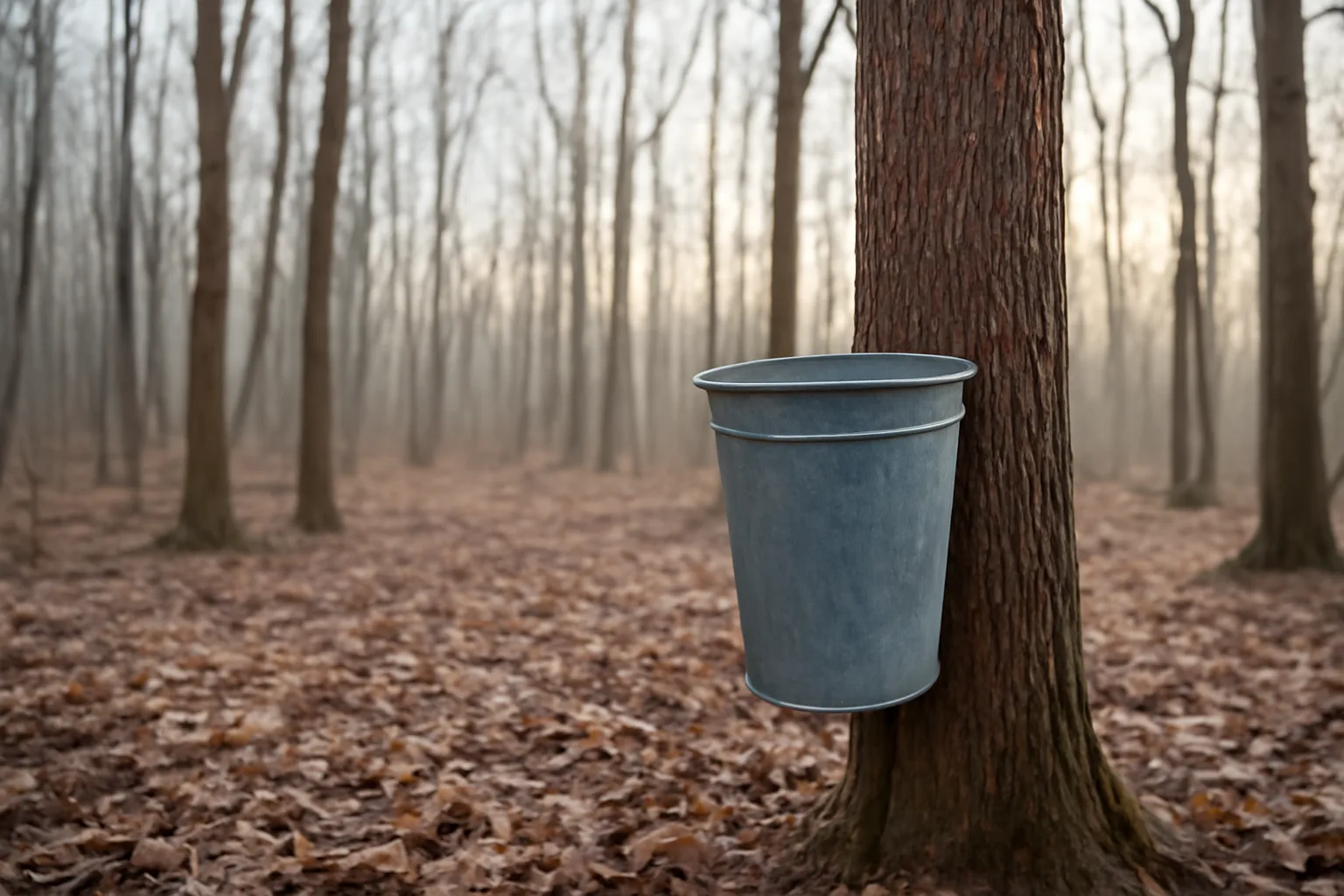
TL;DR
Florida has no sugarbush license. Home tapping needs none. Selling syrup usually means an FDACS food permit unless you fit cottage food under Fla. Stat. 500.80 ($250,000 sales cap). Budget gear, not a commercial bush. USDA does not survey Florida maple. Expect a few freeze nights in the north, not a northern season. Confirm fees with FDACS.
How much does sugarbush cost in Florida?
A Florida sugarbush does not price like Vermont timber. You are not buying a proven sap stand. You are buying land that happens to hold red maple, plus taps, pans, fuel, bottles, and, if you sell, food paper. Most first seasons stay in the low hundreds to a few thousand dollars if you already own woods and keep it as a hobby.
There is no honest statewide “per tap” market here. USDA’s annual maple syrup report surveys 10 states and does not include Florida, so you will not find a Florida yield or price series to underwrite a loan [1]. Nobody has good commercial data on Florida sap. The closest official picture is absence: no Florida line in that report.
If the trees are already on your lot, tree cost is zero. Spiles and tubing are cheap. A flat pan over a backyard fire can stay under a few hundred dollars if you scrounge safely. A hobby evaporator often lands in the low thousands. Commercial oil or wood evaporators run much higher and are a waste of money in this climate. I would not buy RO, a sugarhouse, or a used 2x6 evaporator for Florida sap. You will not fill it.
Land is the wild card. Florida woodland trades as timber, hunting, or homes, not as sugarbush. I will not invent a per-acre maple premium. There isn’t one. If you are shopping acreage just to make syrup, stop. Compare that impulse with a real maple state writeup like sugarbush cost in Georgia before you wire a deposit.
Food-side cost is separate. Home use is free of a state food permit. Selling can mean a cottage food path or a food establishment permit from the Florida Department of Agriculture and Consumer Services. Permit fees change. Confirm the current amount on the FDACS food permit page. Do not use an old blog number [2].
Time is a cost too. You will spend more hours watching forecasts than boiling. That is the Florida bargain.
Do you need a license for sugarbush in Florida?
No. Florida does not issue a sugarbush license, a tap license, or a maple producer certificate. Tapping trees you own, for food you eat, does not take a state maple permit.
Selling is a different stack. Florida Statute 500.12 says a food permit is required of a person who operates a food establishment or retail food store, unless an exemption applies [3]. Cottage food is the exemption people ask about. Florida Statute 500.80 states that a cottage food operation “is exempt from the permitting requirements of s. 500.12 if the cottage food operation complies with this section and has annual gross sales of cottage food products not exceeding $250,000” [4]. That cap is in the statute. It is not a processing-time promise and it is not a maple-specific license.
Whether boiled maple syrup counts as a cottage food product is an FDACS call, not a forum call. Cottage foods are foods that are not time/temperature control for safety foods, sold from the home operation under the statute and FDACS cottage food rules [5]. Syrup is high sugar and usually shelf stable after a proper finish, but you still confirm the product list and labeling with FDACS before you take money. MapleSyrupPath is not FDACS and not a law firm.
Other paper that is not a “sugarbush license” but can still stop you: county zoning if you put up a sugarhouse or invite the public, a fire inspection if you burn indoors, a sales tax account if you are truly in business, and written permission if the trees are not yours. State parks and wildlife management areas are not your bush. Do not tap public trees.
If you bottle as a food establishment, use the FDACS food permit process and current fee table. I will not invent a fee or a wait time. Boards change both [2].
How long does sugarbush take in Florida?
The sap window is short and unreliable. In real maple country, producers plan on weeks of freeze-thaw. Penn State Extension puts it plainly: “The sap run is dependent on weather conditions. Freezing nights and warm days are needed for sap flow” [6]. Florida gives you scattered freeze nights, mostly in the Panhandle and north, not a six-week run.
Setup time is the part you control. A backyard tap-and-pan hobby can be ready in a weekend if trees are already big enough. A food-permit kitchen, if you go commercial, takes as long as FDACS and your county take. Confirm that clock with the board. Nobody should quote you a sure approval date, and no one can promise one.
Tree time is worse if you plan to plant. Sugar maple is grown for tap size on a decades-long clock in the north, often around a 10 to 12 inch trunk before people tap. Planting sugar maple in Florida so you can boil in 2046 is a long bet against heat, humidity, and pests. Red maple is already here and grows faster, but the sugar is thinner and the weather still has to cooperate [7][8].
Boil time follows the math everyone else uses. About 40 gallons of sap make a gallon of syrup when sugar sits near 2 percent [6]. Red maple sap often sits lower than sugar maple. Your boil gets longer, not shorter. On a 70 degree January afternoon the sap also spoils fast. You do not have a sugarhouse cold room working for you.
If you need a calendar answer: watch north Florida nights in January and February. When a freeze is forecast, tap. When it warms for good, pull the taps. That might be a handful of nights. It is not a season you staff.
Can you even run a sugarbush in Florida?
You can tap. You can boil. You will not run a commercial sugarbush in the sense USDA measures. The annual NASS maple syrup report is built on 10 producing states. Florida is not one of them [1]. The 2022 Census of Agriculture maple tables likewise follow the states that actually report taps and syrup. Treat “Florida maple industry” claims as marketing.
A backyard bush is real enough. Red maple (Acer rubrum) is native across Florida and shows up in UF/IFAS tree sheets as a common landscape and wetland tree [8][9]. On a rare freeze-thaw swing in Leon or Jackson County, those trees can drip. People have boiled that sap. That is a kitchen project, not a farm plan.
South Florida is a no. Miami-Dade and the Keys sit in USDA plant hardiness territory far past where sugar maple is happy, and they do not get the night freeze the sap run needs [10]. If your “woods” are live oak and cabbage palm, you do not have a bush.
I would still try a few taps if I lived in the western Panhandle and already owned mature red maples. I would not clear slash pine to plant a maple orchard. I would not write a county agritourism business plan around pancake breakfasts in March. Compare that honesty with other thin-climate writeups, including sugarbush cost in Alabama and sugarbush cost in Arkansas, before you copy a New England layout.
What trees actually run sap in Florida?
Sugar maple (Acer saccharum) is the tree the industry means by sugarbush. USDA PLANTS treats it as a northern and Appalachian species. Florida is not in its native range [7]. The Forest Service FEIS writeup puts the southern edge through the Appalachians toward northern Georgia, not through Florida hammocks [11]. The NRCS plant guide describes a tree of cool, moist sites, not peninsula heat [12].
Red maple is the honest Florida tree. USDA PLANTS lists Acer rubrum as native, and UF/IFAS writes it up as a Florida tree, including wet sites [8][9]. Boxelder and silver maple show up in some northern counties as planted or scattered trees. Their sap is usable in the same amateur way. Sugar content is the problem, not the species name on the tag.
Other “sweet sap” talk you will hear (palm, sweetgum, birch) is not a Florida maple path and is not what graders mean by maple syrup. If you want maple, you need a maple.
Tappable size still matters. A 4 inch landscape whip is not a bush. Wait until the trunk is stout. Northern guidance often starts taps around 10 inches diameter. Use that as a ceiling for caution, not a Florida statute. Over-tapping a stressed yard tree in sandy soil is how you kill the only maple you have.
If you are buying stock, buy for shade. Do not buy 200 sugar maple seedlings for a Gadsden County “orchard” and call it a business. Heat and leaf fungi will collect that bill.
What does first-year equipment cost if you still try?
Keep the first year dumb. I would tap 5 to 15 red maples I already own, hang covered buckets or simple bags, and boil outside on a flat pan. That kit of hardware is often under $300 if you already have a turkey fryer or a cinder-block arch. Add a candy thermometer, filters, and canning jars.
If you want a matched tap, evaporator, and grade set instead of a hardware-store pile, MapleSyrupPath has a $129 one-time Tap + Evaporator + Grade Kit. It does not add freeze nights to the Panhandle. It also does not replace FDACS if you sell.
Skip these in year one: reverse osmosis, a stainless oil-fired evaporator, a filter press, a bottling line, and a branded sugarhouse. Those tools pay off at thousands of taps. You will not have thousands of taps. A hydrometer and a finishing pot matter more than a logo.
Fuel will surprise you. Water is most of sap. You will burn wood or propane for a small jar. Buy a cheap moisture meter for firewood if you go wood. Wet pine is a miserable boil.
Sanitation is not optional. Sap left in a 75 degree shed turns. Boil the same day or keep it ice cold. Florida gives you the worst of both, warm days and no sugarhouse fridge. Budget extra ice and extra dumps. Bad sap is how you spend money to make something you should not bottle.
If the first freeze week yields a pint, you learned the climate. That pint is the whole feasibility study.
What food rules apply if you sell Florida maple syrup?
Home jars for your table are your kitchen. The minute you sell, you are in Chapter 500, Florida’s food law. Section 500.12 is the permit hook for food establishments [3]. Section 500.80 is the cottage food off-ramp if you qualify and stay under $250,000 in annual gross sales of cottage food products [4].
FDACS runs both the cottage food guidance and the food permit desk [2][5]. Read those pages, then call them with your exact process: sap from your trees, boiled at home, jarred, sold at a market or online. Ask if that product is cottage food in their current interpretation. Get it in writing if you can. Do not treat this article as a permit.
Labeling is where hobbyists slip. Cottage food has its own label rules in the statute and FDACS materials, including identity of the product and the cottage food operation information FDACS expects [5]. A food establishment has a different label stack. Either way, “Florida maple” should not imply sugar maple from a native stand you do not have. Say the species if you know it.
Interstate shipping adds FDA territory. I will not pretend that is simple. If you leave the state, ask FDACS and read current federal food facility rules before you print postage. No timing guarantee lives here.
Grading is a northern habit. Florida does not run a maple grade program like Vermont. You can still use standard maple grade language if the syrup actually matches it. Lying about grade is a great way to earn a complaint.
How does Florida compare to real maple states?
The gap is climate, then paper, then trees. NASS publishes maple production for 10 states. Florida is absent [1]. That single fact should govern any spreadsheet you build.
Weather is the mechanism. Freeze at night, thaw by day. Penn State’s beginner page is the same sentence every northern extension repeats [6]. North Florida gets freezes. It does not get a reliable alternating pattern for weeks. The Florida Climate Center tracks freezes because they damage citrus and vegetables, not because they open a sap season [13].
Trees follow range maps, not wish lists. Sugar maple’s published native range stops short of Florida [7][11][12]. Georgia’s mountains are closer to a real bush than any Florida county. If you want a neighbor-state reality check, read sugarbush cost in Georgia. For other places people ask the same bad question, see sugarbush cost in California, sugarbush cost in Arizona, and sugarbush cost in Hawaii.
Licensing is oddly similar. Most maple states also lack a “tap license.” They regulate food and, sometimes, grades. Florida’s twist is not extra maple bureaucracy. It is that you can collect every permit and still have no sap.
| Question | Florida | NASS maple states |
|---|---|---|
| What USDA reports | Not in the annual maple survey [1] | Production and tap counts in 10 states [1] |
| Main maple on the land | Red maple common; sugar maple not native [7][8] | Sugar maple stands are the bush [11] |
| Sap weather | Scattered freeze nights, mainly north [13] | Repeated freeze-thaw weeks [6] |
| Maple-specific license | None | Usually none; food and grade rules vary |
| Selling path | FDACS permit or cottage food if you qualify [3][4] | State ag plus food rules |
Use that table when someone tries to sell you a “turnkey Florida bush.”
What land, water, and county paper actually shows up?
Owning the land, or holding written tap rights, comes first. A handshake on a hunting lease is a fight waiting to happen. If you do not own the trees, get a signed permission that says you may tap, collect, and boil, and who is liable if a tree dies.
Zoning sits at the county. A few buckets behind the house are not a land-use case. A public boil, a farm stand, or a new outbuilding can be. Call the county planning desk with the parcel ID. I will not guess your zoning district.
Water is easy at hobby scale. You are moving tree sap, not irrigating 40 acres. If you later drill a well for a commercial kitchen, that is a water-well construction job under Florida well rules and your water management district, not a maple form. Confirm with the district that covers your county. Do not drill first.
Silviculture BMPs exist for Florida forestry [14]. They are about streams and roads when you log, not about spiles. If you are cutting a woods road to a boil site, read them. If you are walking a bucket 40 feet, move on.
Insurance is your call. A home policy may hate a wood-fired arch next to the porch. Ask the agent a direct question. If they stall, that is data.
None of this is a sugarbush license. It is the ordinary Florida pile that shows up when a hobby starts looking like a business.
Is planting sugar maples in Florida a waste of money?
In most of the state, yes. Sugar maple wants cool roots and a real winter. USDA hardiness maps put much of Florida in zones where that tree is a struggle, and the native range maps do not give you cover [7][10][11]. You can keep a specimen alive in a shady north Florida yard with water and luck. That is gardening.
An orchard is a waste. Seedlings, tubes, mowing, and 20 years of waiting still leave you with a species outside its range and a sap season that may not exist. Red maple you already have is the only rational tap list.
People still plant because a nursery tag said “maple.” Ask which maple. Red, Florida, or Japanese maples in a big-box lot are not a sugarbush. Japanese maple is a landscape plant. Do not tap it for a business story.
If your goal is syrup in the pantry, buy syrup from a NASS state and spend the tree money on oaks or pines that belong here. If your goal is the process, tap the red maples that survived the last hurricane and keep the batch small.
I would rather see someone spend $200 on a pan and a thermometer than $2,000 on bare-root sugar maple. The pan teaches you the weather. The seedlings teach you about refund policies.
Where first-year Florida operators waste money
They buy northern capacity. A 3x8 evaporator is a beautiful object. It is also a boat anchor when your whole county freezes six nights. Buy the smallest boil surface that still finishes a pot before the sap sours.
They pay for land as if maple added value. It does not. Appraisers here know pine, sod, groves, and houses. “Sugarbush potential” is not a line on a Florida closing statement.
They skip the phone call to FDACS and print labels anyway. A market manager will ask. A neighbor will complain. The statute is public. Use it [3][4][5].
They tap stressed yard trees on a fill lot. Red maple in a parking-strip soil already lives on the edge. Extra holes in March will not help.
They chase agritourism buildings before they have a pint. Pour a slab after you have boiled through two winters. Not before.
They treat social video from Vermont as a Florida SOP. Different trees, different nights. Watch your own bucket. If it is dry at 10 a.m. after a 48 degree night, you have your answer.
A cheap notebook with nightly lows, tap counts, and jar weights beats a branded software stack. You are not optimizing 8,000 taps.
What I would actually do in Florida, and how to confirm the boards
I would only do this in the northern tier, on mature red maples I already own. Five to fifteen taps. Covered buckets. Same-day boil. Jars for the house. No website. No farm-stand banner. After two winters I would decide if the nights exist often enough to bother. Most years I would buy breakfast syrup and keep the pan.
If I wanted to sell a few jars, I would email FDACS cottage food staff with the process and wait for their answer [5]. If they say no, I would price a food permit from the current FDACS table or I would stop [2]. I would not invent a third path.
I would not plant sugar maple. I would not lease 80 acres. I would not hire a designer for a sugarhouse. I would not tell a lender there is a Florida maple comps set. There is not [1].
Confirm variable facts every time. FDACS fees and forms. County zoning. Well rules if you build a kitchen. Whether syrup is on the cottage list this year. MapleSyrupPath is an independent publisher. We are not a law firm and not a service company. For the simple gear checklist on this site, use /start. That link does not file your permit.
If the board answer is messy, believe the board. This page is the paper path as published. Your parcel still needs a human at FDACS and a human at the county.
Frequently asked questions
Do you need a license for sugarbush in Florida?
No maple or tap license exists in Florida. Home use on your own trees needs no state sugarbush permit. Selling syrup brings Florida food law. That is a food establishment permit under s. 500.12 unless you qualify for cottage food under s. 500.80. Confirm product eligibility and current fees with FDACS. Zoning still sits with your county.
How much does sugarbush cost in Florida?
Hobby scale on trees you already own often stays in the low hundreds to a few thousand dollars for taps, a small pan, fuel, and jars. Commercial evaporators and planted sugar maple orchards are a poor spend here. Land trades as ordinary woods, not sugarbush. USDA publishes no Florida maple price or yield series. Selling adds FDACS costs you must confirm.
How long does sugarbush take in Florida?
The sap window is nights, not months. You need freezing nights and warmer days, which north Florida only offers in scattered winter stretches. A backyard setup can be ready in a weekend. Planted sugar maples take decades to reach tap size and still face the wrong climate. Food permits take as long as FDACS and the county take. Confirm timing with them.
Can you tap red maples in Florida?
Yes, if the tree is large enough and healthy, and you own it or have written permission. Red maple is native in Florida and is the realistic sap tree. Sugar content is usually lower than sugar maple, so you boil more sap per jar. South Florida still lacks the freeze-thaw pattern. Do not tap public park trees.
Is sugar maple native to Florida?
No. USDA PLANTS and Forest Service range writeups place sugar maple across the northeast and down the Appalachians, not as a Florida native. Red maple is the native maple you will actually find. Planted sugar maples are specimens, not a bush. Do not buy seedlings expecting a commercial stand.
Can I sell maple syrup as a Florida cottage food?
Only if FDACS treats your finished syrup as a cottage food product and you follow s. 500.80, including the $250,000 annual gross sales cap and labeling rules. That is not automatic. Ask FDACS with your exact process before you sell. If they say no, you are looking at a food establishment permit under s. 500.12 or you do not sell.
Does Florida grade maple syrup?
Florida does not run a state maple grade program like the big producing states. If you use U.S. grade names, the syrup should match those grades. There is no Florida maple inspection stamp to collect. Food safety rules still apply if you sell. Home jars for your own table are ungraded kitchen food.
How many taps make sense for a first Florida season?
Stay small. Five to fifteen taps on mature red maples you already own is enough to learn whether your nights actually run sap. You will not feed a commercial evaporator. Over-tapping yard trees in sand does real harm. Count nights of freeze, not Instagram tap walls, when you plan the second year.
Can I tap trees in a Florida state park or WMA?
No. Those trees are not yours. Tapping public trees is a quick way to get cited and to damage a resource other people own. Use private trees with clear rights. If a landowner offers taps, get it in writing, including who pays if a tree declines.
Do I need a well permit to boil sap in Florida?
Not for a backyard pan and a garden hose. A new potable well for a commercial kitchen is a different project. That runs through Florida well construction rules and your regional water management district. Confirm before you drill. Hobby boiling does not need a water-use permit just because sap is wet.
Is south Florida viable for a sugarbush?
No. You lack native sugar maple, you lack a reliable freeze-thaw sap window, and hardiness zones sit far past where a northern bush lives. Red maple may grow, but sap will not run on Miami nights. Spend the money on something the peninsula actually grows. Buy finished syrup if you want it on pancakes.
Where do I confirm current Florida fees?
FDACS food permits and cottage food pages for anything you sell. Your county planning office for buildings, stands, and public boils. Your water management district only if you construct a well or a real kitchen water system. Fees move. This site will not invent a current dollar amount or a processing clock. Call the desk that cashes the check.
Sources
- FDACS, Food Permits: Florida food establishment permits and current fees are administered by FDACS; confirm the live fee table.
- Florida Statute 500.12, Food permits: A food permit from the department is required to operate a food establishment or retail food store unless an exemption applies.
- Florida Statute 500.80, Cottage food operations: Qualifying cottage food operations are exempt from s. 500.12 permitting if they comply with the section and stay at or under $250,000 in annual gross sales of cottage food products.
- FDACS, Cottage Food Operations: FDACS publishes cottage food eligibility, labeling, and sales rules for home-based food operations.
- Penn State Extension, Maple Syrup Production for the Beginner: Sap flow needs freezing nights and warm days; roughly 40 gallons of sap make a gallon of syrup near 2 percent sugar.
- USDA PLANTS, Acer saccharum (sugar maple) profile: Sugar maple native distribution does not treat Florida as native range.
- USDA PLANTS, Acer rubrum (red maple) profile: Red maple is native in Florida and is the realistic sap species on the peninsula and Panhandle.
- USDA ARS, Plant Hardiness Zone Map: Florida hardiness zones sit mostly from the warm end of zone 8 through zone 11, outside typical sugar maple climate.
- USDA Forest Service FEIS, Acer saccharum: Sugar maple’s documented distribution runs from eastern Canada through the Appalachians toward northern Georgia, not Florida.
- USDA NRCS, Sugar Maple plant guide (pg_acsa3): NRCS describes sugar maple as a species of cooler, moist sites within its published range.
- Florida Climate Center (FSU), Freezes: Florida freeze documentation focuses on occasional winter freezes, mainly relevant in northern counties, not a multi-week sap season.
- FDACS, Silviculture Best Management Practices: Florida silviculture BMPs apply to forestry operations and woods roads, not to a backyard tap license.